A practical guide for families planning later life in Vrindavan around purpose, health limits, daily rhythm, community, and elder choice.
Quick Answer
Ageing with purpose in Vrindavan is useful only when it becomes a livable week, not a slogan. Families should ask what the elder wants protected: prayer, quiet, seva, satsang, temple access, family visits, privacy, health stability, or freedom from household pressure. Then test whether the setting supports medicines, meals, sleep, toilets, shaded movement, transport, social connection, emergency response, and a small meaningful role. Vrindavan can give later life a devotional rhythm, but it should not be used to ignore loneliness, depression, mobility limits, caregiver burnout, or medical continuity.
Care and dignity note
This guide is educational and cultural. It does not replace medical care, mental health support, legal advice, spiritual counselling, or emergency help. If an older adult has severe depression, self-harm thoughts, sudden confusion, chest pain, breathing difficulty, a fall, severe weakness, or immediate danger, seek urgent local help.
7
day trial
A normal week reveals more than a festival visit or emotional site tour.
3
non-negotiables
Health access, safe movement, and elder consent must sit beside spiritual preference.
1
real role
Purpose becomes practical when the elder has one repeatable role that does not exhaust them.
Purpose has to survive an ordinary week
A later-life plan is weak if it only says the elder will live near temples. Ask what Monday to Sunday will actually look like. When will they wake, take medicines, eat, bathe, pray, rest, walk, meet people, call family, read, attend satsang, and get help if they feel unwell?
Purpose after retirement often disappears in small ways: the elder stops being needed, the calendar becomes empty, and family calls become supervision instead of conversation. A Vrindavan routine can help only if it gives the elder repeatable meaning without turning every day into a performance.
Vrindavan helps when access is realistic
Temple proximity, bhajan, satsang, and sacred geography are real strengths of Vrindavan for many elders. They are not enough by themselves. Heat, crowds, stairs, uneven paths, long waits, bathroom access, fatigue, medicines, and emergency response decide whether devotion remains accessible.
The useful test is simple: can the elder participate at a safe pace and return home before exhaustion? If a family has to push through pain, confusion, dehydration, or falls risk to prove devotion, the plan is not respectful.
Give elders roles without creating burden
Purpose is not the same as keeping someone busy. A meaningful role should be small enough to repeat and flexible enough to skip during illness. An elder may lead a short reading, help arrange flowers, call another resident, tell stories to children, welcome guests, choose bhajans, or simply keep a daily prayer corner alive.
A serious senior community should protect both agency and privacy. Some elders want shared prayer. Others want solitude, silence, and only a few trusted people. The plan should make room for both.
How to test whether spiritual purpose is livable
01
Ask what the elder wants protected
Name the priorities: darshan, quiet prayer, seva, privacy, vegetarian food, old friends, family visits, health support, or less household responsibility.
02
Build a seven-day routine
Write the week with medicine timing, meals, rest, prayer, movement, social contact, family calls, and one flexible community activity.
03
Set body limits before spiritual goals
Decide heat rules, walking distance, crowd limits, toilet access, transport, hydration, and when to return home without argument.
04
Create one real role
Choose a repeatable role such as a short reading circle, flower arrangement, mentoring, guest welcome, bhajan selection, or story session.
05
Plan connection beyond events
Large festivals do not solve loneliness. Check whether the elder will know people by name and have small-group contact.
06
Keep medical continuity visible
Keep medicines, doctor contacts, records, emergency numbers, transport, and local responders ready even in a spiritual setting.
07
Do a trial week
A trial week shows sleep, appetite, mood, fatigue, temple access, social fit, and whether the elder actually wants the rhythm.
Purposeful ageing tests families should run
| Practice | Why it matters | Family question |
|---|
| Daily rhythm | Purpose needs repeatable structure, not only occasional inspiration. | Can the elder describe a normal day they would actually enjoy? |
| Temple access | Short, safe access is more valuable than a route that exhausts or frightens the elder. | Can they go, sit, use a toilet, hydrate, and return without strain? |
| Meaningful role | A role helps the elder feel needed without depending on constant family attention. | What is one contribution they can repeat without pressure? |
| Health boundary | Spiritual goals should not override fatigue, illness, falls risk, or medical advice. | What signs mean rest, doctor contact, or cancellation? |
| Family agreement | Relocation affects visits, emergencies, money, caregiving, and medical decisions. | Who helps when the elder's needs change? |
Spiritual ageing scenes to inspect
Use these scenes as prompts for a site visit. Ask whether spiritual life is reachable, repeatable, socially real, and respectful of older bodies.
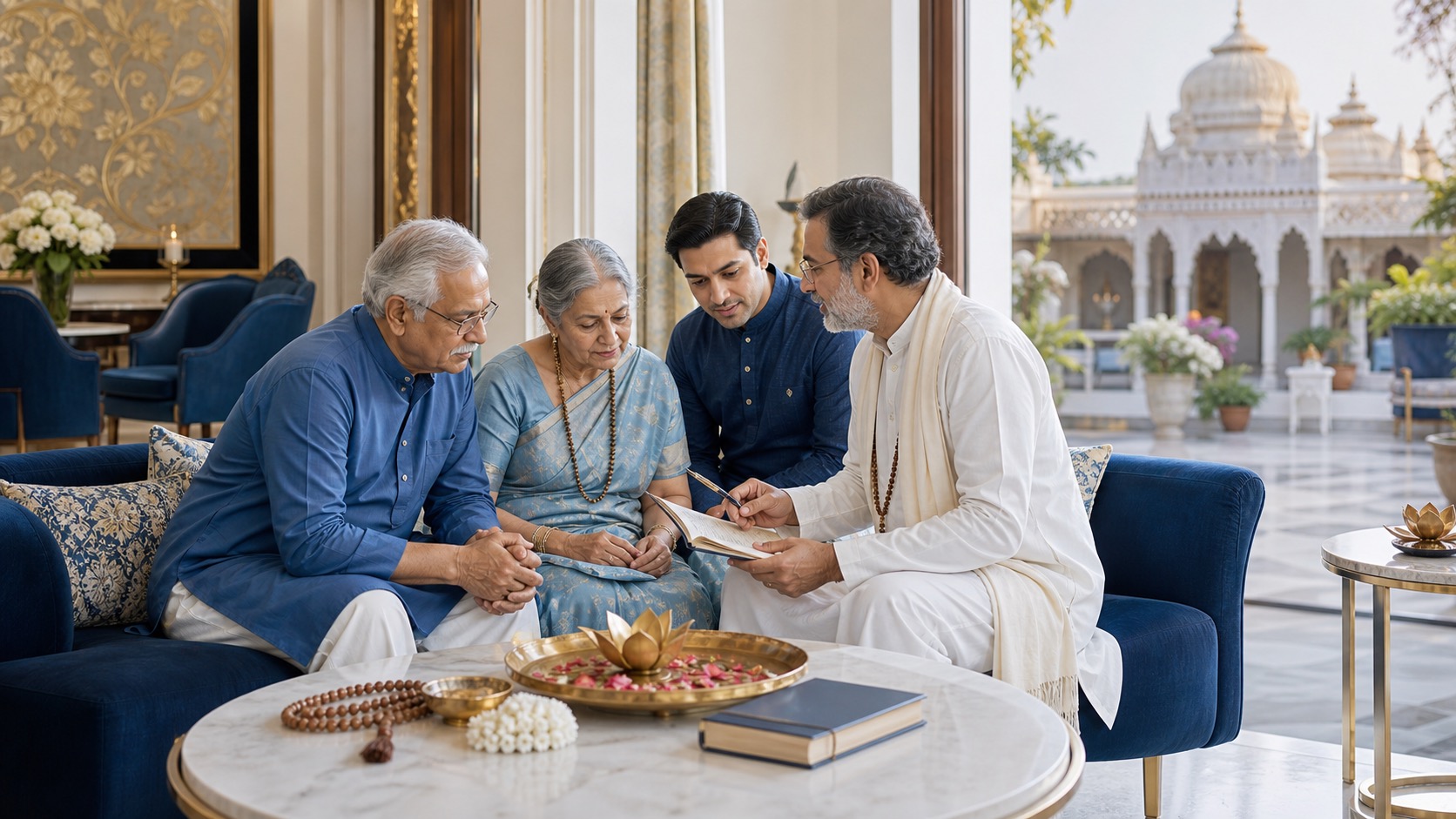 Spiritual ageing works best when purpose, health, community, access, and family voice are planned together.
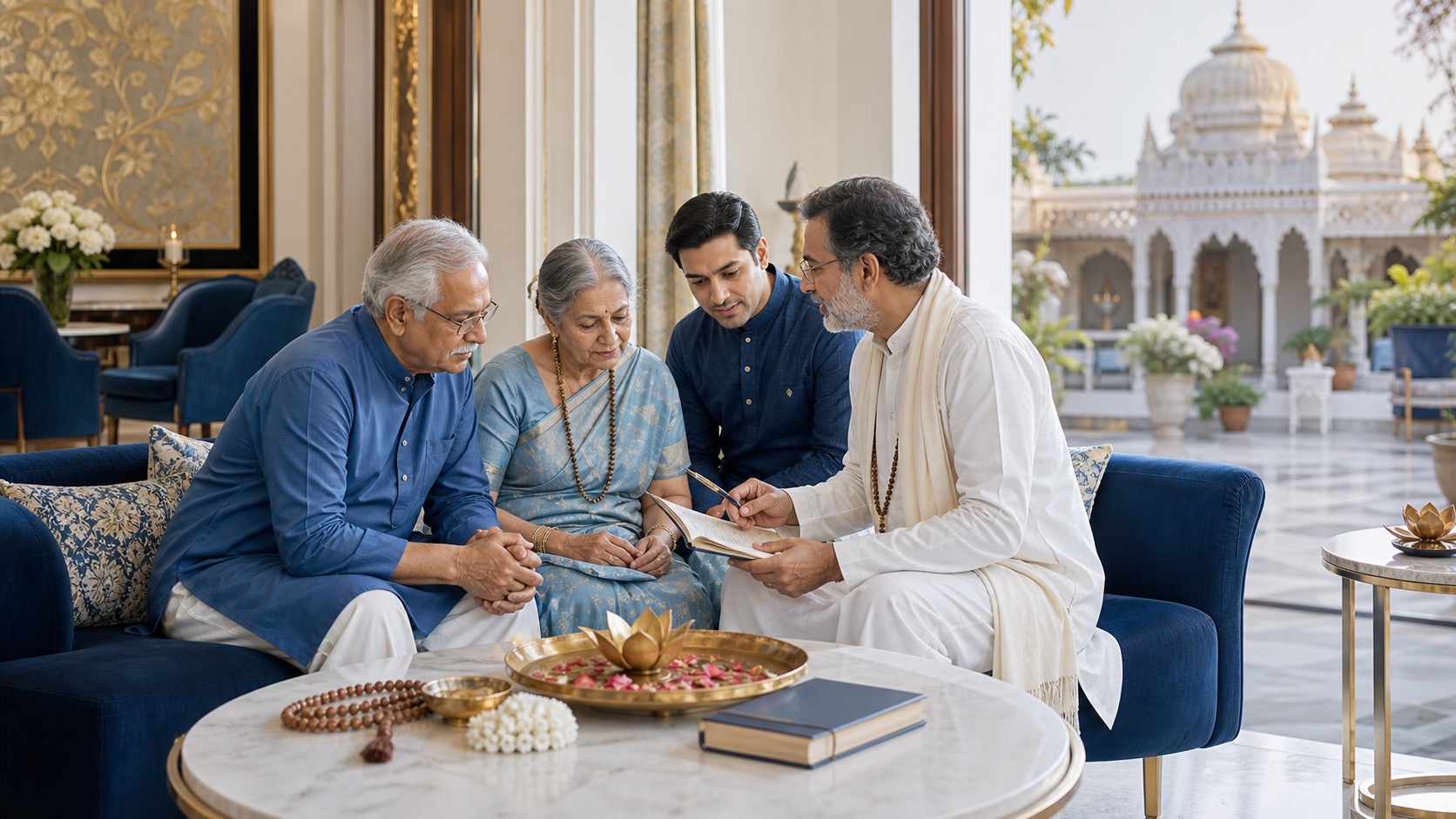 Spiritual ageing works best when purpose, health, community, access, and family voice are planned together.
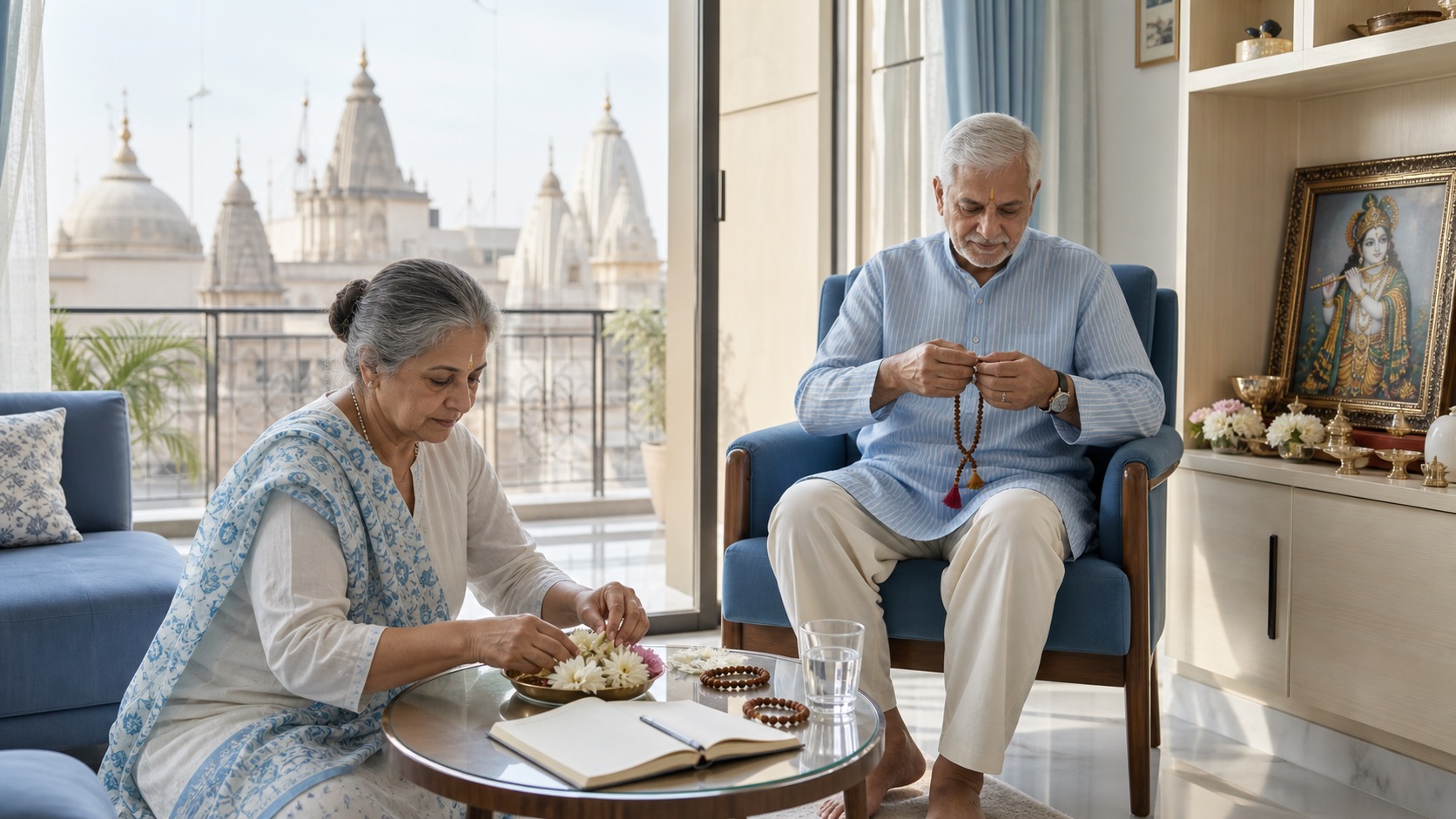 A daily spiritual routine should be gentle, repeatable, safe, and integrated with rest, meals, movement, and medicine timing.
At a glance
Spiritual ageing needs both meaning and support
The strongest spiritual retirement setting does not ask seniors to ignore the body. It brings devotion, safety, companionship, rest, family clarity, and dignity into one daily rhythm.
Questions families ask
Is spiritual ageing only for very religious seniors?
No. Some elders want formal devotion, while others want quiet reflection, familiar music, stories, community meals, service, or a calmer routine. The common need is purpose with dignity.
Can spiritual life replace medical or mental health care?
No. Spiritual routine can support wellbeing, but it does not replace medical care, counselling, emergency care, or treatment for depression, grief, confusion, pain, or serious illness.
Why does Vrindavan matter for later life?
Vrindavan offers temple proximity, cultural memory, devotional rhythm, and spiritual community. For many families, that combination can make retirement feel more purposeful when health access and daily safety are also planned.
When is Vrindavan the wrong choice?
It may be wrong if the elder does not want it, cannot tolerate heat or crowds, needs frequent specialist care elsewhere, has no emergency support, or would become more isolated despite the sacred setting.
How should NRI children evaluate this remotely?
Ask for the weekly routine, medical contact list, temple-access plan, emergency response route, caregiver coverage, and whether the elder has met people they would actually speak with.