How families and communities can make bhajan and satsang genuinely supportive for elders through access, routine, consent, follow-up, and escalation rules.
Quick Answer
Bhajan and satsang support older adults when they are designed as predictable, accessible social contact rather than performance. A useful plan answers practical questions: how the elder reaches the gathering, where they sit, whether they can hear, how long it lasts, whether toilets and water are nearby, whether quiet listening counts as participation, who notices absence, and what signs require family or professional help. Good satsang can reduce isolation and give rhythm to the week, but it does not treat depression, severe grief, dementia, delirium, self-harm thoughts, or medical illness.
Care and dignity note
This guide is educational and cultural. It does not replace medical care, mental health support, legal advice, spiritual counselling, or emergency help. If an older adult has severe depression, self-harm thoughts, sudden confusion, chest pain, breathing difficulty, a fall, severe weakness, or immediate danger, seek urgent local help.
4
access checks
Transport, seating, sound, and toilets decide whether the elder can actually attend.
45
minutes or less
Shorter gatherings with a clear finish protect energy, medicines, meals, and rest.
1
absence responder
One named person should check gently when a regular elder stops coming.
Design for quiet participation
Some elders want to sing. Some only want to listen. Some come for the familiar words, some for the faces, and some because the gathering gives the week a shape. A senior-friendly satsang treats quiet presence as real participation.
This matters because older adults may be carrying grief, loneliness, hearing difficulty, pain, memory changes, or fatigue. The gathering should not reward only loud singing, long sitting, public speaking, or visible cheerfulness.
Make access practical before making it spiritual
The first design questions are basic: can the elder reach the room, sit with back support, hear the lead voice, see printed words if needed, use a toilet, drink water, leave early, and return home safely?
Hearing deserves special attention. If the sound is unclear or the room is noisy, an elder may appear withdrawn when they are simply unable to follow. Use front seating, a clear microphone, lower background noise, printed bhajan lines, and smaller circles when possible.
Create a consent-based follow-up rule
A valuable community notices when a regular elder disappears, but follow-up must be respectful. Families and organizers should agree on who can call, what they may ask, and when to involve family.
The check-in should be practical, not intrusive: Are you unwell? Do you need transport? Was the gathering too long or too loud? Would you prefer a smaller group? If the elder has severe sadness, confusion, self-harm talk, repeated withdrawal, or inability to manage basic routines, the answer is not more bhajan; it is family attention and professional help.
The senior-friendly satsang plan
01
Set a short format
Use a predictable 30 to 45 minute structure: greeting, two or three bhajans, short reading, optional sharing, and closing.
02
Protect the body
Chairs with arms, clear aisles, low-glare lighting, nearby toilets, water, and permission to stand or leave early are part of the plan.
03
Make hearing access visible
Reserve front seats, test the microphone, reduce background noise, print key lines, and avoid side conversations during singing.
04
Offer roles without pressure
Let elders choose listening, singing, reading, flower preparation, greeting, story sharing, or no role at all.
05
Notice mood without diagnosing
Watch for withdrawal, tearfulness, irritability, confusion, or exhaustion, but do not label the elder publicly.
06
Use a named absence responder
If a regular elder misses two gatherings, one agreed person should call gently and offer help, not pressure.
07
Keep a professional-help rule
Self-harm talk, severe depression, new confusion, unsafe behavior, or inability to eat, sleep, or function needs family and clinical attention.
Satsang design decisions that affect elder wellbeing
| Practice | Why it matters | Family question |
|---|
| Sound and hearing | An elder who cannot hear may become silent, frustrated, or excluded. | Can the elder follow the words from their seat? |
| Duration | Long sessions can conflict with pain, fatigue, medicines, meals, and transport. | Can the elder leave before fatigue builds? |
| Participation choice | Pressure to sing or speak can turn community into performance anxiety. | Is listening treated as enough? |
| Follow-up | Absence may mean illness, grief, transport difficulty, embarrassment, or loneliness. | Who checks in, and what can they ask? |
| Escalation | Spiritual community should not hide serious mental health or medical warning signs. | What signs mean call family or a professional? |
Spiritual ageing scenes to inspect
A good devotional gathering lets older adults join through voice, silence, memory, listening, or simple presence, while still protecting health and dignity.
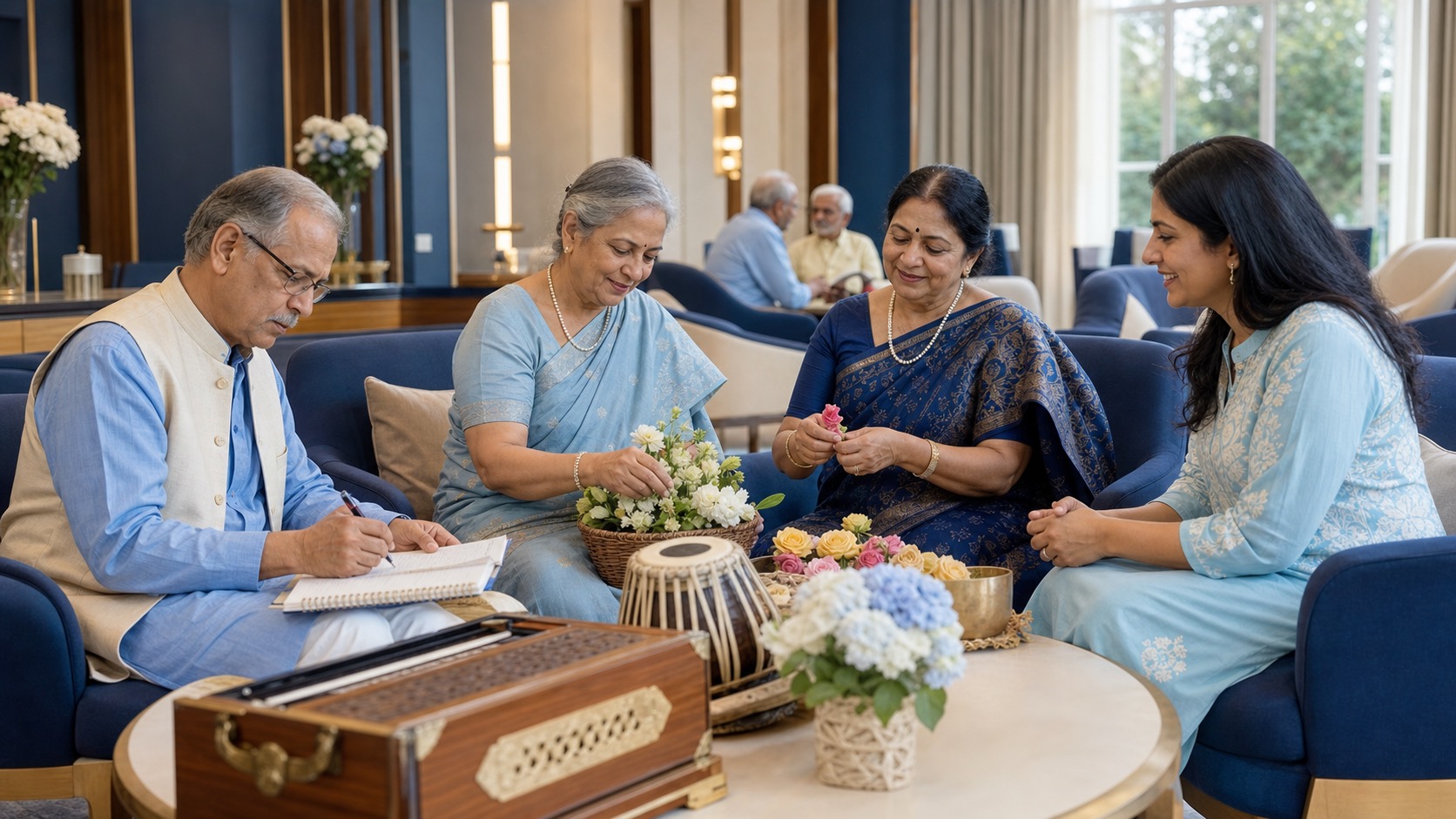 Satsang, seva, music, meals, and shared calendars can turn devotion into visible social support.
 Spiritual ageing works best when purpose, health, community, access, and family voice are planned together.
 A daily spiritual routine should be gentle, repeatable, safe, and integrated with rest, meals, movement, and medicine timing.
At a glance
Spiritual ageing needs both meaning and support
The strongest spiritual retirement setting does not ask seniors to ignore the body. It brings devotion, safety, companionship, rest, family clarity, and dignity into one daily rhythm.
Questions families ask
Can satsang help loneliness?
It can help when it creates real belonging, predictable contact, and follow-up. It should not replace professional support for persistent depression, severe anxiety, self-harm thoughts, new confusion, or severe grief.
What if a senior has hearing difficulty?
Use front seating, a clear microphone, lower background noise, printed lyrics or reading cues, slower discussion, and smaller groups. Do not mistake silence for disinterest.
Should families push elders to attend?
No. Offer transport, companionship, and a smaller format if helpful, but respect fatigue, illness, grief, privacy, and the elder's preference.
What should organizers do when a regular elder stops coming?
Use one respectful check-in, preferably by someone the elder knows. Ask whether they are well, whether access was difficult, and whether they want support. Do not shame them for absence.