Krishna Bhumi Logo
Krishna Bhumi

Blood Pressure After 60: What Families Should Track Before Calling the Doctor

A practical family guide to home blood-pressure logs, correct cuff technique, posture symptoms, medicine timing, fall risk, urgent warning signs, and doctor-ready notes.

i

Quick Answer

Blood pressure tracking after 60 is useful only when the number is connected to context. Families should use a validated upper-arm cuff if possible, confirm cuff size and technique with a clinician, record readings only as advised, and write what was happening: time, rest, posture, medicines, food, fluids, pain, stress, dizziness, fainting, falls, chest symptoms, breathlessness, confusion, and missed doses. Do not change medicines because of one reading. Use the log to help the doctor see patterns and to know which symptoms need urgent care for that elder.

Key numbers to know

1
validated cuff

A correct device and cuff size matter before the family trusts the pattern.

5
quiet minutes

Many home plans ask for rest before measurement; confirm the exact technique with the clinician.

0
medicine edits

Do not stop, double, delay, or shift blood-pressure medicines without qualified medical advice.
Main guide

First check whether the reading can be trusted

A blood-pressure reading can look alarming because the cuff is too small, the arm is unsupported, the person was talking, the elder had just walked, the bladder was full, pain was high, or the monitor is not validated for that person.

Before reacting to a number, ask the clinic to compare the home monitor with the clinic device, confirm cuff size, and show the family the exact technique. If the device is wrong, the family log becomes a source of panic instead of care.

One reading is not a care plan

A single high or low reading can happen after stress, pain, poor sleep, caffeine, exertion, dehydration, missed medicine, or measurement error. The doctor usually needs a pattern: time of day, repeated readings, symptoms, medicine timing, and what changed recently.

Families should ask: which reading range matters for this elder, how many readings should be taken, when should readings be ignored and repeated correctly, and what exact symptom or number should trigger a same-day call.

Posture and dizziness matter after 60

Older adults may feel dizzy, weak, or faint when standing, especially with dehydration, skipped meals, heat, blood-pressure medicines, Parkinsonism, diabetes, prolonged bed rest, or recent illness.

If the elder has falls, near-falls, faintness, or fear of walking, ask the clinician whether sitting and standing readings are needed. Do not create your own standing test during an unsafe moment; the point is to make the doctor aware of the posture-linked symptoms.

Connect readings with medicines and the day

Blood-pressure medicines can be essential, but missed doses, duplicate strips, dose changes after discharge, dehydration, low appetite, alcohol, pain medicines, and supplements can change risk.

Write medicine timing beside the reading. Also write meals, fluids, sleep, pain, stress, recent travel, fever, vomiting, diarrhoea, and whether the elder was able to walk normally. The reading without the day around it is often too weak for good decisions.

Symptoms outrank the spreadsheet

Families sometimes keep measuring while a parent has chest discomfort, breathlessness, fainting, new confusion, sudden weakness, severe headache, vision trouble, or a serious fall. That is the wrong moment to optimize the log.

Ask the treating doctor for this elder's urgent-care rules. If severe symptoms occur, seek appropriate emergency medical help instead of waiting for another reading to look better.

Make the log doctor-ready

A useful blood-pressure log is short enough to read: date, time, reading, pulse if the device shows it, posture, symptoms, medicine timing, recent activity, food and fluids, and any unusual event.

Bring the log, current medicine list, device name, cuff size, recent hospital papers, fall notes, and the family's three questions. The best outcome of tracking is a clearer doctor visit, not a larger spreadsheet.

Stop monitoring from becoming control

Some elders become anxious when family members keep asking for readings. Others stop reporting symptoms because every conversation becomes a lecture. Blood-pressure care should support confidence, not make the elder feel watched all day.

Agree on the testing schedule, keep it private, and stop unnecessary checks when the clinician says they do not add value. The goal is safer living: fewer falls, better medicine understanding, timely review, and dignity.

Blood-pressure log fields that actually help

  1. 01

    Device and cuff

    Record the monitor name and cuff size; ask the clinic to confirm the device and technique.

  2. 02

    Date, time, and rest

    Write when the reading was taken and whether the elder rested quietly before it.

  3. 03

    Posture

    Note sitting, standing if clinician-advised, lying down, after walking, or after a bathroom trip.

  4. 04

    Symptoms

    Dizziness, fainting, weakness, headache, chest discomfort, breathlessness, confusion, or fall.

  5. 05

    Medicine timing

    Write whether prescribed medicines were taken, missed, delayed, duplicated, newly added, or stopped by a doctor.

  6. 06

    Food and fluids

    Skipped meals, low water intake, vomiting, diarrhoea, fasting, or heat exposure can change how the elder feels.

  7. 07

    Pain, sleep, and stress

    Pain, poor sleep, anxiety, family conflict, travel, or festival crowds can affect readings and symptoms.

  8. 08

    Recent event

    Note hospitalization, infection, fall, medicine change, new supplement, or emergency visit.

  9. 09

    Doctor action rule

    Write the clinician's threshold for routine follow-up, same-day call, and urgent care.

How families should interpret common situations

Care AreaWhat to WatchFamily Action
One high readingRecent walking, talking, pain, stress, wrong cuff, missed medicine, no rest, full bladder.Repeat only as the clinician taught; log the context instead of changing medicines.
Repeated high patternSame time of day, multiple days, medicine adherence, salt or fluid changes, pain, sleep, stress.Send the log to the doctor with medicine list and questions.
Low reading with symptomsDizziness, fainting, falls, weakness, dehydration, missed meals, recent dose changes.Seek medical guidance promptly; do not stop medicines independently.
Posture-linked dizzinessLightheadedness on standing, night bathroom trips, near-falls, fear of walking.Ask whether posture readings or medicine review are needed.
Severe symptomsChest discomfort, severe breathlessness, fainting, new confusion, sudden weakness, severe headache, serious fall.Use the doctor's urgent-care rule or seek emergency help; do not keep rechecking at home.
Monitoring anxietyParent becomes fearful, angry, avoids reporting symptoms, or checks repeatedly.Reduce to the clinician-agreed schedule and focus on function, symptoms, and dignity.

Care scenes

Indian family using a blood pressure monitor and health folder with an older mother at home
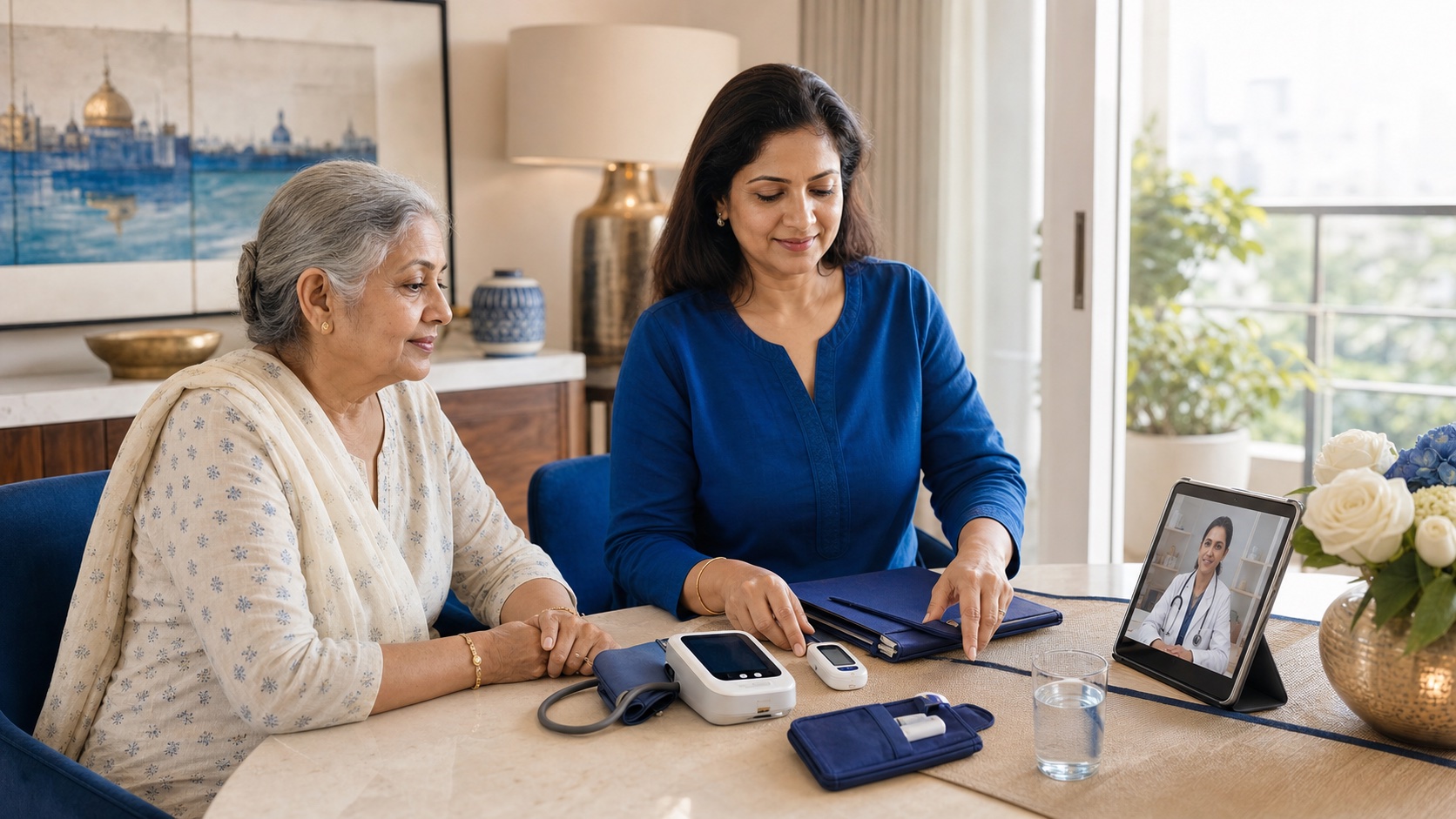
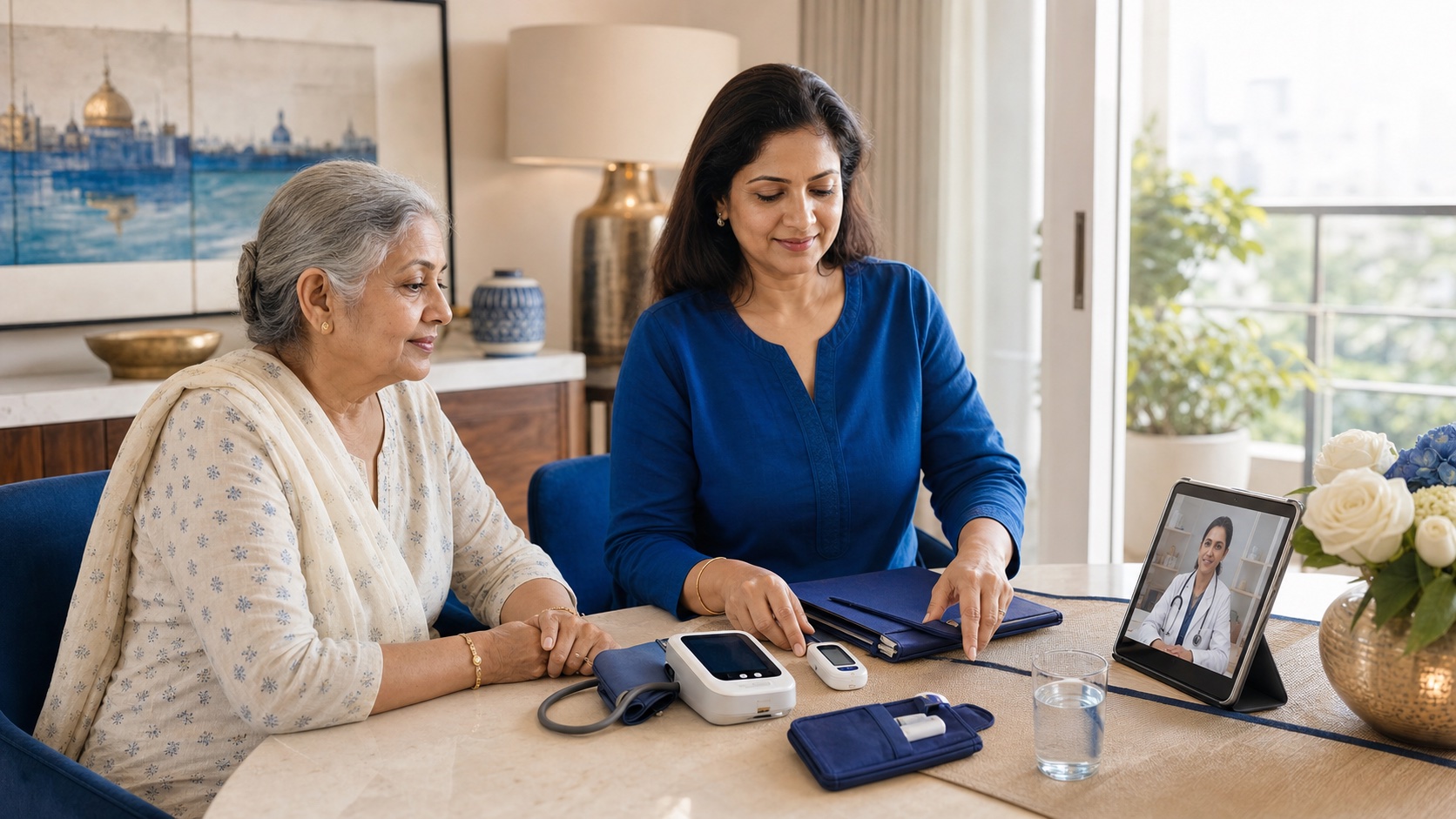
Blood pressure tracking is most useful when readings are paired with symptoms, posture, medicines, and timing.
Indian daughter organizing home monitoring tools and a health notebook with her older mother
Home tracking should make patterns visible for the doctor, not turn the family into a clinic.
Indian family and care coordinator discussing comfort-focused support for an older adult
Serious illness planning is strongest when comfort, dignity, and medical follow-up are discussed early.

At a glance

A blood-pressure reading needs a story

The family job is to connect the number with posture, symptoms, medicines, food, fluids, device technique, and the elder's real ability to move safely.

1
validated cuff

A correct device and cuff size matter before the family trusts the pattern.

5
quiet minutes

Many home plans ask for rest before measurement; confirm the exact technique with the clinician.

0
medicine edits

Do not stop, double, delay, or shift blood-pressure medicines without qualified medical advice.
This guide is for education only and does not replace advice from a qualified doctor, geriatrician, psychiatrist, physiotherapist, palliative-care specialist, or other licensed professional.

Questions families ask

Should every senior check blood pressure daily?

No. Frequency should be individualized by the doctor. Daily checks may help some elders, while others need less frequent monitoring. Extra readings are not useful if nobody knows what action they should trigger.

Can families change blood-pressure medicine timing?

No. Timing and dose changes should be discussed with the prescribing clinician. Stopping or shifting medicine because of one home reading can be dangerous.

What if readings vary?

Variation is common. The family should record context and ask the doctor which pattern matters: morning, evening, after medicines, with symptoms, after standing, or after illness.

What should NRI children ask for?

Ask for the current medicine list, device name, cuff size, recent log, symptoms, falls, missed doses, doctor thresholds, and who locally can respond if severe symptoms occur.

When should a family stop checking and get help?

When the elder has severe symptoms such as chest discomfort, severe breathlessness, fainting, new confusion, sudden weakness, severe headache, or a serious fall, follow the doctor's urgent-care rule or seek emergency help.

Can community living support blood-pressure care?

Yes, if staff or family can support correct measurement, medicine timing, hydration, safe night bathroom access, fall reporting, doctor follow-up, and privacy.

Sources