A practical family guide to supporting an older adult during or after cancer treatment, with checks for infection risk, nutrition problems, fatigue, medicines, caregiver roles, and oncology follow-up.
Quick Answer
Cancer recovery support for an older adult should begin with the oncology plan, not with generic rest and diet advice. Families need written clarity on the cancer type and treatment, whether the person is between chemotherapy cycles or after treatment, current infection risk, fever instructions, medicines, lab and scan dates, food and fluid goals, swallowing or mouth problems, bowel issues, pain control, mobility limits, emergency contacts, and who is allowed to make decisions. A recovery setting is useful only if it can protect that plan, notice deterioration early, and avoid replacing oncology care with vague wellness routines.
Medical safety note
This guide is educational and for family planning only. It does not diagnose, treat, prescribe, replace hospital care, replace emergency care, or replace advice from the treating doctor, surgeon, oncologist, cardiologist, neurologist, physiotherapist, nurse, dietitian, or other licensed professional. Chest pain, breathing difficulty, stroke-like symptoms, severe weakness, fever after treatment, uncontrolled pain, bleeding, sudden confusion, a fall, or any immediate danger needs urgent local medical help.
1
oncology call plan
Keep the treating team's daytime and after-hours numbers visible before the senior leaves hospital or active treatment.
38 C
fever question
Ask the oncology team the exact temperature threshold and whether fever medicine should wait until after calling.
6
daily records
Track temperature, food, fluids, weight trend, bowel pattern, pain, and unusual weakness instead of relying on memory.
Start with the treatment phase, not the diagnosis word
Cancer recovery means very different things after surgery, during chemotherapy, after radiation, during hormone therapy, during immunotherapy, after a stem cell transplant, or in palliative treatment. The family should know which phase the elder is in before deciding what food, visitors, travel, exercise, and social activity are safe.
Ask the oncologist or oncology nurse for the current risk list in plain language: infection risk, expected fatigue, food restrictions, wound or catheter care, medicines that must not be missed, blood-test dates, when the next scan or review is due, and which symptoms mean call today rather than wait for the next appointment.
Nutrition support must match the symptom
Food pressure is one of the easiest ways for families to mean well and still make recovery harder. Cancer treatment can change taste, smell, appetite, swallowing, mouth comfort, nausea, bowel habits, and the ability to tolerate large meals. The useful question is not 'Why are you not eating?' It is 'Which symptom is stopping food today?'
Write down weight changes, how much the elder is drinking, what foods trigger nausea or diarrhea, whether swallowing hurts, whether mouth sores are present, and whether constipation is building. Ask for a dietitian review when intake is falling, weight is dropping, dehydration is suspected, or family food arguments are replacing clinical guidance.
Fatigue needs pacing and safety, not motivational pressure
Cancer fatigue is not ordinary tiredness and may not disappear after a nap. In older adults, fatigue can combine with anemia, poor intake, infection, pain, sleep disruption, low mood, deconditioning, and other illnesses. That is why a day should be paced around essential tasks, rest windows, safe walking, and the elder's priorities.
A geriatric lens helps families avoid shallow advice. Ask about physical function, cognition, falls, medicines, nutrition, mood, social support, and caregiver capacity. If the senior cannot bathe, toilet, walk, remember medicines, or explain symptoms reliably, the care plan must include that reality.
The cancer recovery support checklist
01
Create a one-page oncology home plan
Include diagnosis, treatment phase, medicines, allergies, port or catheter care, lab dates, scan dates, follow-up dates, emergency contacts, and the person authorized for decisions.
02
Write the fever and infection rule
Record the exact temperature threshold, whether to call before taking fever medicine, and which symptoms matter: chills, cough, sore throat, diarrhea, urinary pain, mouth sores, catheter redness, or sudden weakness.
03
Match food to the barrier
Nausea, mouth soreness, taste change, early fullness, constipation, diarrhea, and swallowing trouble need different food strategies. Do not solve all of them with the same heavy meal.
04
Track what the doctor cannot see at home
Keep a daily note of temperature, food, fluids, weight trend, bowel pattern, pain, sleep, walking confidence, confusion, and medicines actually taken.
05
Limit visitors by risk, not emotion
If infection risk is high, visitor rules should follow oncology advice. Family closeness cannot justify exposing the elder to fever, cough, stomach illness, or crowded fatigue.
06
Protect the caregiver system
Assign roles for medicines, food, transport, reports, finances, and updates. One exhausted person should not become the entire cancer recovery infrastructure.
Cancer recovery decisions families should make explicitly
| Focus | Recovery purpose | Family question |
|---|
| Infection escalation | Some cancer treatments lower infection-fighting white blood cells, so fever or infection symptoms may need urgent advice. | What exact symptoms mean call oncology now? |
| Food and fluids | Cancer and treatment can affect appetite, taste, swallowing, bowel habits, hydration, weight, and muscle strength. | What problem is limiting intake today? |
| Fatigue and function | Severe fatigue can affect bathing, toileting, walking, appointments, mood, and safe medicine use. | Which daily tasks now need help or pacing? |
| Caregiver load | Cancer caregiving includes medicines, side-effect monitoring, transport, finances, communication, and emotional support. | Which duties are assigned, and who gets relief? |
Recovery scenes to inspect
Read the scene like a care handover: the medicine list is current, food is symptom-led, infection rules are visible, the elder can rest, and the caregiver knows whom to call.
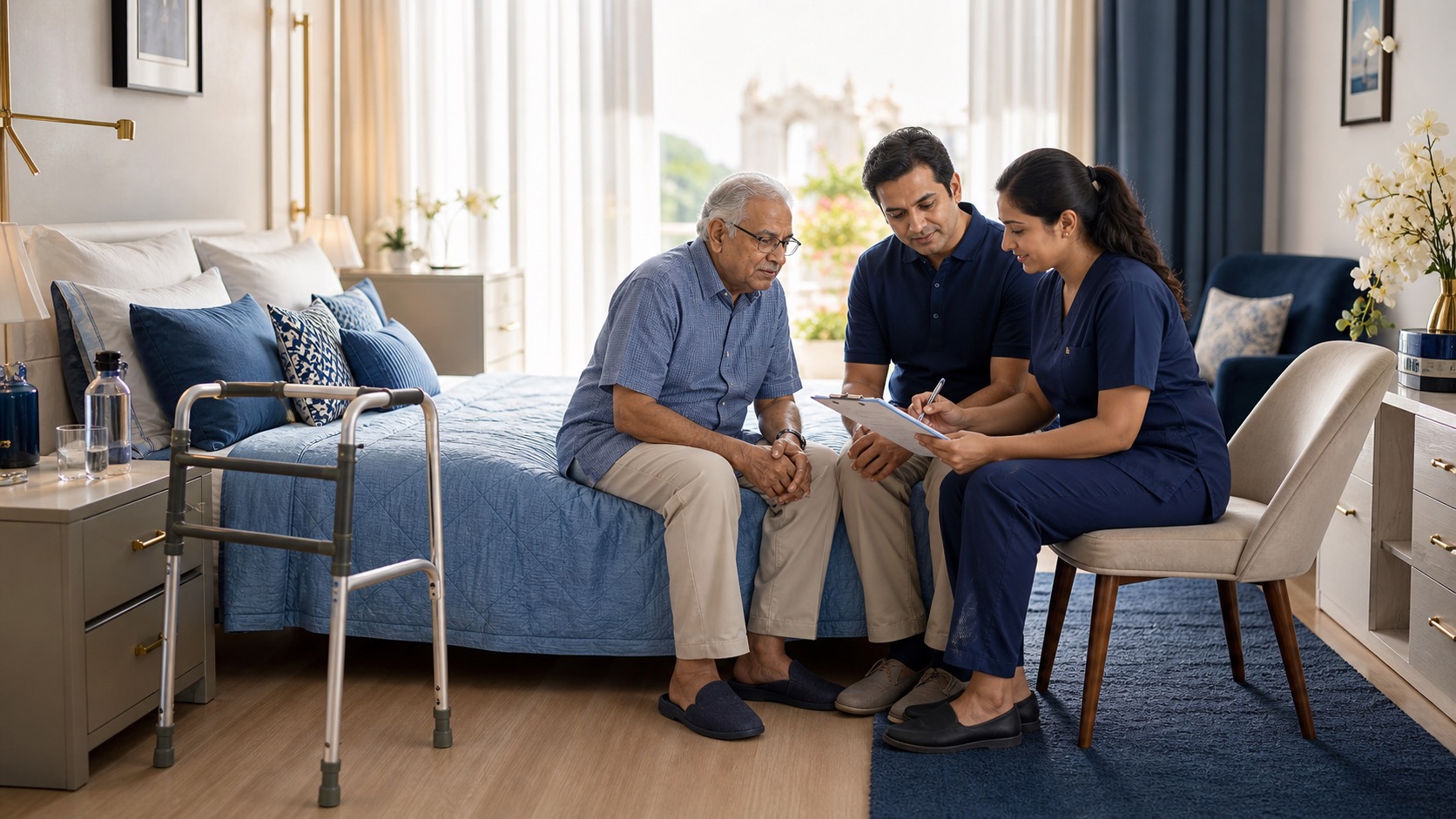 A recovery suite should make ordinary needs safer: low bed height, clear walking paths, hydration, medicines, rest, and caregiver seating.
 Medical recovery living starts with a written plan: discharge instructions, medicines, warning signs, follow-ups, mobility, food, and family roles.
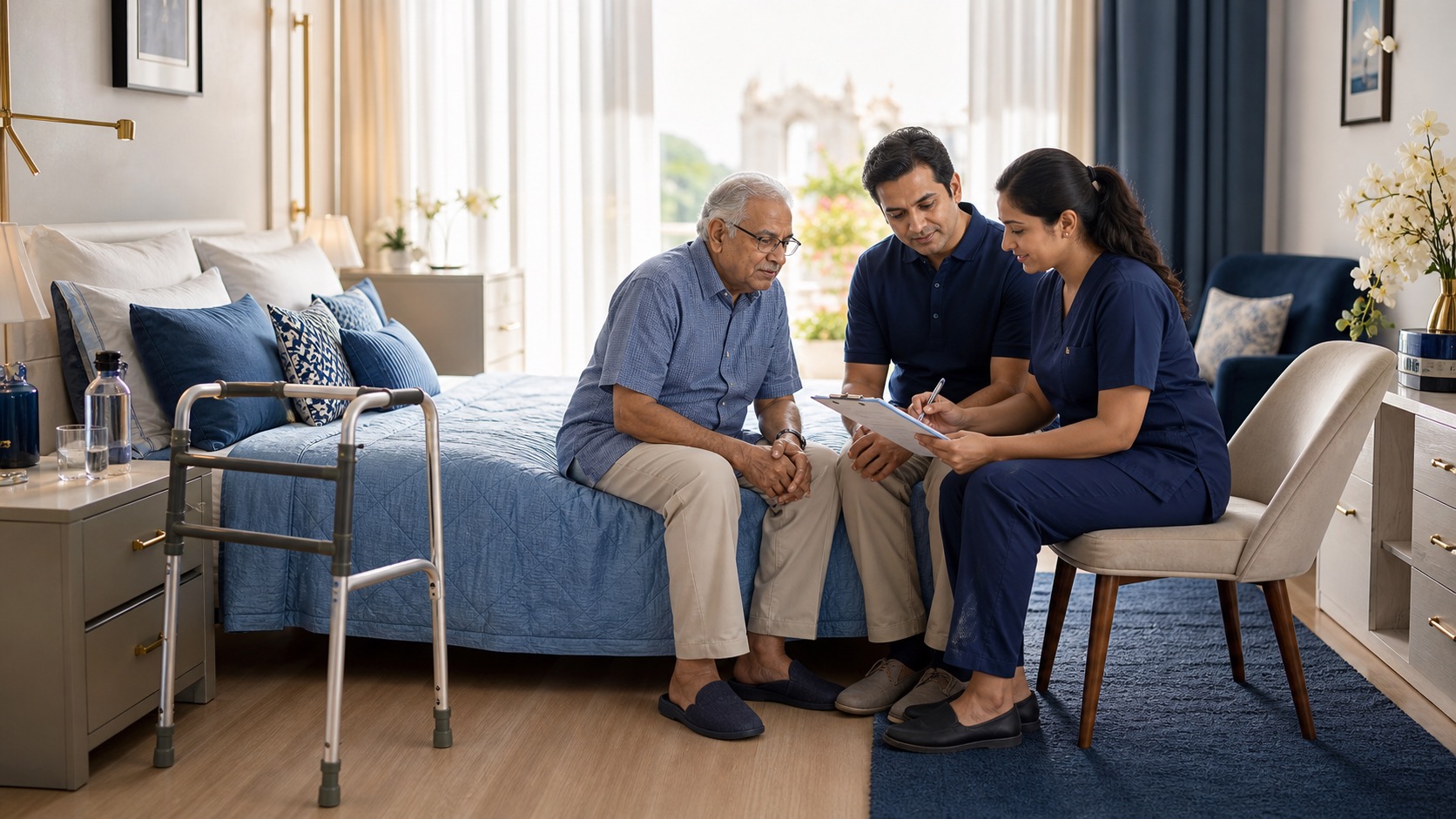 A recovery suite should make ordinary needs safer: low bed height, clear walking paths, hydration, medicines, rest, and caregiver seating.
Family takeaway
Recovery living works best when it is honest about its role. It can make rest, meals, movement, medicines, records, appointments, spiritual rhythm, and family communication easier. It should never hide risk, delay urgent care, or replace the treating medical team.
Questions families ask
Can a recovery stay replace oncology follow-up?
No. A recovery stay can support meals, rest, transport, medicine routines, symptom records, and dignity. It cannot change chemotherapy, radiation, immunotherapy, scans, lab decisions, fever instructions, or cancer treatment goals.
What should families ask before discharge or travel?
Ask for the treatment phase, infection risk, fever threshold, medicine list, food and fluid advice, activity limits, wound or catheter care, follow-up dates, lab dates, and the after-hours oncology contact.
Should families push the senior to eat more?
No. Families should report poor intake and follow oncology or dietitian advice. Appetite and tolerance can change because of nausea, mouth sores, taste changes, bowel problems, fatigue, or disease-related weight loss.
When is urgent medical advice needed?
Follow the treating team's instructions. In general, fever, chills, breathing trouble, confusion, severe weakness, uncontrolled vomiting or diarrhea, dehydration, bleeding, catheter redness, painful urination, or new severe pain should not be treated as ordinary tiredness.
How can family help without overwhelming the elder?
Use one update channel, ask before visiting, reduce repeated advice, keep decisions with the elder where possible, and divide practical duties so the main caregiver can sleep and recover too.