A practical routine-card template that helps older adults balance devotion, medicines, meals, rest, movement, temple access, family calls, and low-energy days.
Quick Answer
A daily spiritual routine for older adults in Vrindavan should start with the body, not the calendar. Put medicines, meals, hydration, toilet access, rest, and doctor restrictions on the routine card before temple visits or satsang. Then create three versions of the day: a normal day, a low-energy day, and a no-outing day. A safe routine may include seated morning prayer, breakfast after medicines if prescribed that way, short shaded movement, rest, one meaningful contact, optional temple or satsang only when energy and weather allow, evening wind-down, and clear signs that mean cancel the plan and call family or a doctor.
Care and dignity note
This guide is educational and cultural. It does not replace medical care, mental health support, legal advice, spiritual counselling, or emergency help. If an older adult has severe depression, self-harm thoughts, sudden confusion, chest pain, breathing difficulty, a fall, severe weakness, or immediate danger, seek urgent local help.
3
day versions
Normal, low-energy, and no-outing plans prevent devotion from becoming pressure.
2
fixed anchors
Medicine and meal timing should stay more fixed than prayer or outing timing.
1
visible card
One card should show routine, contacts, warning signs, and the low-energy backup.
Start with medical anchors
A routine fails when prayer, meals, medicines, and rest compete. For older adults, the first anchors are usually medicine timing, meal timing, hydration, bowel and toilet needs, sleep, and any doctor or physiotherapist restrictions. Spiritual practices should fit around those anchors.
Families should write the routine in plain language: what happens after waking, what medicines are taken before or after food, when the elder eats, when they rest, who checks in, and what symptoms stop the outing. Without that, the routine depends on memory and goodwill.
Make temple access optional and safe
A daily temple visit is not the only valid spiritual routine. On some days, home prayer, bhajan, reading, japa, a short call, or a small satsang inside the community may be better. The elder should not feel they have failed because heat, pain, dizziness, fatigue, or crowds make an outing unsafe.
Before any regular temple route, decide the maximum walking distance, shaded pause points, toilet option, seating option, return transport, water plan, and who is called if the elder feels weak or confused.
Build a low-energy version before it is needed
Low-energy days are normal in later life. The routine card should say what to do when sleep was poor, appetite is low, knees hurt, blood sugar feels off, the weather is harsh, or the elder is emotionally heavy. A short prayer, simple food, water, medicines, rest, and one human check-in may be a complete day.
It should also name warning signs that are not routine problems: chest pain, breathlessness, fainting, new confusion, sudden weakness, fall injury, fever, severe pain, dehydration, repeated vomiting, or self-harm talk. Those signs need escalation, not a modified prayer schedule.
The practical daily routine card
01
Write the first 90 minutes
List wake time, toilet support, water, blood sugar or blood pressure checks if prescribed, medicines, breakfast, and the first seated prayer.
02
Keep prayer seated by default
Flowers, beads, reading, chanting, silence, or bhajan can happen safely before the elder attempts walking or travel.
03
Add movement only within limits
Use a shaded short walk, chair mobility, or physiotherapist-approved exercise; stop for dizziness, chest symptoms, severe pain, or unusual weakness.
04
Protect food, water, and rest
Do not let darshan, satsang, or visitors delay meals, fluids, naps, or medicines that keep the elder stable.
05
Choose one social touchpoint
A neighbour greeting, small satsang, family call, resident tea, or short walk with someone is enough on many days.
06
Create the no-outing version
When heat, fatigue, pain, or illness rises, switch to home prayer, simple meals, medicine tracking, rest, and a family check-in.
07
Put warning signs on the card
Write the symptoms that mean call family, local responder, doctor, ambulance, or emergency care instead of continuing the day.
Daily routine decisions families should make
| Practice | Why it matters | Family question |
|---|
| Medicine anchor | Medicines and food timing can affect safety more than the prayer schedule. | Which parts of the day cannot move without doctor advice? |
| Temple outing | Heat, standing, crowds, stairs, and return transport decide whether the outing helps or harms. | What makes today a no-temple day? |
| Social contact | Small repeatable contact can support mood better than occasional large events. | Who will the elder speak to today by name? |
| Low-energy plan | A backup plan prevents guilt and unsafe pushing on difficult days. | What is the simplest complete day? |
| Escalation | Some symptoms are medical warnings, not routine variations. | Who is called first when something changes? |
Spiritual ageing scenes to inspect
The best spiritual routine feels like support, not pressure. Use the images to test whether home prayer, medicine timing, rest, safe movement, community contact, and temple access can coexist.
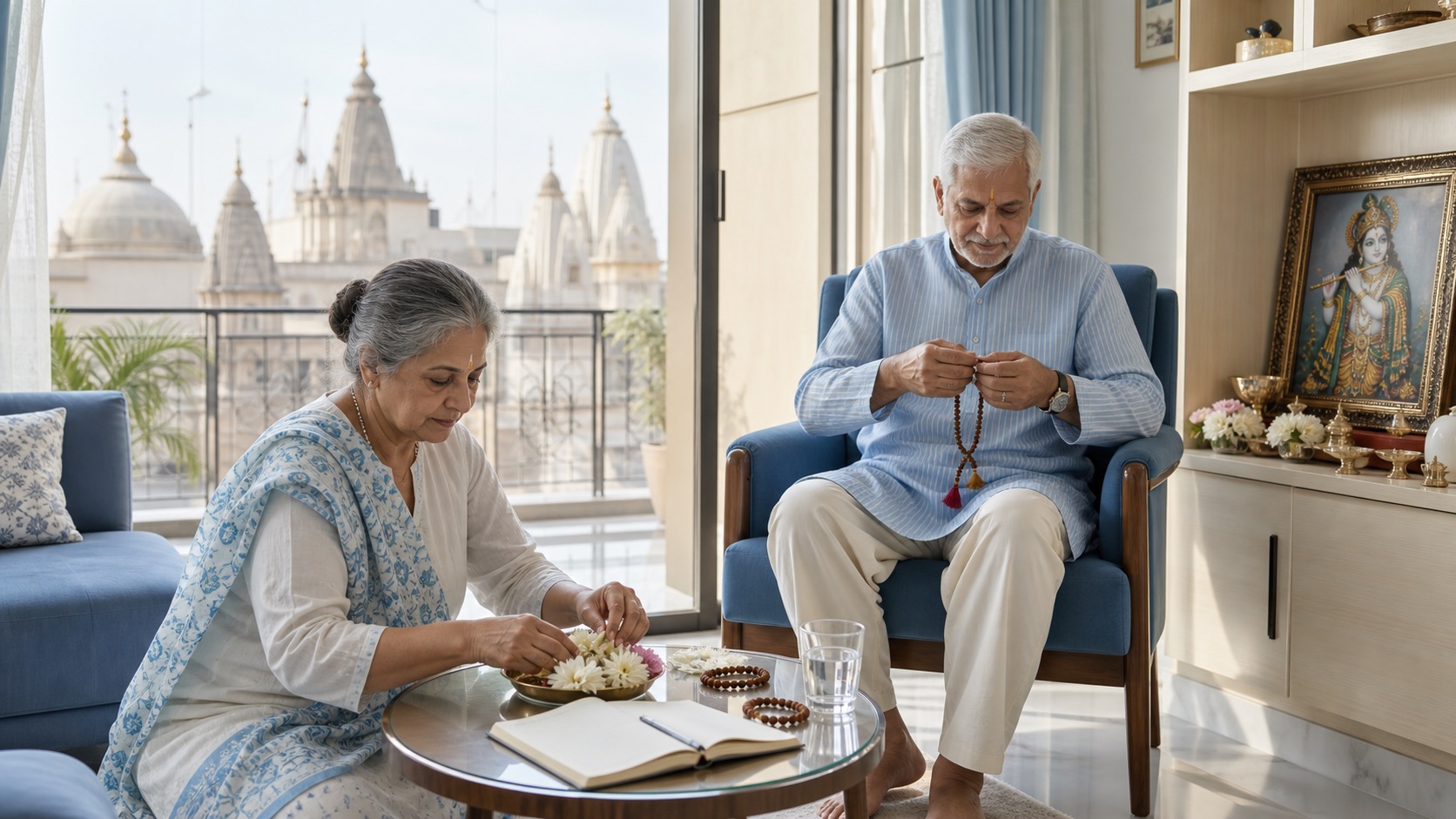 A daily spiritual routine should be gentle, repeatable, safe, and integrated with rest, meals, movement, and medicine timing.
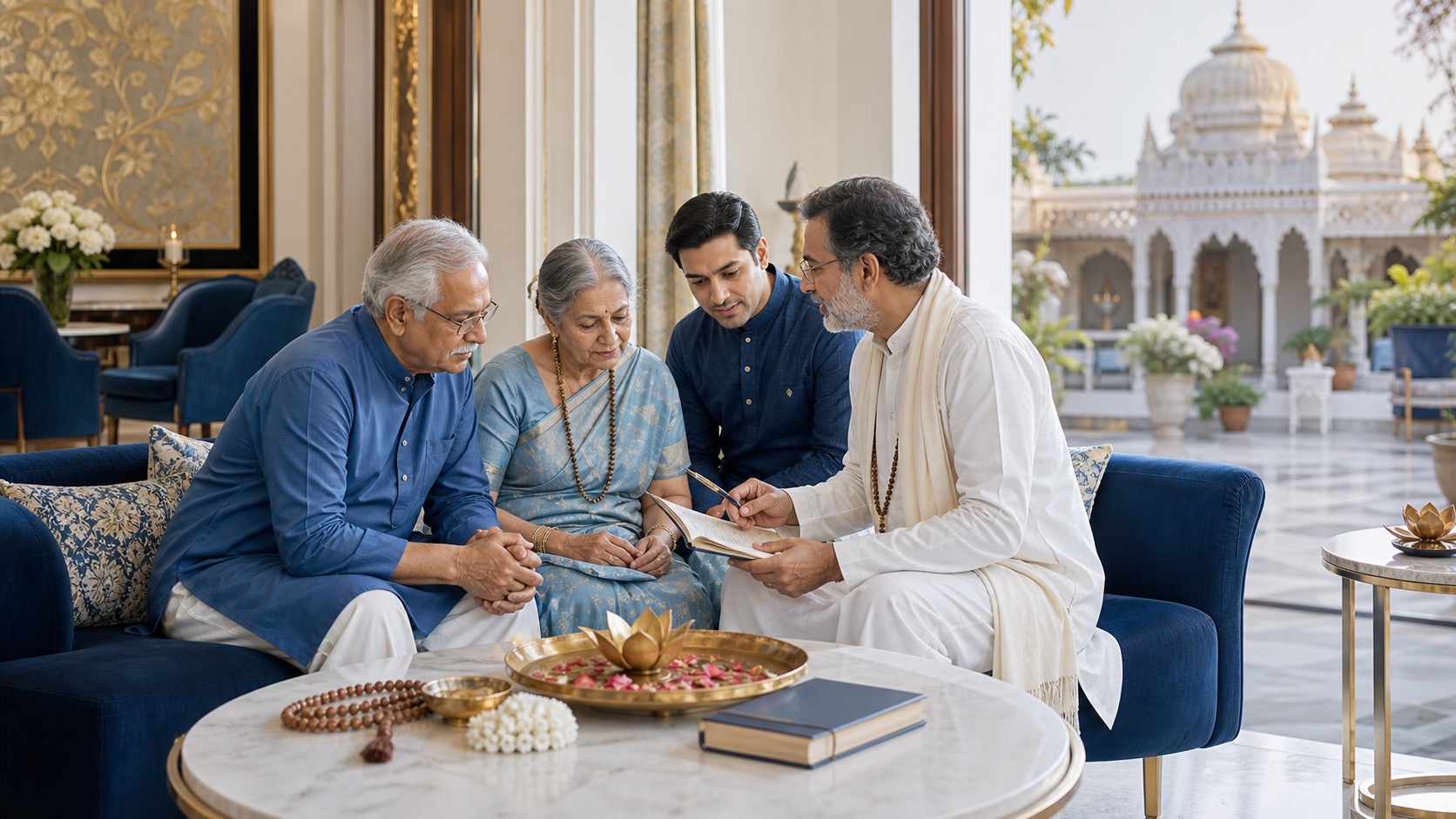 Spiritual ageing works best when purpose, health, community, access, and family voice are planned together.
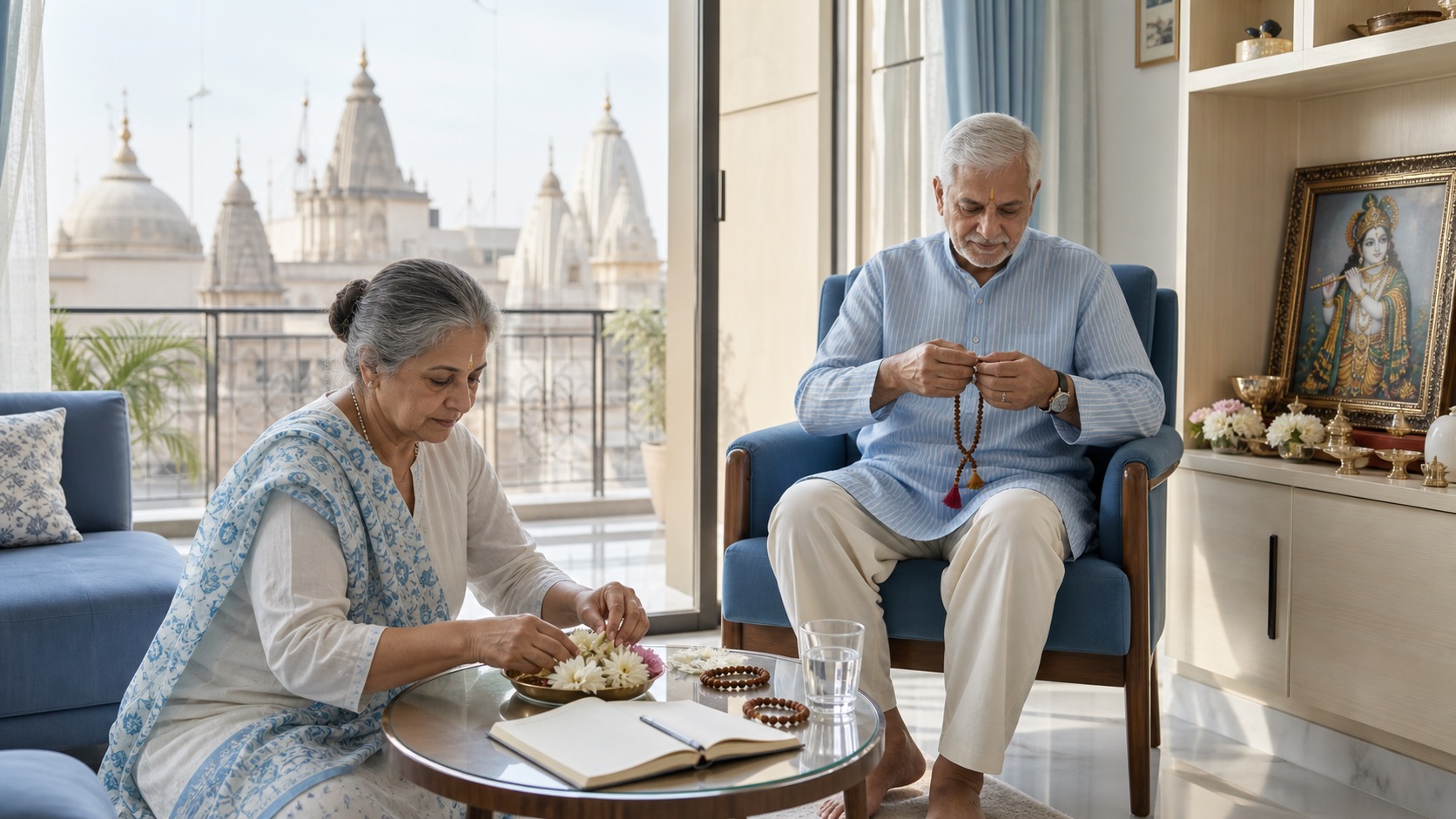 A daily spiritual routine should be gentle, repeatable, safe, and integrated with rest, meals, movement, and medicine timing.
At a glance
Spiritual ageing needs both meaning and support
The strongest spiritual retirement setting does not ask seniors to ignore the body. It brings devotion, safety, companionship, rest, family clarity, and dignity into one daily rhythm.
Questions families ask
Should seniors go to temple every day?
Only if it is safe and desired. Home prayer, listening to bhajan, reading, japa, or a short community gathering may be better on low-energy, hot, painful, crowded, or medically unstable days.
Can routine help mood?
Routine, connection, and meaningful activity can support emotional wellbeing, but persistent sadness, anxiety, withdrawal, confusion, or self-harm talk needs professional help.
How should families handle festival days?
Plan shorter participation, transport, hydration, seating, crowd avoidance, medicine timing, toilet access, and a clear return option. The elder should be allowed to leave early.
What should be on the visible routine card?
Medicine timing, meal timing, water reminders, prayer options, movement limit, rest windows, family call time, local responder, doctor contact, and warning signs.
When should the routine be cancelled?
Cancel outings and seek help for chest pain, breathlessness, fainting, new confusion, sudden weakness, fall injury, fever, severe pain, dehydration, repeated vomiting, or self-harm talk.