Krishna Bhumi Logo
Krishna Bhumi

Family Caregiving Plan for Ageing Parents in India

A practical framework for Indian families to organize elder care, daily routines, responsibilities, records, escalation, and dignity before a crisis begins.

i

Quick Answer

A family caregiving plan is a shared written system for an ageing parent's daily support. It should define medicines, meals, movement, appointments, money, documents, emergency contacts, caregiver roles, and the parent's preferences. The purpose is not control. It is fewer preventable crises and more dignity.

Key numbers to know

7
care areas to track

Medicines, mobility, meals, memory, mood, money, and emergencies.

3
people need the same plan

The elder, the daily caregiver, and the backup decision maker.

30 days
review rhythm

A monthly family review catches small changes before they become crises.

Main guide

Caregiving is a system, not one person's duty

Many Indian families treat elder care as a personal sacrifice by one daughter, son, spouse, or domestic helper. That approach often works for a short time, then breaks when there is a fall, hospitalization, medicine change, or caregiver exhaustion.

A better plan makes care visible. It records what the elder can do independently, what needs help, who checks what, and when the family should call a doctor or arrange extra support.

Start with the parent's daily life

The strongest plan begins with routine: waking, bathing, meals, prayer, walks, medicines, rest, calls, social time, and sleep. Families should protect the parts of the day that give the elder identity and peace.

Care plans fail when they only list diseases. A parent may have diabetes or arthritis, but the real risk may be missed breakfast, a dark bathroom, no backup transport, or confusion about tablets.

Why community design matters

Senior-friendly communities can reduce the pressure on families by making safe movement, social contact, wellness routines, and nearby help easier to access.

At Krishna Bhumi, the elder-care conversation should connect family responsibility with place design: clear walking routes, wellness orientation, spiritual routines, and a community where help is not far away.

8 parts of a practical family caregiving plan

  1. 01

    One updated medicine list

    Include dose, timing, prescribing doctor, purpose, allergies, and the date of the last review.

  2. 02

    Daily routine map

    Write the elder's usual meals, sleep, movement, prayer, bathing, and social habits so changes are easier to spot.

  3. 03

    Role clarity

    Assign who books appointments, pays bills, checks medicines, visits, handles emergencies, and updates NRI family members.

  4. 04

    Home safety checklist

    Review lighting, bathroom grip, footwear, clutter, steps, seating, and night-time access.

  5. 05

    Emergency contacts

    Keep doctor, ambulance, neighbor, security, driver, pharmacy, and family contacts visible and current.

  6. 06

    Documents folder

    Keep ID, medical records, prescriptions, insurance, property papers, and consent preferences organized.

  7. 07

    Escalation signs

    Agree what triggers a call: falls, fever, confusion, missed medicines, low intake, weakness, or breathlessness.

  8. 08

    Parent preferences

    Record food choices, spiritual routine, privacy needs, visitors, care boundaries, and preferred decision maker.

Family caregiving responsibilities map

Care AreaWhat to WatchFamily Action
Daily caregiverMeals, medicines, hygiene, movement, mood, and immediate safety.Give a written routine, backup contact, and clear reporting format.
Primary childDoctor visits, records, payments, and care decisions.Hold monthly reviews and update the shared care file.
NRI familyMissed calls, inconsistent reports, and financial or legal gaps.Schedule video reviews and assign a local responder.
Neighbor or communitySudden non-response, isolation, or urgent access needs.Share emergency contacts without exposing private records unnecessarily.
DoctorNew symptoms, falls, confusion, medicine changes, or hospital discharge.Bring one concise symptom timeline and the latest medicine list.

Care in practice

Three scenes that show how the guidance can look in family planning, safer homes, and supported community living.

Indian family reviewing an elder care notebook with an ageing mother in a senior-friendly Krishna Bhumi apartment
A family care plan works best when it is written, shared, reviewed, and connected to daily routines.
Indian daughter and ageing father reviewing a home safety checklist together
Home safety is not a one-time repair. It is a practical review of bathrooms, lighting, walking routes, medicines, and emergency access.
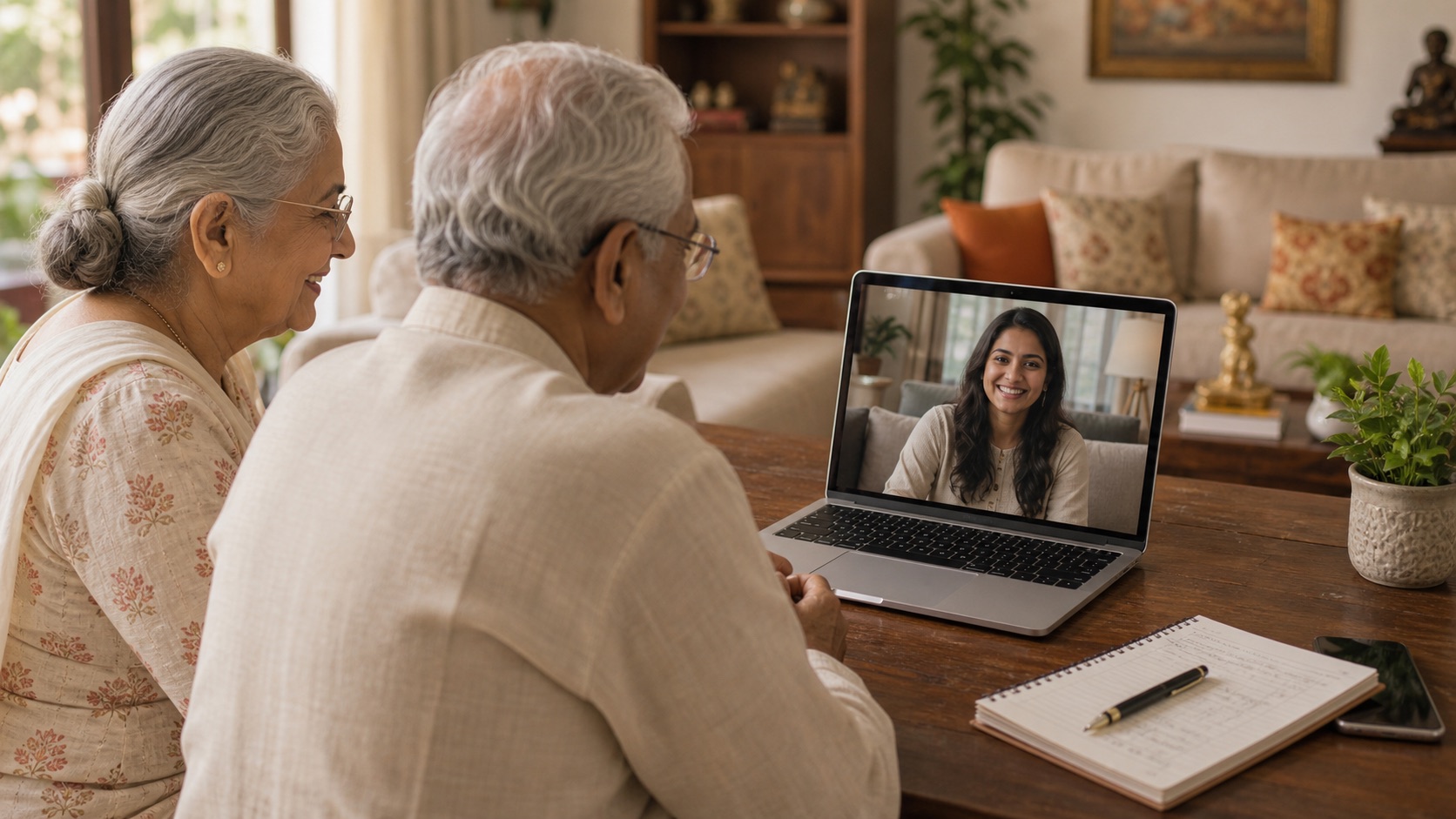
NRI daughter on a video call with ageing Indian parents and a shared care checklist
Long-distance care becomes safer when families agree what to track, who visits, and when to escalate.

At a glance

The family care operating system

Good elder care connects daily routine, records, roles, safety, and escalation into one shared system.

7
care areas to track

Medicines, mobility, meals, memory, mood, money, and emergencies.

3
people need the same plan

The elder, the daily caregiver, and the backup decision maker.

30 days
review rhythm

A monthly family review catches small changes before they become crises.

Before you act

This article is for education and family planning only. It does not replace advice from a qualified doctor, geriatrician, nurse, physiotherapist, mental health professional, legal adviser, or other licensed professional. Seek urgent medical help for sudden weakness, chest pain, severe breathlessness, fainting, serious injury, or sudden confusion.


Questions families ask

Who should own the family caregiving plan?

One person should maintain the plan, but the elder, daily caregiver, backup family member, and local emergency responder should all know the essentials.

How often should a care plan be reviewed?

Monthly is practical for stable elders. Review immediately after a fall, hospitalization, medicine change, new confusion, or major caregiver change.

Should the elder be included?

Yes. A plan made without the elder's voice can become control. Include preferences, privacy, food, spiritual routine, and decision comfort.

Can a senior living community replace family caregiving?

No community replaces family love, but the right environment can reduce daily risk and make support easier to coordinate.

What is the first thing to write down?

Start with medicines, emergency contacts, doctor names, daily routine, and warning signs that require immediate action.

Sources and review notes

Last reviewed: 2026-05-30. The care principles in this guide are based on public-health, ageing, and caregiving sources where available.