A practical guide for helping older adults join Vrindavan festivals with clear roles, seating, medicine and meal timing, heat and crowd limits, transport, rest, and home alternatives.
Quick Answer
Festivals can be deeply valuable for older adults when families separate the meaning of the ritual from the strain of the crowd. A senior-friendly festival plan should name the one ritual that matters most, the elder's energy window, a responsible escort, seating and toilet access, medicine and meal timing, hydration, heat and sound limits, transport drop-off, and a clear return trigger. Elders should be offered dignified roles such as blessing, storytelling, flower work, song selection, prasad packing, or receiving family, but no one should be pressured to attend a late-night, hot, noisy, or crowded event to prove devotion.
Care and dignity note
This guide is educational and cultural. It does not replace medical care, mental health support, legal advice, spiritual counselling, or emergency help. If an older adult has severe depression, self-harm thoughts, sudden confusion, chest pain, breathing difficulty, a fall, severe weakness, or immediate danger, seek urgent local help.
3
participation levels
Home ritual, short senior window, and full event attendance should all be valid options.
1
named escort
One person should watch medicines, fatigue, crowding, hydration, and return timing.
15
minute check-ins
During crowded or hot events, ask about pain, dizziness, thirst, toilet need, and noise tolerance.
Separate the ritual from the crowd
For many older adults, a festival is not entertainment. It carries family memory, recipes, songs, childhood places, temple rhythms, grief, gratitude, and the feeling of still belonging to the community.
The mistake is assuming that belonging requires the elder to handle the biggest crowd, longest queue, loudest program, or latest night. The ritual may be preserved through a quiet morning darshan, a small home aarti, a family meal, a short bhajan session, or blessing grandchildren before the main event begins.
Ask the elder what matters most this year: darshan, music, prasad, family visit, dressing the deity, hearing a katha, meeting friends, seeing lights, or simply being remembered. Build the day around that one priority instead of dragging the elder through everything.
Write the festival care card before the day
A festival care card should fit on one page. Write event timing, elder's preferred ritual, medicine timing, meal timing, diabetes or diet needs if relevant, toilet plan, seating location, escort name, emergency contact, transport drop-off, return route, and the condition that means the visit ends.
The escort is not just a driver. That person watches for fatigue, heat stress, dizziness, breathlessness, pain, confusion, missed medicines, low fluid intake, and whether the elder is pretending to be fine because the family looks excited.
Crowds and heat change the plan. In Vrindavan, festival routes and temple areas can become difficult quickly. Keep participation short, choose cooler hours, avoid unnecessary queues, and treat leaving early as good planning, not failure.
Give roles without creating strain
Older adults should not be included only as spectators. A light role can protect dignity: choosing bhajans, telling the festival story to children, folding cloth, arranging flowers while seated, blessing prasad packets, greeting guests for a short window, or recording a memory for the family.
The role must be optional and bounded. A senior who enjoys welcoming people for 20 minutes should not be turned into the host for four hours. A senior who wants quiet prayer should not be pushed into performance because others find it charming.
Communities can make inclusion real by offering a calm senior window, chairs with backs and arms, shaded waiting, lower-volume areas, prasad delivery, small-group blessings, recorded bhajan, and a home version for residents who cannot attend.
The senior festival day checklist
01
Choose one priority ritual
Ask what the elder most wants from the festival and plan around that instead of trying to cover every event.
02
Name the escort
One person should stay responsible for medicines, hydration, seating, toilet access, fatigue, and the return decision.
03
Reserve real seating
Chairs with backs and arms, shade, clear paths, and a lower-noise area matter more than a symbolic reserved row.
04
Protect medicines and meals
Plan food, water, medicine timing, diabetes needs if relevant, and a snack before long programs or travel.
05
Set heat, crowd, and sound limits
Avoid peak heat, dense queues, loud speakers, slippery routes, and long standing when the elder is already tired.
06
Write the return trigger
Leave for dizziness, confusion, pain, breathlessness, toilet urgency, missed medicine, overheating, or the elder asking to stop.
07
Offer a dignified role
Blessing, storytelling, flower sorting, song selection, prasad packing, or greeting for a short window can preserve agency.
08
Create the calm version
Home aarti, recorded bhajan, prasad delivery, family video call, or a morning visit can be the right festival plan.
Festival participation options by stamina
| Practice | Why it matters | Family question |
|---|
| Home ritual | Keeps frail or low-energy seniors included without travel, crowd, or heat strain. | Can family bring prasad, music, story, flowers, or a video call home? |
| Quiet morning visit | Often protects sleep, medicine timing, crowd comfort, and heat tolerance better than late-night events. | Can the elder get the main meaning before the crowd builds? |
| Short senior window | A focused 30 to 45 minute segment can offer music, darshan, blessing, and prasad without exhaustion. | Is there seating, toilet access, water, and a clear end time? |
| Family meal or blessing | Some elders value family presence more than a public program. | Can the elder bless, share a memory, or choose one ritual at home? |
| Full event with exit plan | Works only when stamina, transport, medicines, seating, and crowd conditions are realistic. | Who decides to leave, and where is the vehicle or rest room? |
Spiritual ageing scenes to inspect
A senior-friendly festival protects the elder's devotion without making the elder pay for it with exhaustion.
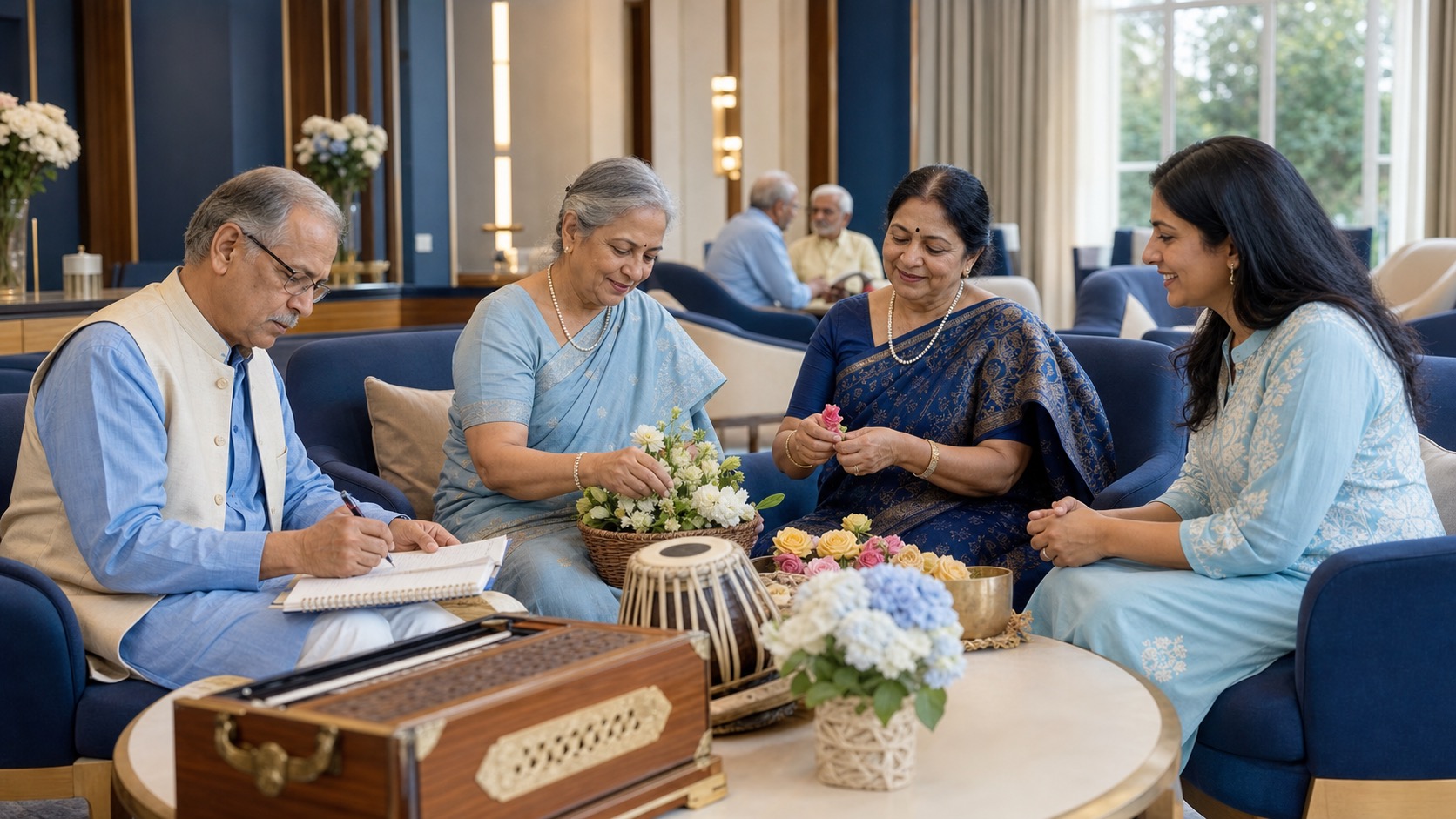 Satsang, seva, music, meals, and shared calendars can turn devotion into visible social support.
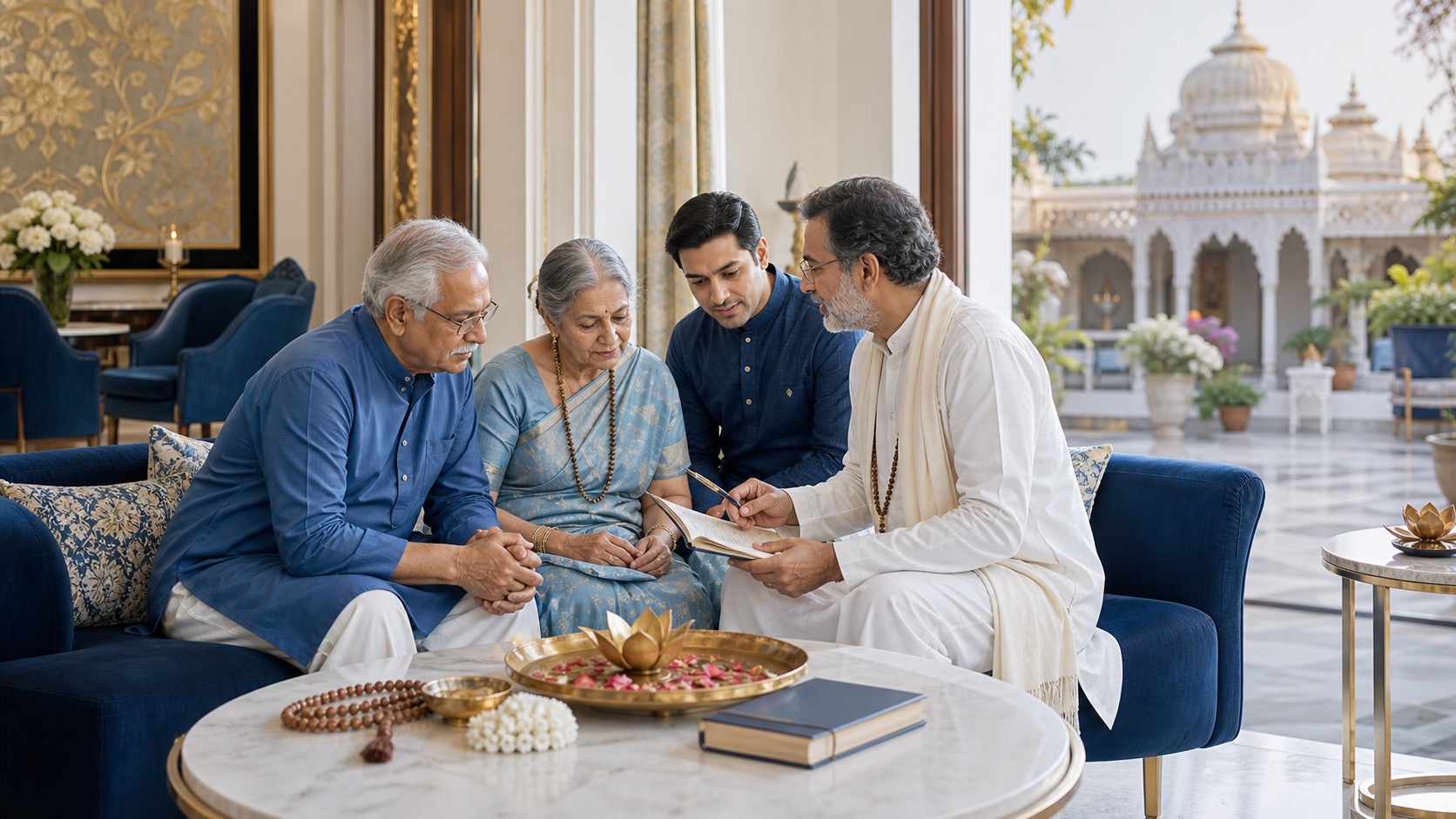 Spiritual ageing works best when purpose, health, community, access, and family voice are planned together.
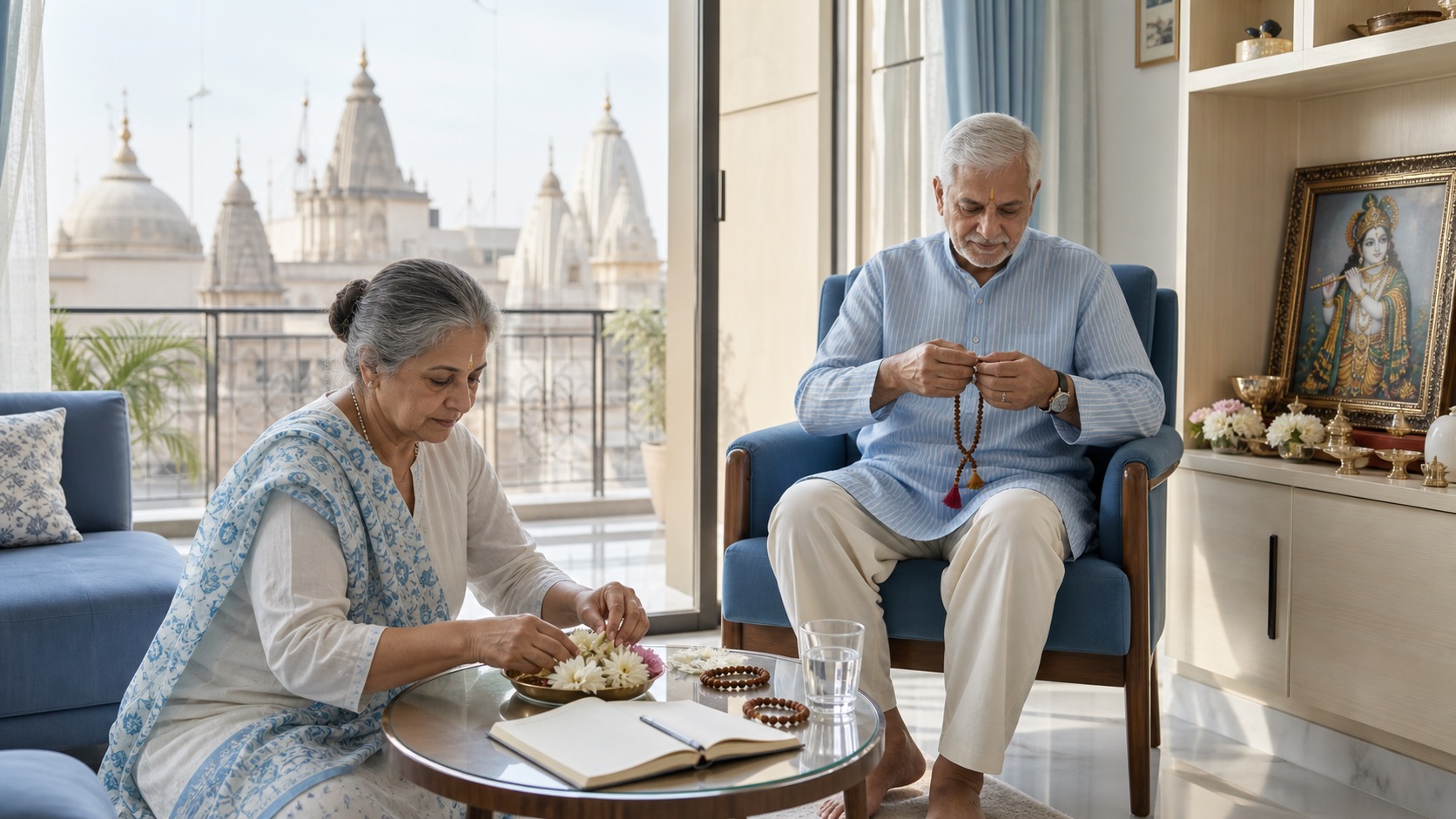 A daily spiritual routine should be gentle, repeatable, safe, and integrated with rest, meals, movement, and medicine timing.
At a glance
Spiritual ageing needs both meaning and support
The strongest spiritual retirement setting does not ask seniors to ignore the body. It brings devotion, safety, companionship, rest, family clarity, and dignity into one daily rhythm.
Questions families ask
Should seniors attend late-night festival events?
Only when it fits the elder's sleep, medicine schedule, stamina, transport, and personal wish. Morning or early evening alternatives are often better. A family should not treat late-night attendance as proof of devotion.
How can communities include frail seniors?
Use short senior windows, home rituals, recorded music, prasad delivery, small-group blessings, chairs with arms, lower-volume areas, family-supported participation, and a way to leave without embarrassment.
What makes a festival elder-friendly?
Clear timing, seating, shade, toilets, hydration, medicine and meal planning, safe paths, manageable sound, rest spaces, transport, and respectful roles. The elder should be able to stop without guilt.
What should families do if the elder gets tired but refuses to leave?
Offer a face-saving exit: prasad at home, a shorter darshan, a seated blessing, or a return after rest. Avoid arguing in public. The escort should act early when there is dizziness, confusion, breathlessness, pain, or overheating.
How can a senior contribute without overexertion?
Give small bounded roles: choosing one song, blessing prasad packets, telling a story to children, arranging flowers while seated, welcoming guests for 20 minutes, or recording a festival memory.