Krishna Bhumi Logo
Krishna Bhumi

Functional Ability: A Better Way to Think About Ageing

Why families should judge ageing by ability, environment, and purpose instead of only diagnoses and lab reports.

i

Quick Answer

Functional ability means the health-related abilities that let an older adult be and do what they value. It depends on intrinsic capacity, the environment, relationships, and support. This lens is more useful for families than asking only whether a parent has a disease.

Key numbers to know

5
ICOPE capacity domains

WHO highlights cognition, locomotion, vitality, psychological, and sensory capacity.

3
layers that shape ability

Person, environment, and family or community support.

12 km
Krishna Bhumi distance from Yamuna Expressway

Access matters because family visits and medical travel affect support.

Main guide

Why diagnosis alone is not enough

A parent can have normal reports and still struggle to climb stairs, remember medicines, or eat enough. Another parent may have chronic disease but remain active because the condition is managed and the environment is supportive.

Functional ability turns the conversation toward daily life: movement, self-care, relationships, safety, learning, contribution, and dignity.

Intrinsic capacity plus environment

Intrinsic capacity is what the person can draw on: cognition, movement, nutrition and energy, mood, vision, and hearing. Environment includes home design, lighting, paths, transport, toilets, social spaces, and nearby help.

Families often focus on the person and forget the environment. A slippery bathroom, dim corridor, isolated apartment, or inaccessible temple route can reduce ability even when the elder's medical condition is stable.

The Krishna Bhumi content angle

This elder-living series should repeatedly show how community design protects ability. Safe walking paths, benches, wellness routines, social calendars, spiritual spaces, and emergency plans are not decorative amenities. For older adults, they are functional supports.

This is a stronger argument than luxury alone. For elders, good design is health infrastructure.

6 abilities families should protect

  1. 01

    Ability to move safely

    Walking, standing, turning, and bathing safely are core independence markers.

  2. 02

    Ability to manage daily routines

    Meals, medicines, sleep, hygiene, and appointments should not depend on memory alone.

  3. 03

    Ability to stay socially connected

    Regular social contact protects mood, confidence, and willingness to stay active.

  4. 04

    Ability to participate spiritually

    For many elders, temple visits, bhajan, satsang, and seva are central to meaning.

  5. 05

    Ability to ask for help

    Emergency contacts and trusted nearby people are part of independence.

  6. 06

    Ability to make choices

    Dignity requires that support does not erase preference, routine, or voice.

Functional ability planning map

FactorWhat to WatchFamily Action
PersonStrength, balance, memory, mood, appetite, hearing, vision.Track changes monthly and discuss concerns early.
HomeBathroom safety, lighting, steps, clutter, seating, kitchen access.Complete a room-by-room senior safety audit.
CommunityWalking paths, benches, social routine, spiritual access, meals.Choose environments that make healthy routines easy.
HealthcareDoctor access, medicine review, preventive checks, therapy support.Keep records and one escalation plan.
FamilyCaregiver availability, NRI coordination, emergency roles.Assign responsibilities before a crisis.

Care in practice

Three scenes that show how the advice can look in daily family life, clinical planning, and community routines.

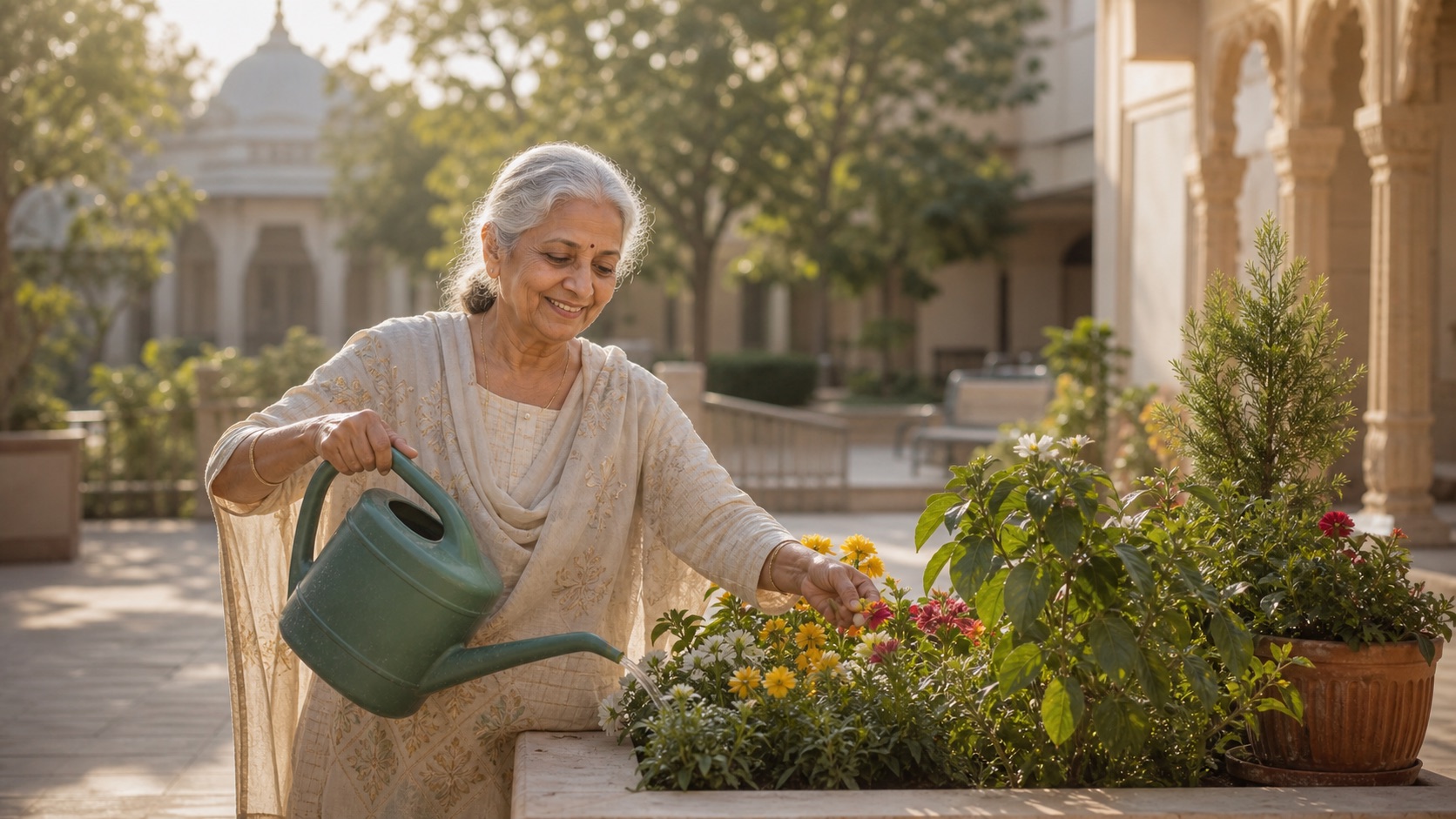
Happy Indian senior woman gardening in a safe community courtyard
Function is not just medical status. It is the ability to keep doing meaningful daily activities.
Happy Indian senior couple walking on a safe landscaped community path in Vrindavan
Healthy ageing is easier when the environment supports movement, rest, safety, and social connection.
Indian elderly man reading on a balcony while senior neighbors wave from a community garden
Independence is strongest when help is nearby but the elder still controls daily choices.

At a glance

Functional ability equation

Ability improves when the person, place, care plan, and community all work together.

5
ICOPE capacity domains

WHO highlights cognition, locomotion, vitality, psychological, and sensory capacity.

3
layers that shape ability

Person, environment, and family or community support.

12 km
Krishna Bhumi distance from Yamuna Expressway

Access matters because family visits and medical travel affect support.

Before you act

This article is for education and family planning only. It does not replace advice from a qualified doctor, geriatrician, physiotherapist, psychiatrist, dietitian, or other licensed professional. Seek urgent medical help for sudden weakness, chest pain, severe breathlessness, fainting, serious injury, or sudden confusion.

Questions families ask

Is functional ability a medical term?

It is used in healthy ageing frameworks to describe the abilities that allow older adults to do what they value.

How can a family measure it?

Track walking, bathing, dressing, meals, medicines, mood, memory, social contact, and emergency readiness.

Why does environment matter so much?

A supportive environment can compensate for some age-related changes. A risky environment can make mild changes dangerous.

Does needing support mean loss of independence?

No. Good support can preserve independence by reducing preventable risks.

How does spiritual life fit into functional ability?

For many elders, spiritual participation is a valued activity. A healthy ageing plan should help preserve it safely.

Sources and review notes

Last reviewed: 2026-05-30. The data points in this guide are based on official public-health and ageing sources where available.