Krishna Bhumi Logo
Krishna Bhumi

Group Meals for Seniors: Nutrition Watchpoints Families Should Track

A practical senior dining guide for families: how to observe appetite, fluids, chewing, swallowing, medicines, mood, dignity, and meal support without policing the elder.

Quick Answer

Group meals help older adults when they turn food into a visible daily health rhythm, not when they become a decorative dining amenity. Families should observe one real meal before judging a senior community: attendance, portion eaten, protein and fluids, chewing or swallowing trouble, medicine timing, fatigue, mood, seating comfort, assistance style, and whether the elder feels respected. Persistent poor intake, weight loss, dehydration, coughing or choking, missed medicines, sudden appetite change, or eating withdrawal should trigger medical, dental, dietitian, or mental health review.

This guide is for education only and does not replace advice from a qualified doctor, psychiatrist, psychologist, counsellor, dietitian, or other licensed professional. If someone talks about self-harm, suicide, being unsafe, or is in immediate danger, seek urgent local emergency care or a qualified crisis service.
7
day meal log

Track meals, fluids, appetite, and missed routines before assuming the problem is attitude.

3
urgent signs

Choking, dehydration, and rapid weight loss need qualified review, not menu debate.

1
dining lead

One person should own meal observations, special diets, and family updates.

Main guide

Judge the meal, not the menu

Families often ask for the menu and stop there. A menu can look polished while the elder eats half a roti, drinks almost no water, coughs through dal, misses a diabetes meal window, or feels embarrassed because help is offered loudly.

The real question is what happens during an ordinary meal. Does the elder arrive? Do they sit comfortably? Can they hear conversation? Do they eat enough protein and fluids? Are medicines and meal timing aligned? Does staff notice change without scolding?

A shared meal is useful because it makes daily life visible. It can show appetite loss, loneliness, swallowing concerns, dental pain, depression risk, hand weakness, confusion, and poor fit with the dining environment.

Track a seven-day meal picture

One small lunch does not prove a nutrition problem. Track seven days: breakfast, lunch, dinner, snacks, fluids, appetite, weight concern, missed medicines, coughing, fatigue after meals, and whether the elder ate alone or with others.

This is especially important for NRI children. A parent may say I ate properly on the phone, but a meal log may show skipped breakfast, weak evening intake, low water, or refusal to attend the dining room after a conflict.

Use the log to guide action. Poor intake may be caused by illness, pain, dental trouble, swallowing difficulty, medicine side effects, depression, grief, constipation, diabetes timing, kidney or heart restrictions, or simply food that does not feel culturally acceptable.

Protect nutrition without policing the plate

Older adults may need fewer calories than before while still needing nutrient-dense food, enough protein, fluids, and attention to chronic conditions. That does not mean every meal should become a lecture.

Do not shame slow eating, small appetite, soft-food preference, dentures, tremor, or needing help. Shame makes elders hide the problem. A better approach is to ask what makes eating difficult and then adjust texture, timing, seating, assistance, portions, or clinical support.

If the elder has diabetes, kidney disease, heart disease, swallowing difficulty, frailty, major weight loss, cancer recovery, or repeated hospitalizations, meal planning should be individualized by qualified professionals.

Keep cultural comfort, but watch health tradeoffs

Food is identity, especially for older adults in India. Vegetarian preference, fasting days, spice tolerance, onion-garlic rules, festival foods, prasad, meal timing, and familiar grains can decide whether the elder eats with dignity.

Cultural comfort should not be dismissed as fussiness. But it also should not hide risk. Repeated fasting with diabetes, low fluids in hot weather, very low protein intake, or avoiding entire food groups after illness needs careful review.

A good dining program can support both: familiar food, safe textures, controlled salt or sugar when needed, hydration prompts, portion flexibility, and respectful escalation when intake becomes unsafe.

Design the dining room for independence

Senior dining is not only about food. It is about paths to the table, lighting, handrails, back support, noise, serving height, toilet access, water visibility, staff tone, and whether assistance happens discreetly.

Many elders stop eating in groups because the room is too loud, the walk is tiring, the chair hurts, the table is too low, they fear spilling, they cannot hear, or they do not want to be corrected in public.

For community operators, the dining room should be a daily observation point. Attendance, appetite, swallowing, hydration, mood, and withdrawal should be noticed respectfully and shared through a clear family update process when risk appears.

Know when a meal issue needs clinical review

Some meal changes are temporary. Others are warning signs. Coughing or choking while eating, wet-sounding voice after swallowing, sudden weight loss, dehydration, repeated vomiting, severe constipation, confusion around meals, or refusal of food and medicines needs qualified review.

Mood matters too. Depression in older adults can show through appetite or weight change, sleep problems, low energy, and loss of interest. A parent who stops attending meals after grief, illness, or a friend moving away should not be labelled stubborn.

Group meals can reveal the problem, but they do not treat it by themselves. Families should use the observation to involve the right support: doctor, dentist, dietitian, speech/swallowing professional, mental health professional, or emergency care when needed.
12-point senior meal observation checklist

01

Attendance

Note whether the elder attends meals, skips them, arrives late, or leaves early.

02

Portion actually eaten

Track what is eaten, not only what is served. Half-eaten meals matter.

03

Protein and nutrient density

Check whether the meal includes useful protein, vegetables, grains, and appropriate fats for the elder's condition.

04

Fluid intake

Notice water, buttermilk, soup, or other allowed fluids. Low thirst is common with age.

05

Chewing comfort

Avoiding chapati, raw salad, nuts, or harder foods may point to dental, denture, or texture problems.

06

Swallowing safety

Coughing, choking, wet voice, or fear of swallowing should not be ignored.

07

Medicine timing

Meals should not clash with diabetes medicines, pain medicines, or other prescribed timing needs.

08

Energy after meals

Watch unusual sleepiness, breathlessness, pain, or fatigue after dining.

09

Hand and posture support

Tremor, arthritis, weakness, low table height, or poor back support can reduce intake.

10

Mood at the table

Eating alone inside a crowd, irritability, tearfulness, or loss of interest can signal distress.

11

Cultural fit

Food rules, fasting, spice tolerance, familiar textures, and festival food need respectful planning.

12

Dignity of assistance

Support should be quiet and adult. Public correction often makes elders withdraw.

Meal signs and sensible next step

Community AreaWhat to WatchFamily Action
Skipped mealsMisses breakfast or dinner, says not hungry, or eats only tea and biscuits.Track seven days, check mood, pain, constipation, medicines, dental comfort, and illness.
Coughing or chokingCoughs during meals, avoids liquids, has a wet voice, or fears swallowing.Seek medical or swallowing review. Do not solve this only with softer food.
Loose clothes or visible weight lossClothes hang loose, family notices thinning, or staff sees smaller portions over time.Arrange medical and nutrition review and check whether food access, appetite, or illness changed.
Low fluidsDry mouth, dizziness, constipation, dark urine, or very little water at meals.Review hydration prompts and medical restrictions. Seek care quickly if dehydration signs are strong.
Slow or messy eatingFood spills, hands shake, posture collapses, or the elder stops before finishing.Check table height, utensils, arthritis, tremor, weakness, and whether discreet assistance is needed.
Refuses the dining roomEats in the room despite safe mobility, or avoids a table after conflict or embarrassment.Ask about noise, seating, language, privacy, bullying, grief, and staff tone before blaming the elder.
Fasting becomes riskyRepeated fasting despite diabetes, frailty, dehydration, or recent illness.Respect faith while involving family and clinicians to create safer fasting or alternative rituals.
NRI children hear all goodParent reports eating well, but staff or relatives see skipped meals and low fluids.Use a weekly meal note with attendance, intake, fluids, concerns, and actions taken.

Community scenes

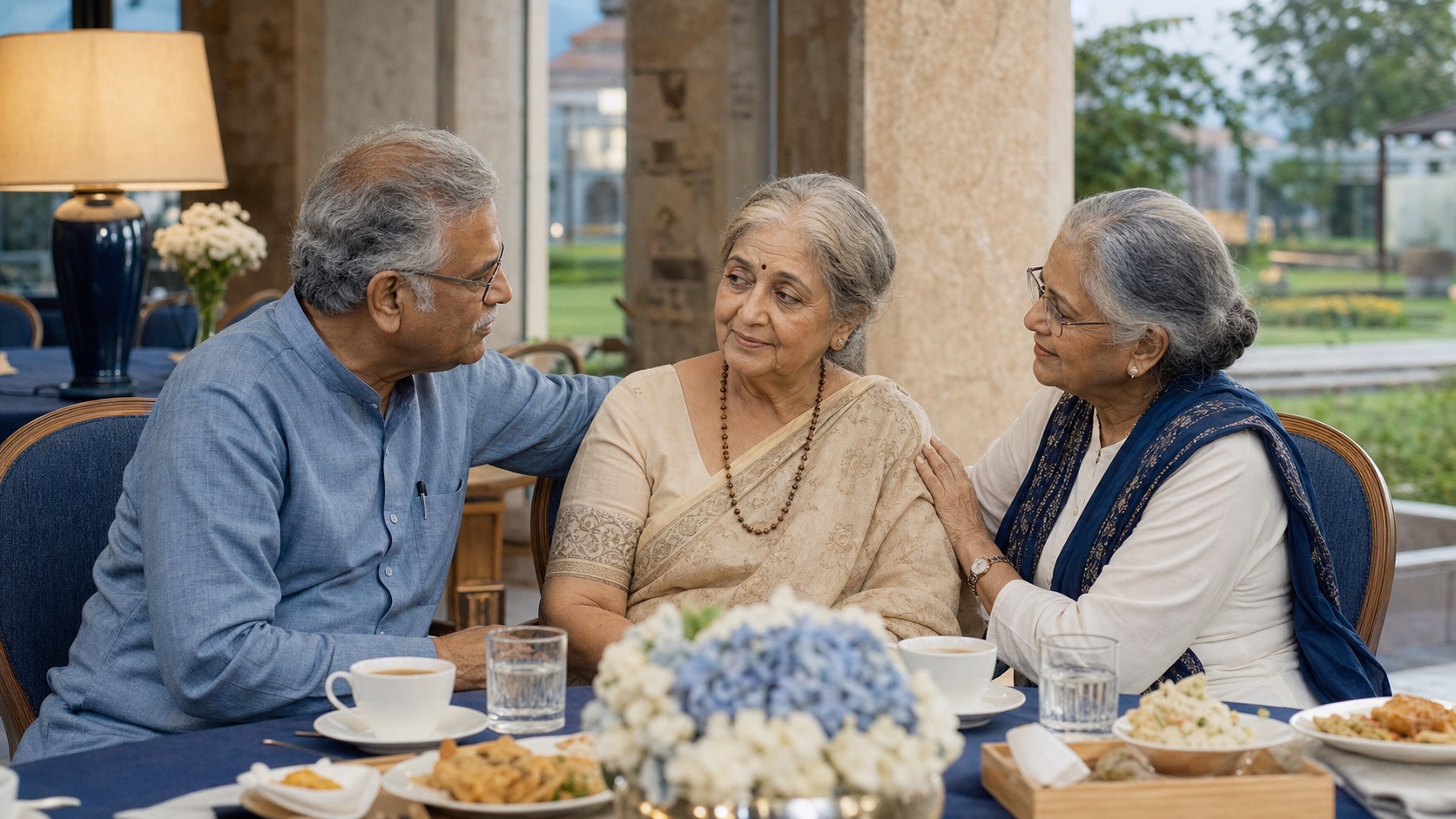
Older Indian adult being supported by senior friends over tea in a blue community dining lounge
Grief support should protect privacy while keeping food, sleep, health, and companionship from collapsing.
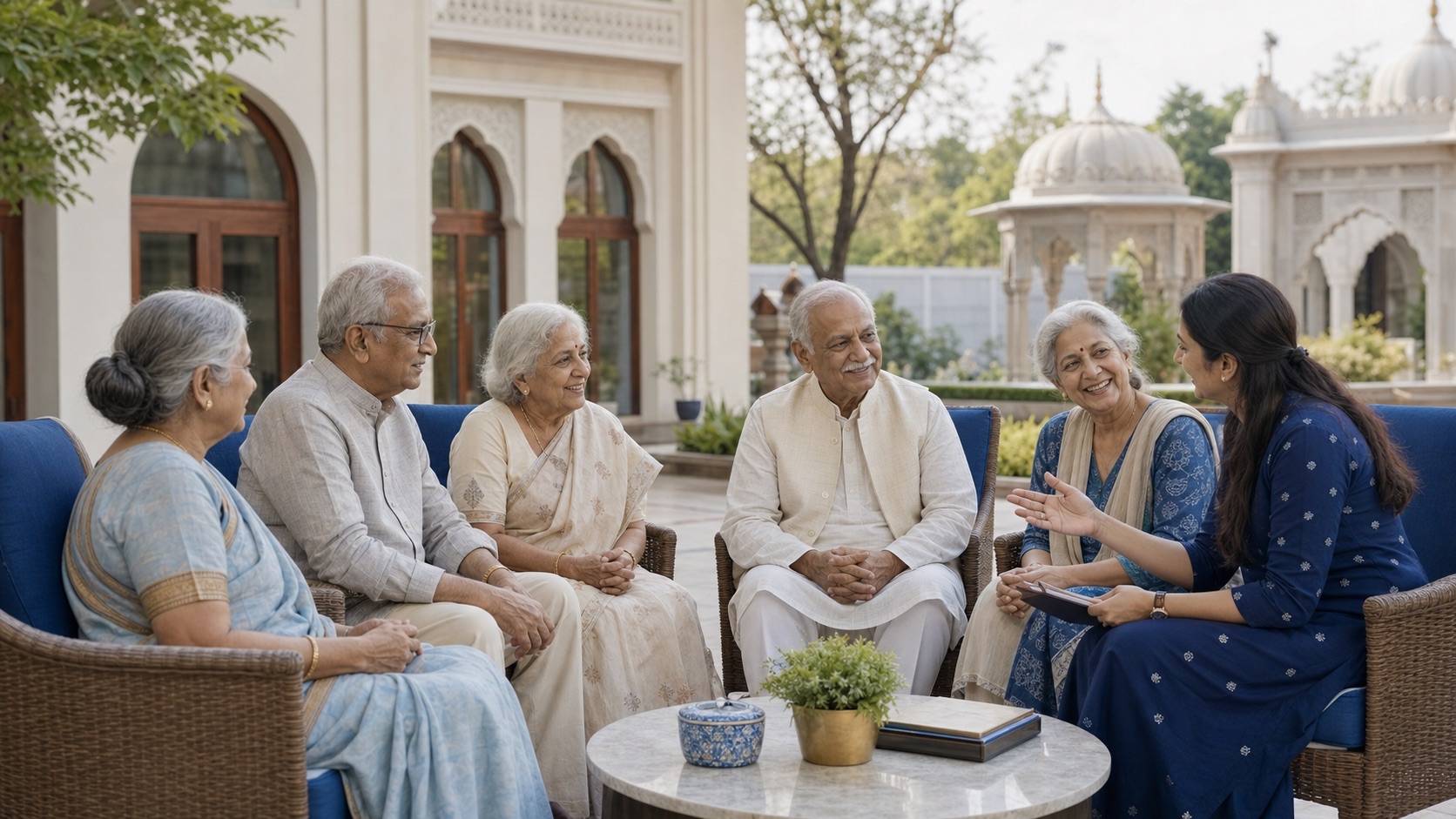
Indian seniors in a premium blue courtyard having a guided community conversation
Community living is strongest when everyday companionship is designed into the rhythm of the place.

At a glance

A good meal system protects nutrition, dignity, and visibility

A senior dining program is working when it helps elders eat enough, drink enough, stay connected, keep privacy, and get timely help when the table reveals a health change.

7
day meal log

Track meals, fluids, appetite, and missed routines before assuming the problem is attitude.

3
urgent signs

Choking, dehydration, and rapid weight loss need qualified review, not menu debate.

1
dining lead

One person should own meal observations, special diets, and family updates.

Questions families ask

Are group meals necessary for every older adult?

No. Some elders prefer private meals. But shared meals are useful when appetite, loneliness, routine, hydration, or daily observation are weakening. The elder should still have choice and privacy.

What should families observe during a trial meal?

Observe arrival, seating, noise, portion eaten, fluids, protein, chewing, swallowing, medicine timing, staff tone, help offered, and whether the elder seems comfortable after the meal.

What if the elder eats very little?

Do not shame them. Track the pattern for several days and review appetite, weight, medicines, mood, constipation, dental comfort, swallowing, pain, and chronic illness with qualified professionals.

Can community meals replace nutrition advice?

No. Chronic illness, weight loss, frailty, diabetes, kidney disease, heart disease, cancer recovery, and swallowing concerns need individualized professional guidance.

How should fasting or religious food rules be handled?

Respect them, then check safety. Fasting, low fluids, or restricted foods may need adjustment when diabetes, frailty, dehydration, medicine timing, or recent illness is present.

What should NRI children ask the community?

Ask for a weekly meal note: attendance, portion eaten, fluids, weight concern, missed meals, swallowing or chewing concerns, mood at meals, and whether any clinical review is needed.

Sources