Intergenerational Living: A Boundary Plan for Elder Families
A practical guide for making family visits, grandchild time, NRI trips, shared meals, and elder roles warm without turning older adults into unpaid labour or symbolic dependents.
Quick Answer
Intergenerational living helps older adults when it creates reliable affection, shared memory, practical support, and a feeling of being included without taking away privacy, rest, consent, or control over time. It becomes harmful when elders are treated as babysitters, family symbols, household managers, unpaid counsellors, or passive recipients of decisions. A useful family plan defines visit length, quiet hours, grandchild roles, money boundaries, medical decision roles, emergency contacts, NRI visit purpose, and what the elder can decline without guilt.
Connection and privacy must both be protected, not traded against each other.
Short, calm contact often teaches more than a full-day visit that exhausts the elder.
The elder should have a say before visits, roles, routines, or care decisions are changed.
Main guide
Start by naming what family contact is for
Family contact is not automatically useful just because it is family. It may be for affection, decision-making, storytelling, festival participation, health review, grandchild bonding, financial planning, or simple companionship. Each purpose needs a different format.
If the purpose is companionship, a quiet tea may be better than a noisy gathering. If the purpose is medical planning, children need documents and time with doctors. If the purpose is grandchild bonding, the visit should be short enough that the elder is not left exhausted.
Protect the elder from becoming a role instead of a person
Families often call elders blessings, roots, tradition, or responsibility. Those words can be loving, but they can also hide the elder's actual preferences: when they want quiet, which food suits them, whether children are too noisy, whether visitors tire them, or whether they feel overruled.
Respect means asking before planning, not only informing. The elder should be able to say no to a visit, delay a call, leave a group meal, refuse a grandchild duty, or ask for private time without being treated as ungrateful.
Make grandchild time safe and realistic
Grandchildren can bring joy, memory, humour, and continuity. They can also bring noise, infection risk, clutter, running, questions, and emotional overload. A good visit has a beginning, an activity, and an end.
Use quiet activities: looking at old photos, one story, simple prasad preparation, a short walk, bhajan listening, drawing, folding clothes, or a family recipe. Avoid turning the elder into default childcare, especially when mobility, hearing, continence, pain, or fatigue is present.
Separate family love from care responsibility
Adult children may visit out of love but quickly turn the visit into instructions: medicines, food, money, staff, repairs, documents, and complaints. Some of that is necessary, but it should not consume every family interaction.
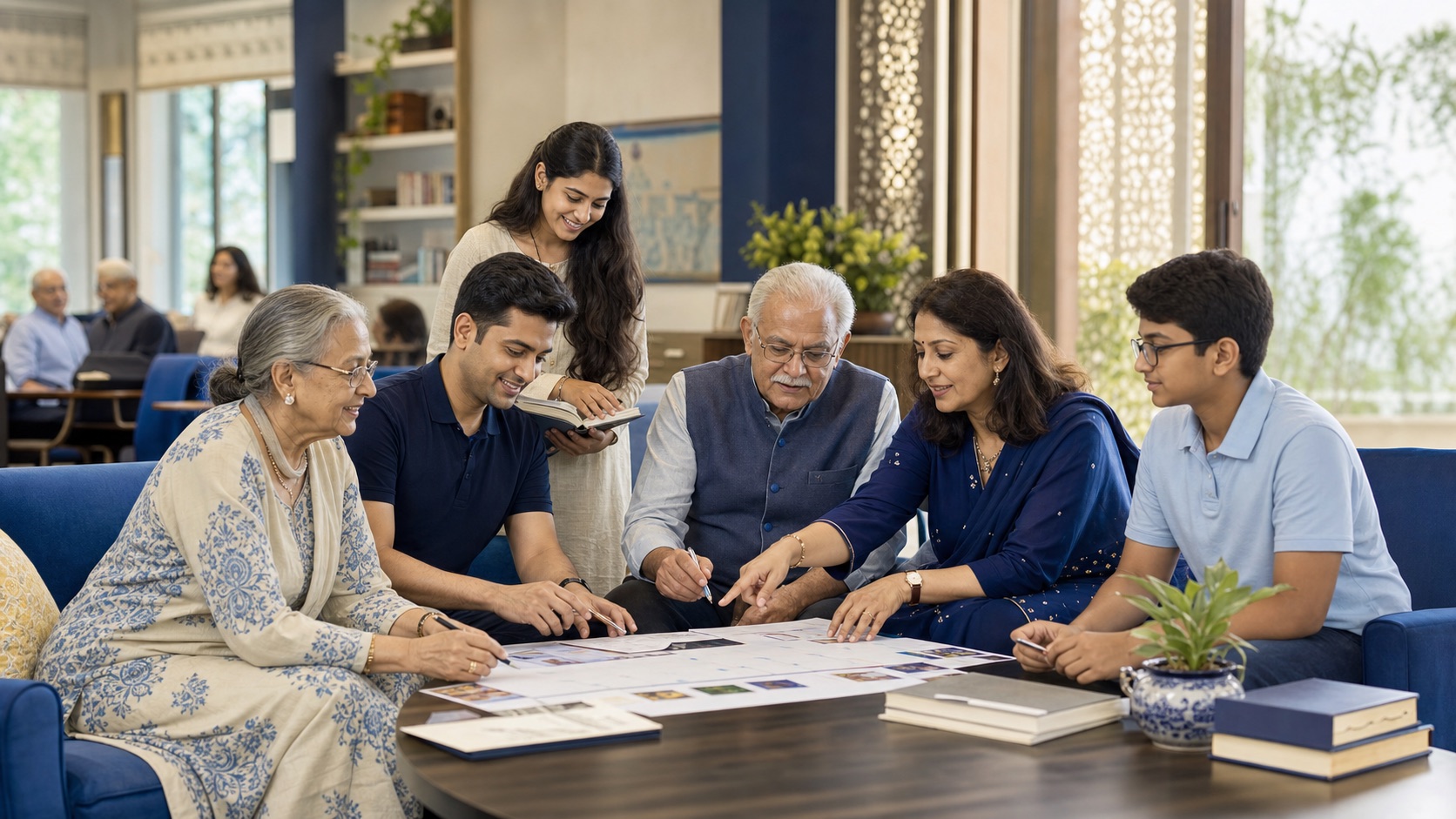
Define who handles medical appointments, who tracks documents, who pays bills, who speaks to staff, and who provides emotional companionship. When roles are unclear, visits become tense and the elder becomes the meeting agenda.
Plan NRI visits before the flight is booked
NRI children often arrive with limited days, guilt, and a long decision list. Without planning, the visit becomes a crisis audit. Before travel, collect the parent's weekly routine, medicines, doctor list, emergency contacts, finances, helper details, and what the parent actually wants from the visit.
A good NRI visit should include one health review, one document review if needed, one slow meal, one quiet outing, one private conversation with the parent, and one no-agenda day. Not every visit should be a relocation debate.
Use community spaces to protect privacy
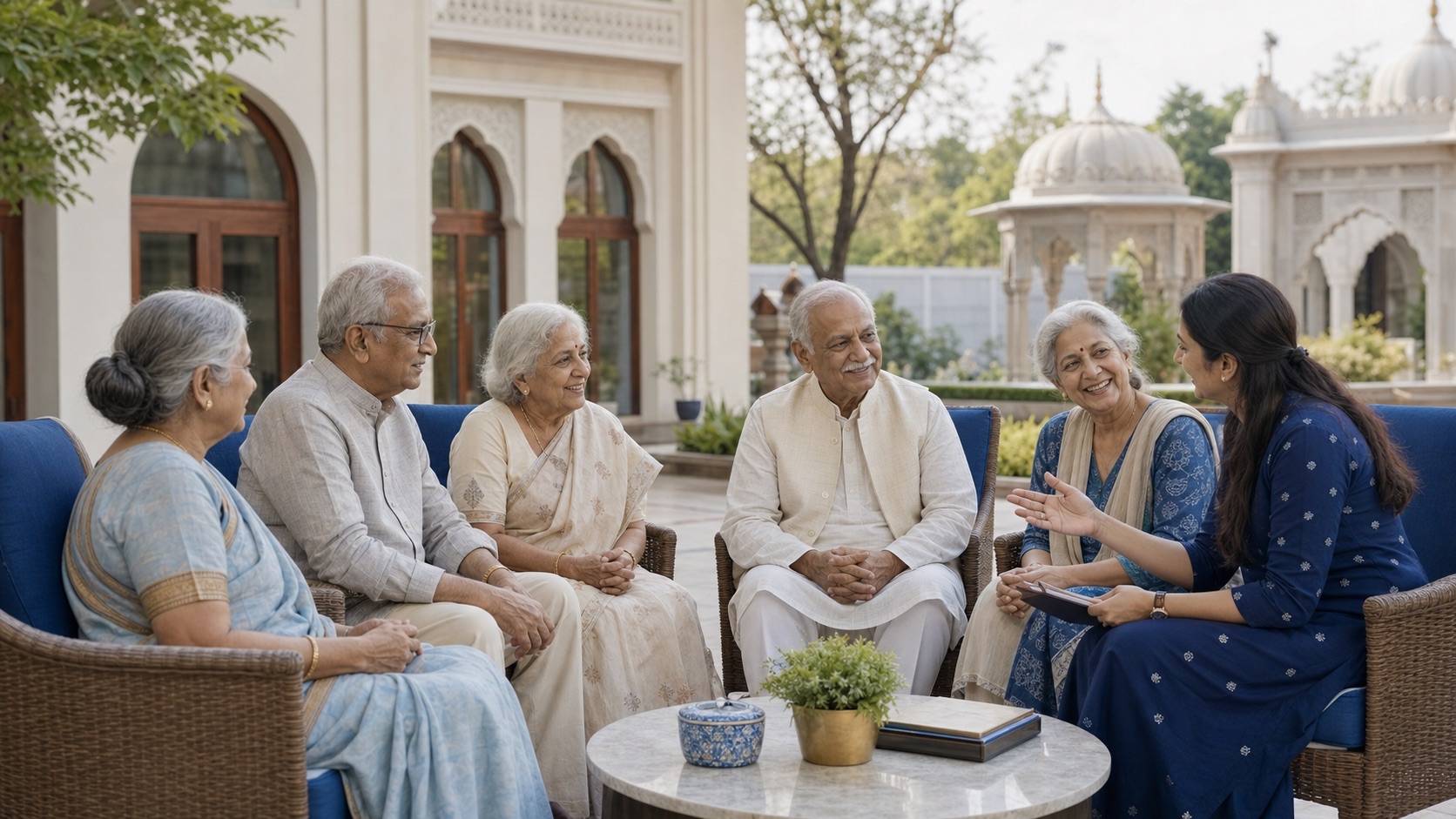
Senior communities can support intergenerational life when families can meet in gardens, dining areas, temple routes, lounges, guest spaces, and shaded walkways instead of crowding the elder's room.
Neutral spaces let the elder host without losing privacy. They also help staff notice whether a visit leaves the elder energised, tired, anxious, skipped on meals, or quieter than usual.
Family visit plan before everyone arrives
Ask the elder first
Confirm preferred day, time, food, room privacy, outing comfort, and who they actually want to see.
Set a visit length
Start with short visits and extend only if the elder remains alert, comfortable, and interested.
Protect quiet hours
Tell relatives and children when the elder rests, prays, takes medicines, eats, or avoids calls.
Give children a simple role
One drawing, one story, one photo album, one short walk, or one song works better than uncontrolled noise.
Keep elder roles voluntary
Grandparenting, teaching, blessing, advising, or storytelling should be offered, not demanded.
Separate admin from affection
Do documents, medicines, bills, and staff issues in a fixed slot so the whole visit is not management.
Use shared spaces
Meet in lounges, gardens, dining areas, or temple routes when the elder's room needs privacy.
Plan NRI calls
Use predictable call times and a local observer so distant children are not guessing from mood alone.
Watch after-effects
Tiredness, skipped meals, irritability, poor sleep, or withdrawal after visits means the format needs change.
Review family conflict
If siblings disagree, use the elder's stated preferences, health needs, and care capacity as the base.
Where intergenerational living helps and where it fails
| Community Area | What to Watch | Family Action |
|---|---|---|
| Grandchildren | Joy, memory, and affection mixed with fatigue, noise, infection risk, or fall hazards. | Use short, structured activities and make one adult responsible for the child. |
| Adult children | Support turns into instructions, guilt-driven control, or overprotection. | Ask what support feels respectful and keep one part of the visit agenda-free. |
| NRI visits | Crisis-only travel, rushed relocation decisions, and no time for ordinary companionship. | Prepare documents before travel and reserve time for slow meals and private conversation. |
| Community spaces | No place to meet except the elder's room, causing crowding and loss of privacy. | Use accessible shared spaces with toilets, seating, shade, and quiet exits. |
| Family decisions | Children decide moves, helpers, money, or routines without elder consent. | Use supported decision-making wherever possible and document the elder's preferences. |
| Care burden | One child, spouse, or grandchild becomes the invisible manager for everyone. | Assign roles openly: health, money, documents, visits, staff, and emotional companionship. |
| Festivals | Large gatherings bring meaning but also crowds, heat, noise, late nights, and exhaustion. | Create a shorter elder-friendly version with rest, seating, medicines, and exit plan. |
| After-visit decline | The elder sleeps poorly, eats less, withdraws, or becomes irritable after family contact. | Reduce length, noise, and decision pressure; check pain, mood, and fatigue. |
Community scenes


At a glance
Family connection needs consent, structure, and recovery time
The best family contact leaves the elder seen and included, not managed, exhausted, or overruled.
Connection and privacy must both be protected, not traded against each other.
Short, calm contact often teaches more than a full-day visit that exhausts the elder.
The elder should have a say before visits, roles, routines, or care decisions are changed.
Questions families ask
Is intergenerational living always better for seniors?
No. It helps when it is respectful, voluntary, and matched to stamina. It can harm wellbeing if it removes privacy, creates noise, overloads the elder, or turns family affection into control.
Can senior communities support family bonds?
Yes. Good shared spaces, predictable visiting rhythms, accessible dining, guest areas, gardens, and safe walking routes can make family time easier without crowding the elder's private room.
What if adult children disagree?
Use the elder's stated preferences, medical needs, daily function, safety, finances, and sustainable care capacity as the decision base. Do not let sibling guilt become the care plan.
Should grandparents babysit?
Only if they want to and it is safe. Grandchild time can be meaningful, but routine childcare should not be assumed when the elder has pain, fatigue, mobility limits, memory concerns, or a need for rest.
What should NRI children do before visiting?
Collect the weekly routine, medicines, doctor list, documents, emergency contacts, helper details, and the parent's own priorities. Then plan both practical review and unhurried companionship.
How do families know a visit was too much?
Watch the next 24 hours: poor sleep, skipped meals, irritability, pain flare, withdrawal, confusion, or refusal of the next activity means the visit format should be lighter.