Loneliness in Old Age: A Family Plan for Daily Connection
A practical guide for families who need to tell quiet solitude from harmful isolation and build daily connection through visits, meals, movement, purpose, and community living.
Quick Answer
Loneliness in old age becomes a care problem when isolation starts changing food, sleep, movement, mood, medicines, confidence, cognition, or safety. Families should first separate chosen solitude from unwanted isolation, then check for depression, grief, hearing loss, vision loss, pain, mobility fear, medication effects, transport barriers, and recent life changes. A useful plan creates predictable daily contact, shared meals, safe movement, low-pressure activities, family call rhythm, and someone local who notices change. Community living matters when it makes connection part of the environment instead of depending on occasional concern.
Chosen solitude can be healthy; unwanted isolation that changes function needs a plan.
Track meals, calls, movement, sleep, mood, medicines, and face-to-face contact for one week.
Every distant family needs one nearby person who can notice change and visit when needed.
Main guide
Start by separating solitude from isolation
Some older adults genuinely enjoy quiet, prayer, reading, gardening, or limited social contact. That is not automatically a problem. The concern begins when the quiet is unwanted, distressing, or linked with shrinking daily life.
Families should compare what the parent says with what the week shows: meals skipped, calls avoided, curtains closed, medicines missed, walking reduced, temple visits stopped, old interests abandoned, or one helper becoming the parent's only regular human contact.
Check practical barriers before blaming mood
Loneliness is not always solved by telling a parent to be more positive. Hearing loss can make conversation tiring. Poor vision can make outings frightening. Knee pain, incontinence, heat, transport, fear of falling, grief, depression, and medicine side effects can all shrink social life.
A useful family review asks what changed and what blocks participation now. If the parent stopped going out after a fall, after a spouse died, after a helper left, or after eyesight worsened, the solution must address that barrier, not only schedule more calls.
Build connection into the week
Connection works best when it is predictable. One dramatic weekend visit followed by ten silent days is less useful than small repeatable touchpoints: morning greeting, shared meal, walking partner, neighbour tea, temple visit, hobby group, family call, or a simple task the elder owns.
The plan should include daily contact, weekly outside movement if safe, one meaningful role, one shared meal opportunity, one family call rhythm, and a fallback if the parent refuses contact for several days.
Use community living as an operating system, not entertainment
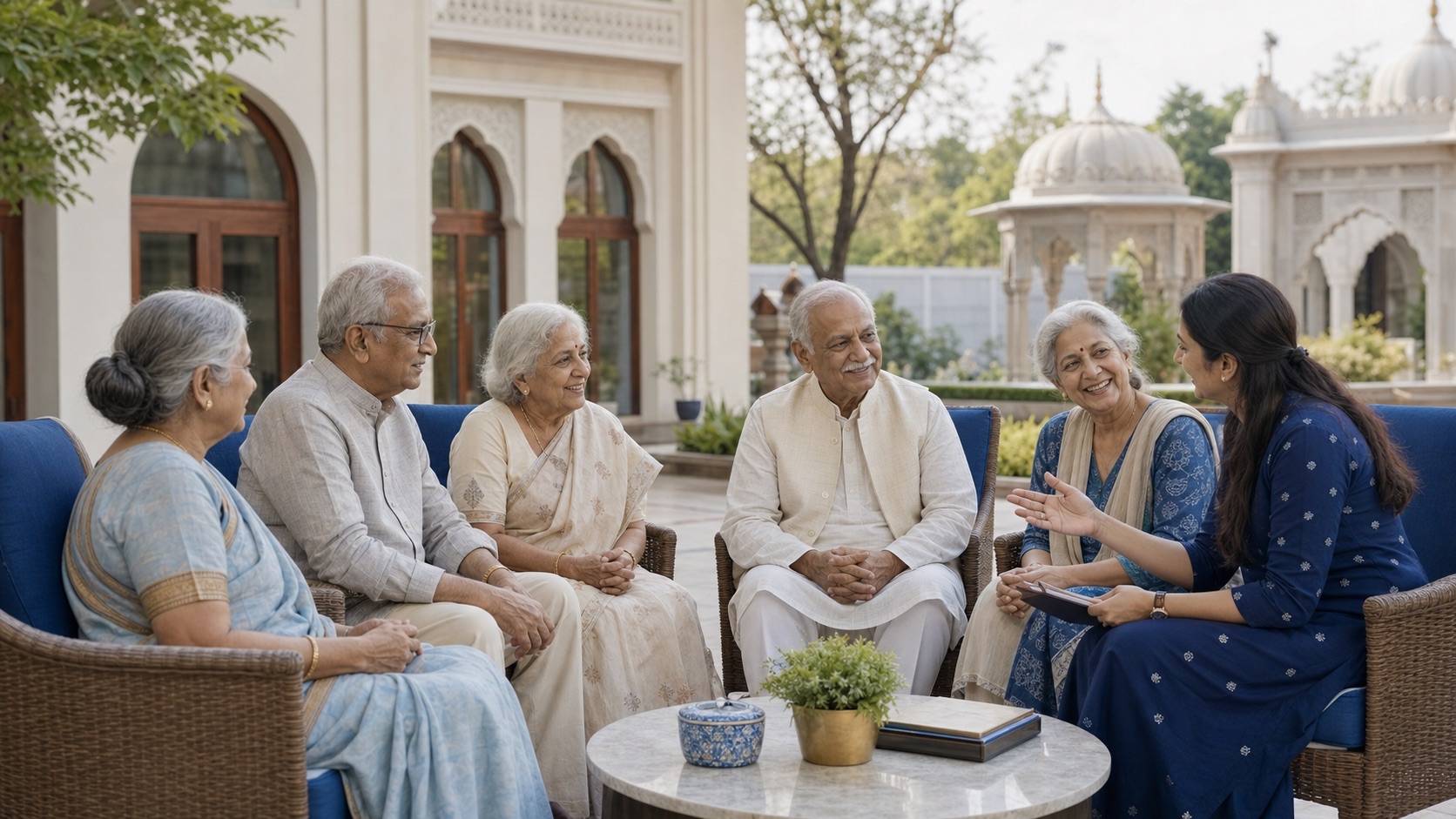
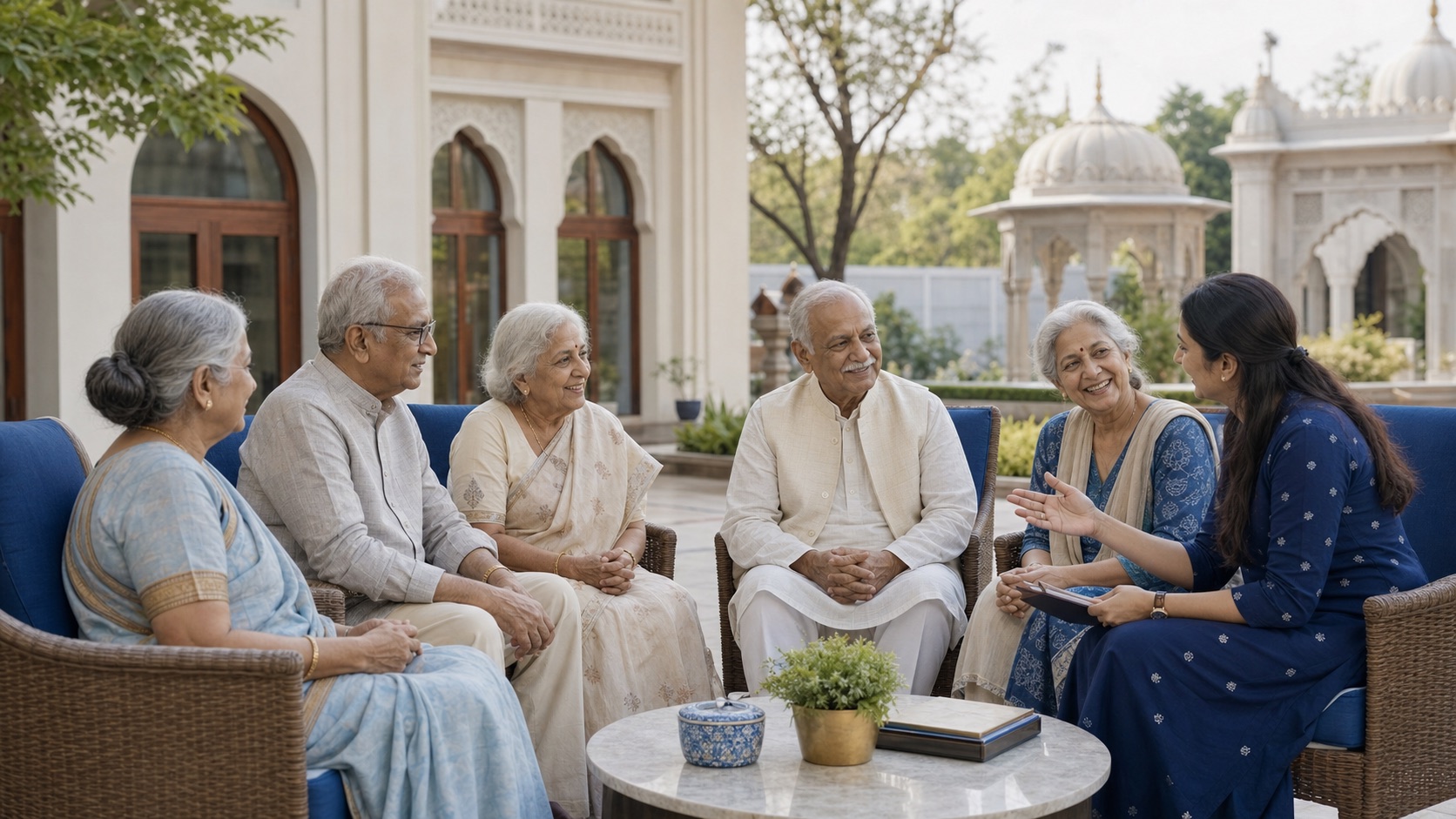
At home, connection may depend on one visiting child, one neighbour, or one domestic worker. In a well-run senior community, greetings, shared meals, walking routes, satsang, classes, staff check-ins, and familiar faces can become the default day.
The point is not noisy programming. The best community design gives low-pressure participation: the elder can join, decline, return, sit quietly, and still be noticed if meals, mood, movement, or hygiene change.
Know when loneliness needs clinical attention
Loneliness is not the same as depression, but they can overlap. Families should take professional help seriously if the parent shows persistent sadness, hopeless words, sleep or appetite change, loss of interest, unexplained pain, poor self-care, or thoughts of not wanting to live.
Do not present spiritual life, family calls, or community living as a substitute for mental health care. They can support routine and belonging, but depression, grief complications, cognitive change, and medication concerns need qualified review.
Vrindavan can make connection feel familiar
For many elders, devotional rhythm, temple proximity, bhajan, seva, and Braj cultural cues make connection feel natural rather than forced. A shared aarti, quiet satsang, gentle seva role, or familiar festival preparation can restore identity as much as activity.
That value depends on safety and choice. Spiritual routine should respect energy, mobility, health, privacy, and the elder's own preference. It should never become pressure to perform devotion publicly.
One-week loneliness review for families
Meals
Track whether meals are eaten fully, skipped, delayed, or taken alone every day.
Face-to-face contact
Write down who the parent actually sees in person, not only who calls.
Movement
Note whether the parent leaves the room, home, building, or courtyard safely and willingly.
Sleep and daytime energy
Watch oversleeping, late waking, daytime fatigue, night anxiety, or unusual restlessness.
Mood and words
Listen for hopelessness, irritability, repeated worry, or comments that life has become empty.
Old interests
Check whether bhajan, reading, gardening, cooking, phone calls, prayer, or temple visits have stopped without replacement.
Health barriers
Ask whether pain, hearing, vision, continence, transport, fear of falling, or medicine side effects are blocking contact.
Helper dependency
If one helper is the entire social world, the arrangement is fragile and should not be the whole plan.
Festival and grief dates
Mark holidays, spouse death anniversaries, birthdays, and family events that may intensify loneliness.
Local responder
Name one nearby person who can check in physically when calls feel flat or the parent does not answer.
From warning sign to practical response
| Community Area | What to Watch | Family Action |
|---|---|---|
| Skipped meals | Food remains untouched, appetite drops, or weight seems to be falling. | Arrange shared meals, nutrition review, medicine check, and someone to notice daily intake. |
| Calls become flat | Short answers, repeated phrases, low energy, or calls avoided for several days. | Ask a local person to visit, then review mood, sleep, pain, and recent losses. |
| Movement shrinks | The elder stops walking, visiting temple, meeting neighbours, or leaving the home. | Check fall fear, pain, transport, heat, footwear, lighting, and safe walking support. |
| One helper is everything | The helper is cook, companion, observer, emergency caller, and emotional support. | Add family visibility, backup contact, social routine, and community comparison if risk is rising. |
| Loss of interest | Prayer, music, reading, hobbies, or calls stop without a new routine. | Offer one small role, not a busy schedule: tea duty, flower sorting, story call, or gentle seva. |
| Hopeless words | Comments about being a burden, having no reason, or not wanting to continue. | Do not dismiss it. Arrange medical or mental health review and increase immediate support. |
| NRI family anxiety | Children call often but remain unsure what is really happening day to day. | Create a weekly observation note and a named local responder instead of relying only on calls. |
| Community visit | Parent resists the word community because it sounds like abandonment. | Use a no-decision meal, satsang, or day visit to test comfort without forcing a move. |
Community scenes


At a glance
Connection is a care layer when it is designed into the day
A useful community plan protects privacy while making meals, movement, purpose, companionship, and early noticing easier to sustain.
Chosen solitude can be healthy; unwanted isolation that changes function needs a plan.
Track meals, calls, movement, sleep, mood, medicines, and face-to-face contact for one week.
Every distant family needs one nearby person who can notice change and visit when needed.
Questions families ask
Is loneliness the same as depression?
No. Loneliness is a painful gap between desired and actual connection. Depression is a medical condition that needs professional evaluation and treatment. They can overlap, so persistent sadness, hopeless words, appetite change, poor sleep, or loss of interest should be taken seriously.
Can phone calls from children solve loneliness?
Calls help, especially when they are predictable and warm. But many elders also need local face-to-face contact, shared meals, movement, and someone nearby who notices if the day is changing.
Should an introverted parent be pushed into activities?
No. The goal is not forced socializing. Offer low-pressure options such as shared tea, a quiet walking partner, a short satsang, or sitting near familiar people, while respecting personality, privacy, and energy.
When should family consider community living?
Consider it when isolation is affecting meals, movement, safety, mood, medicines, or confidence, and the family cannot create reliable daily contact and local observation at home.
What should NRI children do first?
Do a one-week observation through a local relative, neighbour, helper supervisor, or trusted advisor: meals, mood, movement, medicines, visitors, and missed calls. Then decide what support gap is real.
Can spiritual routine help loneliness?
It can help when it is chosen, familiar, safe, and low-pressure. Bhajan, satsang, seva, and temple rhythm can support belonging, but they should not replace clinical help when depression or cognitive change is suspected.
Sources
- WHO - Mental Health of Older Adults
- WHO - Commission on Social Connection
- National Institute on Aging - Loneliness and Social Isolation
- National Institute on Aging - Cognitive Health and Older Adults
- National Institute on Aging - Mental Health Benefits of Exercise and Physical Activity
- National Institute of Mental Health - Older Adults and Mental Health
- MedlinePlus - Nutrition for Older Adults