Krishna Bhumi Logo
Krishna Bhumi

Memory Cafes in India: How Families Should Evaluate Dementia-Friendly Spaces

A practical guide to what memory cafes should do, who they are for, safety boundaries, caregiver value, and red flags families should not ignore.

Quick Answer

A memory cafe is a regular, dementia-friendly gathering where people with memory change and their caregivers can meet safely, socialize without shame, and receive practical support. It is not a clinic, cure, daycare substitute, or marketing event. A good memory cafe has trained hosts, predictable timing, low noise, safe exits, caregiver support, referral boundaries, and activities that invite participation without testing memory.

2
people served

The person with memory change and the caregiver both need support.

6
minimum standards

Trained host, calm room, safe exit, simple activity, caregiver time, and referral boundary.

0
memory tests

A dignity-first space never quizzes elders for public proof of decline.

Main guide

Start with the problem families actually face

Many Indian families stop taking a parent with memory change to restaurants, weddings, temples, parks, or relatives' homes because the outing becomes unpredictable. The elder may repeat questions, misplace items, refuse food, become suspicious, wander toward an exit, or feel humiliated when corrected.

The result is isolation for the elder and confinement for the caregiver. A memory cafe is valuable only if it solves that real problem: a predictable place where memory symptoms, slow responses, and caregiver fatigue are expected rather than treated as embarrassment.

Define what the cafe is and is not

A memory cafe should be a structured social-support session, not a diagnostic camp, religious pressure space, entertainment show, sales seminar, or unsupervised drop-off service. Families should know who runs it, who attends, how long it lasts, what happens if someone becomes distressed, and when medical review is recommended.

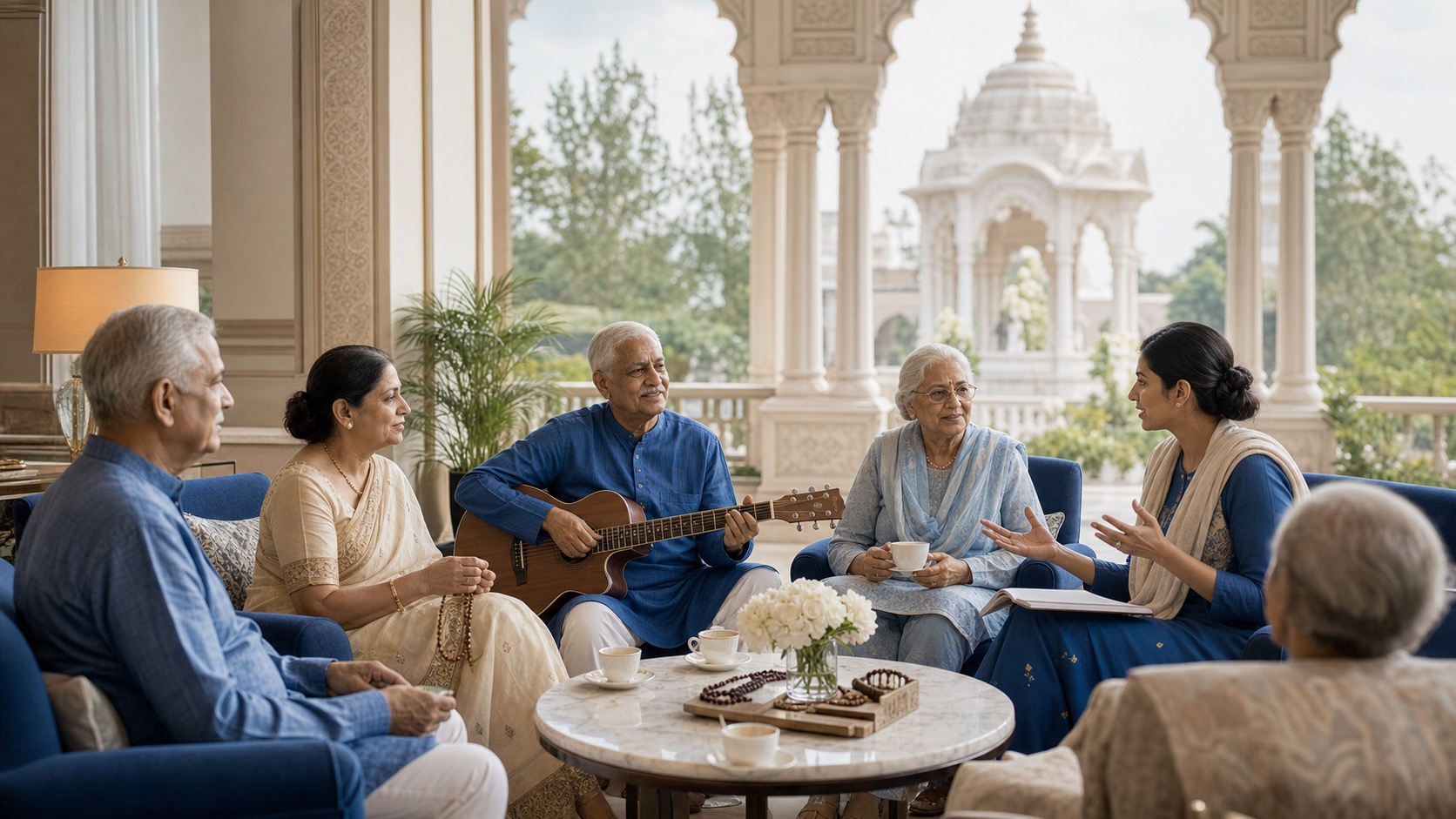
The best formats are modest: tea, familiar music, storytelling, simple art, light movement, devotional rhythm if welcomed, and a short caregiver conversation. The activity is a tool for belonging, not the point of the session.

Check whether the host understands dementia communication

A trained host does not argue, quiz, correct, rush, shame, or over-explain. They use short sentences, offer choices, redirect gently, watch distress cues, and protect the elder from being discussed as if they are absent.

Ask a simple question before attending: 'What do you do if someone keeps repeating a question, wants to leave, refuses to join, or becomes agitated?' A vague answer means the space is not ready for dementia support.

Make the physical room do half the work

The room should be easy to understand: one entrance, visible toilets, low noise, steady lighting, limited clutter, chairs with arms, water nearby, no loose wires, and enough space for walkers or wheelchairs.

Exit safety matters. A dementia-friendly space does not lock people in or shame wandering. It quietly plans supervision, identifies exits, keeps a recent contact number, and knows who will accompany a person who becomes restless.

Give caregivers something useful, not just tea

Caregivers need peer relief, practical ideas, and permission to speak honestly. A good session may include ten minutes on sundowning, wandering, bathing refusal, medicine routines, legal planning, respite, or when home care is no longer enough.

The caregiver should leave with one usable action, one contact pathway, or one reduced burden. If the session only entertains the elder while the caregiver continues silently burning out, it has missed half the purpose.

Adapt the model to India without making it chaotic

Indian memory-friendly gatherings can include bhajans, prasad-style snacks, festival memories, old film songs, rangoli, temple stories, courtyard walks, or intergenerational visits. These work only when participation is optional and the group stays calm.

Avoid the common failure mode: inviting too many relatives, adding a loud sound system, turning the session into a performance, or asking elders to recite, remember names, or prove devotion in front of others.

Know who should not attend without extra support

A memory cafe is not suitable as-is for every situation. Repeated unsafe wandering, severe aggression, acute confusion, uncontrolled pain, fever, delirium, serious swallowing risk, or major psychiatric distress needs medical and care-planning support before a social session.

Families should also respect refusal. If the elder becomes more distressed after two or three careful attempts, choose smaller formats: one visitor, a home tea circle, supervised garden time, or a short spiritual/music routine.
Memory cafe evaluation checklist

01

Named host

There should be one accountable facilitator, not a floating group of volunteers with no care lead.

02

Predictable timing

Same day, time, room, and duration helps people with memory change settle into the pattern.

03

Small group size

The room should allow calm conversation, not crowd energy, speeches, or public performance.

04

Dementia communication

Hosts should know not to quiz, correct, argue, shame, rush, or force participation.

05

Safe arrival and exit

Plan escort, ID support, toilets, water, walking aids, wandering response, and return transport.

06

Simple activity

Use familiar music, stories, art, prayer, tea, movement, or photos that invite rather than test memory.

07

Caregiver circle

Set aside time for caregivers to discuss real issues such as sleep, aggression, hygiene, money, and respite.

08

Medical boundary

The cafe should not diagnose, promise improvement, sell cures, or delay doctor review.

09

Referral list

Families should leave knowing who to contact for doctor review, counselling, home safety, legal planning, or emergency help.

10

Feedback loop

After each session, ask what calmed, what overwhelmed, what created risk, and what should change next time.

What families should ask before attending

Care AreaWhat to WatchFamily Action
PurposeIs it social support, education, respite, marketing, or diagnosis?Attend only if the purpose is clear and honest.
Host skillCan the facilitator explain dementia communication and distress response?Ask what they do during repetition, refusal, agitation, or wandering.
Room safetyNoise, lighting, toilets, exits, chairs, steps, clutter, and walking spaceVisit the room once without the elder if safety is uncertain.
Activity demandDoes it require recall, public speaking, religious performance, or fast participation?Choose recognition-based, optional, short activities.
Caregiver valueDoes the caregiver get peer support or practical guidance?Avoid formats where caregivers only sit silently and supervise.
Medical limitsDoes anyone promise treatment, cure, reversal, or guaranteed prevention?Treat cure claims as a red flag and keep doctor-led care separate.
TransportCan the elder arrive and leave without confusion, fatigue, or unsafe waiting?Arrange escort, medicines, water, ID, and a short return plan.
After-effectIs the elder calmer, engaged, tired, agitated, ashamed, or more confused afterward?Use the after-effect to adjust duration, group size, or whether to continue.

Care scenes

Indian seniors in a blue community lounge sharing music, prayer, tea, and guided conversation
Social rhythm, familiar rituals, and patient companionship can support identity even when memory changes.
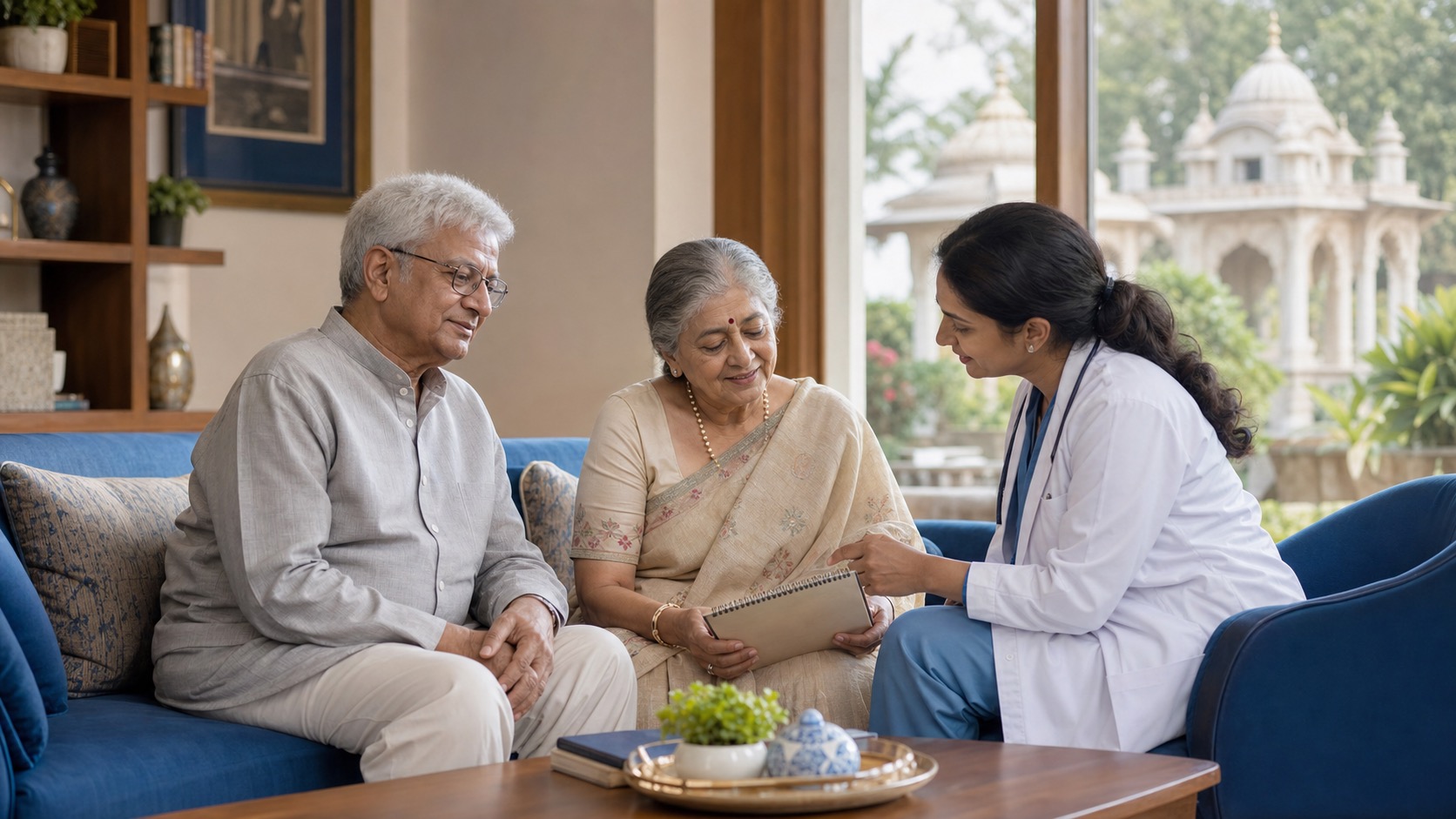
Indian older couple and memory care doctor reviewing a notebook in a premium blue senior living lounge
Memory care works best when families discuss changes early, document patterns, and keep the elder's dignity central.

At a glance

A real memory cafe protects dignity before programming

The test is not whether the event looks warm in photos. The test is whether an elder can be confused, slow, repetitive, quiet, or restless without losing safety, respect, or belonging.

2
people served

The person with memory change and the caregiver both need support.

6
minimum standards

Trained host, calm room, safe exit, simple activity, caregiver time, and referral boundary.

0
memory tests

A dignity-first space never quizzes elders for public proof of decline.

This guide is for education only and does not replace advice from a qualified doctor, geriatrician, neurologist, psychiatrist, psychologist, legal professional, financial professional, or other licensed specialist.

Questions families ask

Is a memory cafe a treatment centre?

No. It is a supportive social space and should not replace medical diagnosis, medicines, behaviour assessment, home safety planning, or emergency care.

Who should attend?

People with mild memory change or dementia, family caregivers, and trained hosts can attend when the setting is calm, supervised, voluntary, and suitable for the elder's current symptoms.

Can a caregiver leave the elder there and go away?

Usually no. A memory cafe is not the same as daycare or respite admission. Some programs may offer supervised respite, but that must be stated clearly with staffing, consent, safety, and emergency processes.

What makes a memory cafe unsafe?

Large crowds, loud music, locked or unmanaged exits, no trained host, public memory tests, cure claims, sales pressure, no caregiver support, and no plan for agitation or wandering are red flags.

How can temples or senior communities adapt this idea?

Use a small calm room, fixed timing, trained facilitator, optional familiar devotional or cultural activities, caregiver discussion time, safe exits, and clear referral boundaries.

When should a family skip the cafe and seek medical review?

Skip or postpone when confusion is sudden, fever or pain is present, falls are recent, aggression is severe, wandering is unsafe, swallowing is risky, or the elder becomes repeatedly distressed by the setting.

Sources