A practical guide for families planning Vrindavan and Braj visits around energy budget, route length, heat, toilets, seating, medicines, transport, home rituals, and return plans.
Quick Answer
A senior-friendly Braj visit should begin with the elder's energy budget, not a long place list. Families should choose one purpose, one primary stop, a walking and standing limit, verified toilet and seating options, medicine and hydration support, heat and crowd timing, transport drop-off, and a clear return trigger. Long parikrama routes or crowded festival visits should be attempted only when the elder wants them, health allows, weather is safe, and support is realistic. Sacred geography can also be experienced through stories, maps, home prayer, temple-view spaces, short darshan, and small guided outings.
Care and dignity note
This guide is educational and cultural. It does not replace medical care, mental health support, legal advice, spiritual counselling, or emergency help. If an older adult has severe depression, self-harm thoughts, sudden confusion, chest pain, breathing difficulty, a fall, severe weakness, or immediate danger, seek urgent local help.
3
visit levels
Home ritual, short local darshan, and supported half-day outings serve different energy levels.
45
minute first outing
A short first visit reveals more about stamina than an ambitious full-day route.
1
return trigger
Agree in advance when to stop: fatigue, heat, confusion, pain, dizziness, crowding, or medicine timing.
Start with an energy budget, not a place list
Many families plan Braj visits like a checklist: cover more temples, more ghats, more stories, and more distance. That approach often fails older adults. The right first question is not, 'How many places can we cover?' It is, 'How much walking, standing, heat, noise, and waiting can this elder manage today?'
Make a simple energy budget before leaving: maximum walking time, maximum standing time, required seating breaks, toilet urgency, medicine timing, meal timing, and how quickly the elder tires after crowds or stairs. If the elder uses a cane, walker, wheelchair, hearing aid, oxygen support, or frequent bathroom breaks, the route must be designed around that reality.
The visit is successful when the elder returns calm, safe, and spiritually satisfied. A 30 to 45 minute darshan with time to sit may be more valuable than a full-day circuit that ends with pain, dehydration, confusion, or resentment.
Build a Braj route card before leaving
A route card turns devotion into a safe plan. Write the primary place, why it matters to the elder, drop-off point, estimated walking distance, stairs or uneven surfaces, nearest seating, toilet option, shade, crowd window, food plan, medicine schedule, phone numbers, and return route.
Do not rely on memory from an earlier visit. Road access, barricades, parking, crowd patterns, and construction can change. Check locally before taking an older adult into a narrow lane, long queue, or crowded festival area.
Carry a small visit kit: water, light snack, prescribed medicines, prescription copy, phone charger, emergency contact card, basic medical history, cap or umbrella, wet wipes, and any mobility support the elder uses. The kit matters most when the outing has to end earlier than planned.
Use three ways to experience Braj
The first level is a home or community experience: story, map, bhajan, reading, photo, livestream, temple-view sitting, or a small satsang. This is not a lesser version. It keeps the elder included on low-energy days.
The second level is a short local visit: one temple, one ghat view, one courtyard, one guided walk, or one quiet darshan window. The route should include seating and an easy return before fatigue builds.
The third level is a supported half-day outing to a wider Braj location. Use this only when the elder has handled shorter visits well. Long parikrama routes, crowded festival circuits, and heat-heavy travel need medical judgment, realistic support, and the elder's clear wish, not family pressure.
The senior Braj outing checklist
01
Ask what meaning the elder wants
The purpose may be darshan, memory, chanting, family time, quiet sitting, or seeing one familiar place again.
02
Choose one primary stop
Do not combine multiple places unless the first visit goes well and the elder still wants to continue.
03
Set walking and standing limits
Agree on maximum walking distance, queue time, stair use, and how often the elder will sit.
04
Avoid heat and crowd windows
Choose cooler, calmer times and postpone the visit when heat, crowding, rain, or traffic makes the plan unsafe.
05
Carry the medicine and hydration kit
Bring water, snack, prescriptions, emergency contacts, phone power, and any mobility or hearing support.
06
Confirm toilets and seating
A spiritual plan that ignores toilets, benches, and rest space is not senior-friendly.
07
Plan drop-off and return
Know where the vehicle waits, who walks with the elder, and how the group exits if the elder becomes tired.
08
Create a non-travel version
For difficult health days, use a map, story, bhajan, photo, family memory, or home prayer without guilt.
Braj visit options by energy level
| Practice | Why it matters | Family question |
|---|
| Home or community ritual | Keeps the elder spiritually included when travel would be tiring or unsafe. | Which story, map, bhajan, photo, or reading will connect the elder to the place today? |
| Temple-view sitting | Allows devotion, memory, and quiet without long queues or difficult walking. | Is there a safe seated place with shade, water, and an easy return? |
| Short guided outing | A focused guide can reduce wasted walking and explain meaning at the elder's pace. | Can the guide keep the route short, flexible, and free of pressure? |
| Supported half-day visit | Gives access to wider Braj only when stamina, weather, transport, and medicines are planned. | Has the elder already managed a shorter visit comfortably? |
| Long parikrama or festival crowd | Can be meaningful but carries higher risk for fatigue, heat stress, falls, and confusion. | Does the elder truly want this, and has the family checked medical fitness and exit options? |
Spiritual ageing scenes to inspect
Sacred geography for seniors is not proven by distance covered. It is proven by whether devotion, safety, dignity, and choice survive the outing.
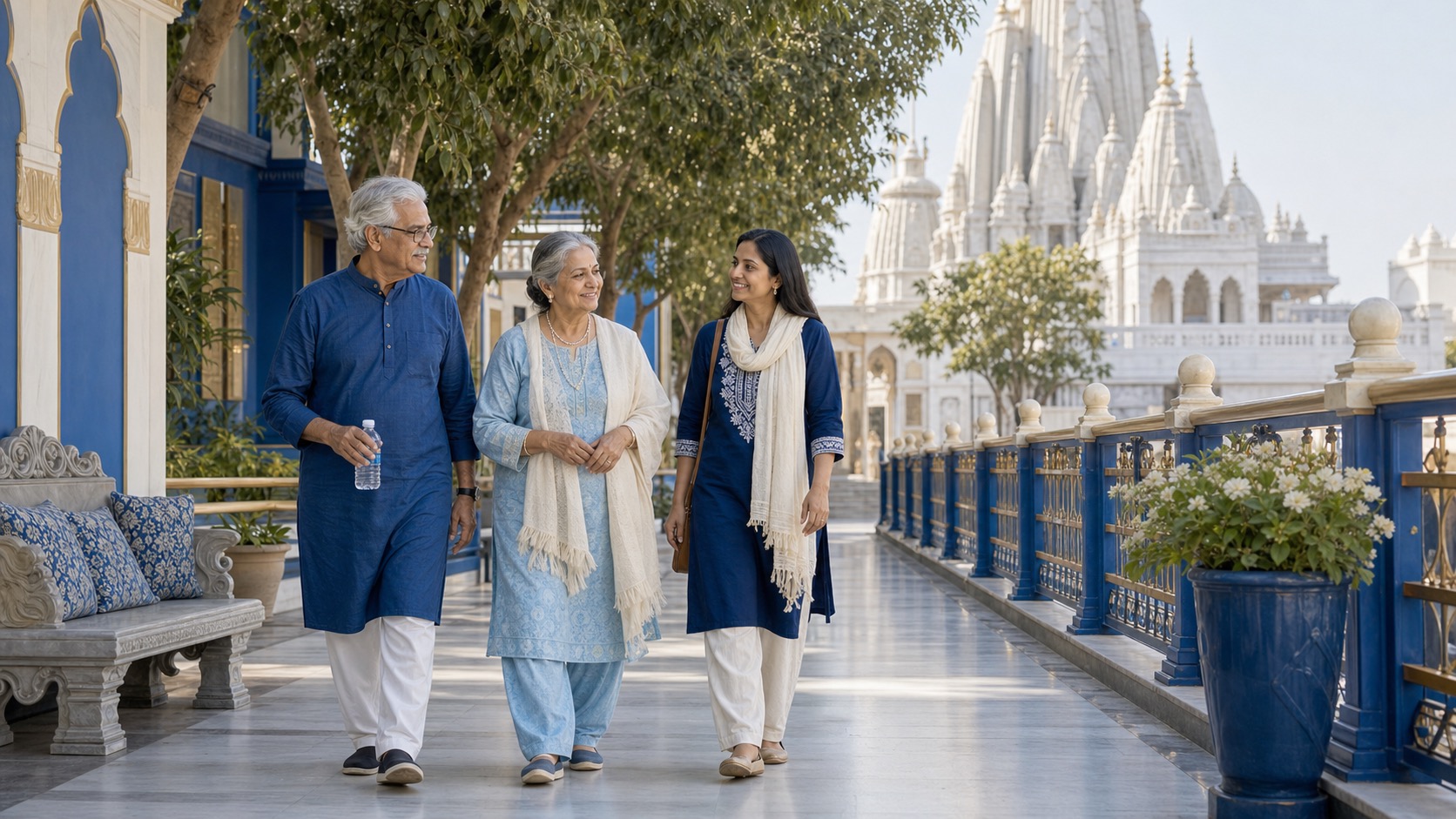 Gentle pilgrimage depends on shaded routes, pauses, hydration, timing, transport, and a plan for fatigue.
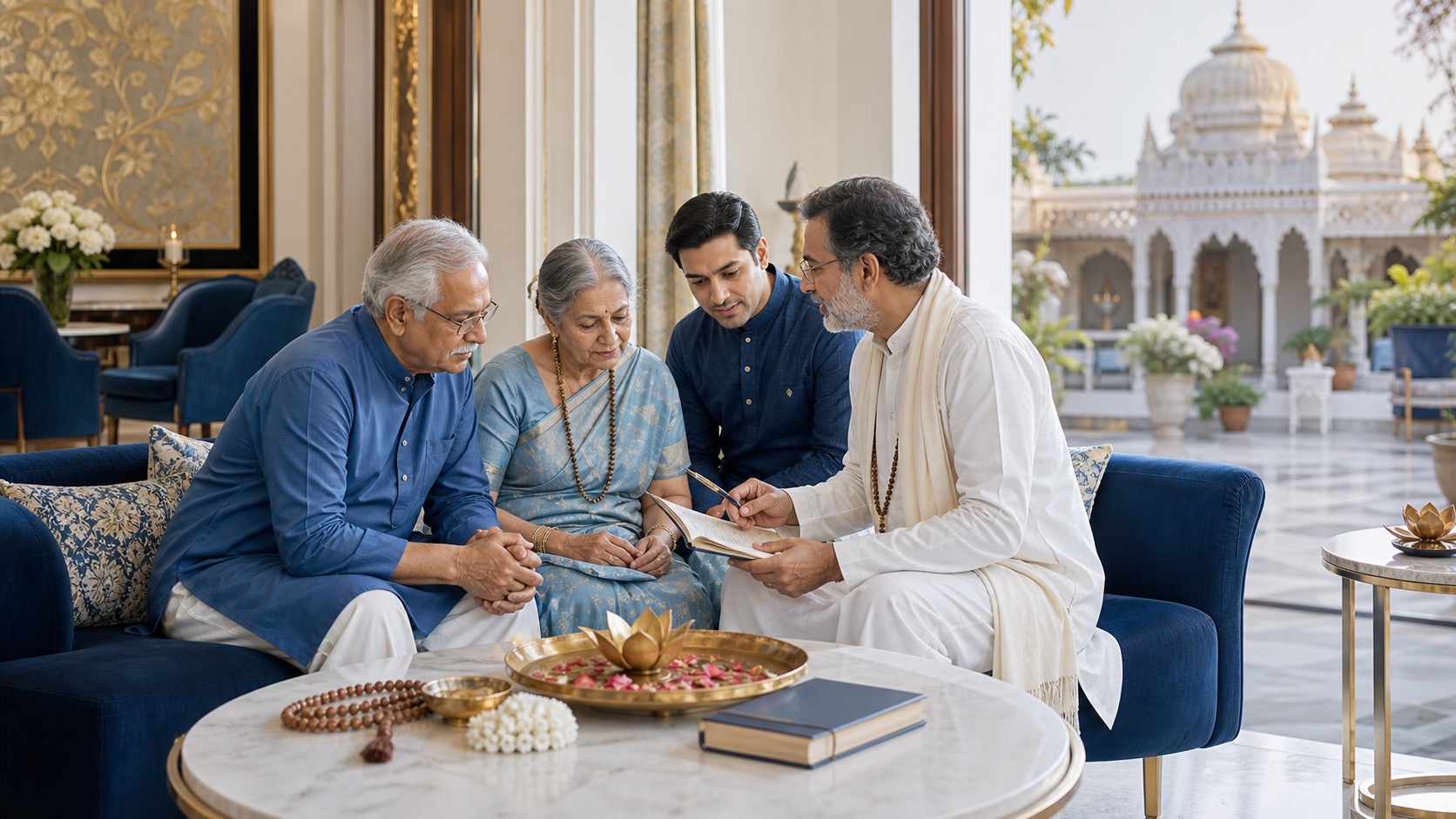 Spiritual ageing works best when purpose, health, community, access, and family voice are planned together.
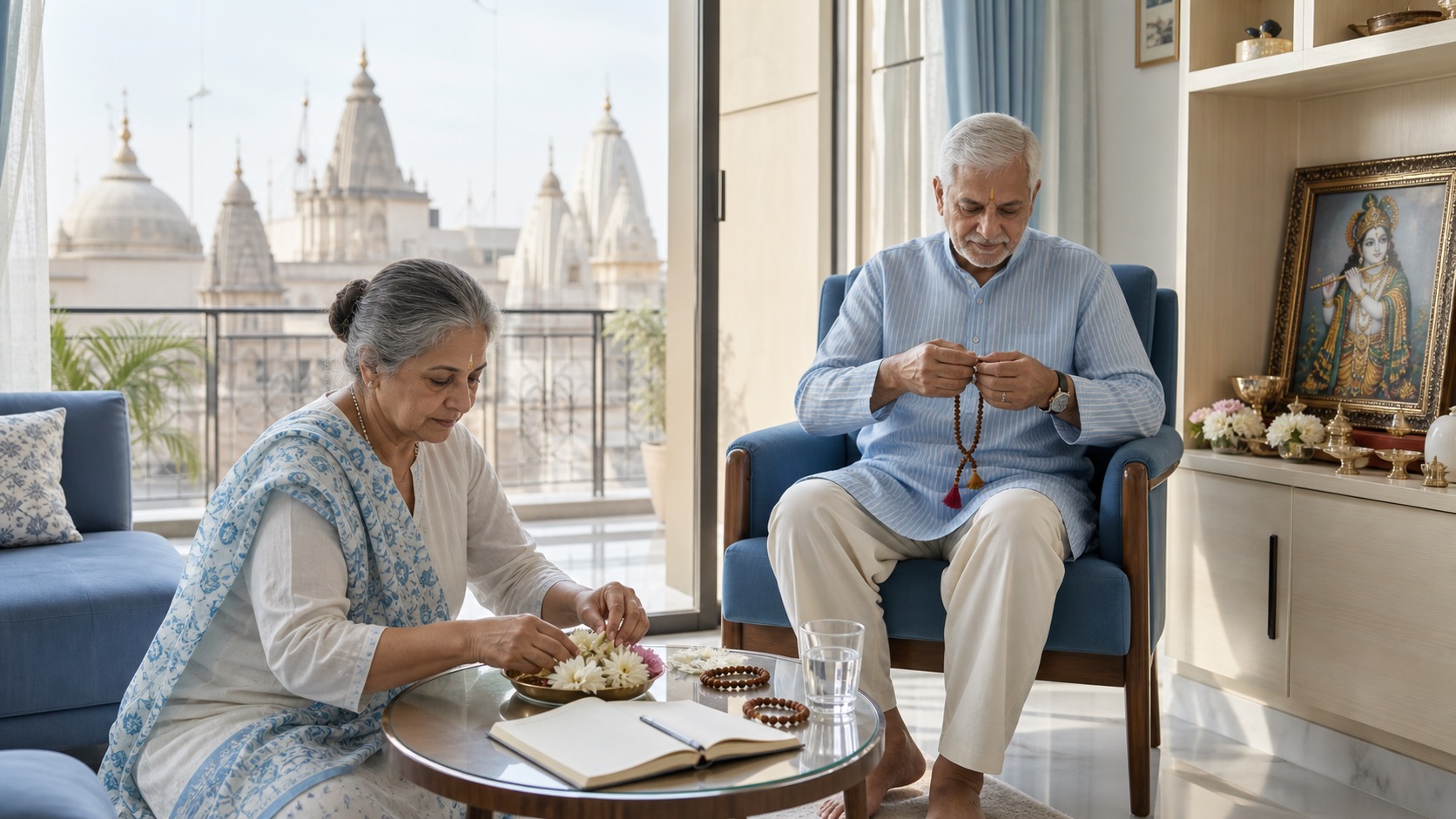 A daily spiritual routine should be gentle, repeatable, safe, and integrated with rest, meals, movement, and medicine timing.
At a glance
Spiritual ageing needs both meaning and support
The strongest spiritual retirement setting does not ask seniors to ignore the body. It brings devotion, safety, companionship, rest, family clarity, and dignity into one daily rhythm.
Questions families ask
Should seniors attempt long parikrama routes?
Only when the elder wants it, health allows it, weather is safe, and the family has realistic support, seating breaks, transport backup, medicine timing, and a return plan. Shorter alternatives are valid spiritual choices, not failures.
Can sacred geography be experienced from home?
Yes. Stories, maps, songs, photos, family memories, guided discussions, livestreams, and home prayer can keep elders connected when travel is difficult. For many seniors, meaning comes from memory and attention, not only physical distance.
What five questions should families ask before a Braj outing?
Ask what the elder wants from the visit, how long they can walk or stand, where they can sit and use the toilet, when medicines and meals are due, and what condition means the group returns immediately.
How should families handle heat and crowds?
Avoid peak heat, crowded festival windows, long queues, and routes without shade or seating. Carry water, keep visits short, watch dizziness or confusion, and leave early when the elder shows strain.
What if the elder insists on a full route?
Respect the wish, but test stamina through a shorter visit first. If the elder has heart disease, breathing difficulty, balance problems, memory issues, diabetes, recent surgery, or heat sensitivity, discuss the plan with a doctor and arrange stronger support.