Krishna Bhumi Logo
Krishna Bhumi

Satsang, Seva, and Daily Routine: An Elder-Friendly Design Guide

A practical guide for making satsang, seva, chanting, meals, walking, and daily routine accessible, voluntary, medically humble, and useful for older adults.

Quick Answer

Satsang, seva, and daily routine help older adults only when they are designed around choice, comfort, access, stamina, hearing, mobility, meals, medicines, privacy, and health boundaries. A useful routine gives the day a gentle shape: morning orientation, safe movement, shared contact, rest, and one meaningful spiritual or social role. It should never be sold as a cure for depression, dementia, pain, delirium, grief, or serious illness. The family or community should also notice when an elder who usually enjoys prayer, bhajan, seva, or company suddenly stops participating, because that change may signal pain, fatigue, depression, cognitive change, or unsafe access.

This guide is for education only and does not replace advice from a qualified doctor, psychiatrist, psychologist, counsellor, dietitian, or other licensed professional. If someone talks about self-harm, suicide, being unsafe, or is in immediate danger, seek urgent local emergency care or a qualified crisis service.
4 anchors
for the day

Orientation, movement, companionship, and rest matter as much as the ritual itself.

20 min
first test

Short, repeatable participation is usually safer than long programs that exhaust seniors.

1
opt-out

Every spiritual activity needs a dignified way to leave, sit quietly, or decline.

Main guide

Start with the ordinary day, not the event

Families often focus on the visible event: a satsang, aarti, festival, discourse, or seva opportunity. Older adults experience the whole day around it: waking, bathing, medicines, meals, transport, heat, stairs, seating, toilets, sound, fatigue, and the ability to rest afterwards.

A spiritual routine is elder-friendly when the logistics are gentle enough that the elder can participate without fear of falling, embarrassment, hunger, pain, continence anxiety, or being trapped in a long program.

Design satsang for access and choice

For many seniors, satsang is valuable because it creates familiar language, music, memory, friendship, and a feeling of being expected. But the design matters: seating with back support, audible sound, shade or temperature control, water, toilets, clear duration, and a place to sit quietly.

Participation should have levels. An elder may sing, listen, sit near the group, join only for prasad, or leave after 20 minutes. Quiet presence should count as participation.

Keep seva small, voluntary, and age-matched

Seva can protect usefulness when it matches ability: sorting flowers, keeping a prayer list, welcoming one new resident, folding cloth, choosing a bhajan, mentoring a younger person, reading aloud, or calling someone who is absent.

Seva becomes harmful when it ignores pain, stamina, tremor, eyesight, hearing, memory, continence, grief, or mood. The right question is not how much the elder can do. It is what role they can repeat with dignity.

Use routine to notice change early

A predictable routine makes change visible. If a senior who normally attends morning bhajan stops coming, eats less prasad, avoids a walking partner, falls asleep during the day, or becomes unusually irritable, the community should not simply say they have lost interest.

The first review should be practical: sleep, pain, medicines, appetite, hydration, hearing, vision, mobility, recent grief, depression signals, memory change, and whether the activity has become too long or difficult.

Do not turn devotion into pressure

Spiritual life should never be used to shame an elder: you are in Vrindavan, so you should be happy; you should attend every satsang; you should do more seva; you should not feel sad if you have faith. These sentences can hide real distress.

The healthier frame is invitation: would you like to sit with the group, listen from the side, help with one small task, or rest today? Choice protects dignity.

Spiritual care and clinical care must cooperate

A senior can need both bhajan and a doctor, both prayer and depression care, both community and pain management, both chanting and a memory assessment. Spiritual rhythm supports identity and belonging; it does not replace qualified care.

Treat self-harm talk, severe hopelessness, new confusion, hallucinations, refusal of food or medicines, repeated falls, severe pain, breathlessness, or sudden behavior change as care signals. Do not explain them away as karma, vairagya, mood, or stubbornness.
Elder-friendly satsang and seva checklist

01

Time window

Schedule when the elder is usually alert, medicated, fed, and least affected by pain or heat.

02

Seating

Provide back support, arms if needed, space for walkers, and no pressure to sit on the floor.

03

Sound and hearing

Check whether the elder can hear clearly without the volume becoming painful or chaotic.

04

Toilet and water

Make toilets, water, and a discreet exit easy; continence anxiety keeps many elders away.

05

Transport and fall risk

Review stairs, uneven paths, night lighting, footwear, wheelchairs, handrails, and return transport.

06

Short first dose

Begin with 15 to 20 minutes and increase only if the elder wants it and recovers well.

07

Small seva role

Offer one repeatable role that can be done seated, slowly, and without public performance.

08

Quiet option

Not every elder wants group energy; listening from the side or using a quiet room should be respected.

09

Meal and medicine timing

Avoid programs that clash with diabetes meals, pain medicines, sleep needs, or hydration.

10

Absence follow-up

If a regular participant stops coming, ask gently and check health before assuming disinterest.

When spiritual routine helps and when to change it

Community AreaWhat to WatchFamily Action
Morning prayerGives orientation and calm, but becomes stressful if rushed before food or medicines.Place it after basic comfort: toilet, water, tea, medicines, and pain control.
SatsangCreates belonging when audible, short, seated, and easy to leave.Offer levels of participation: sing, listen, sit nearby, or join only for prasad.
SevaProtects usefulness when the role is chosen, small, and repeatable.Remove tasks that cause pain, shame, fatigue, comparison, or public pressure.
Chanting or meditationCan support calm for some elders, but may frustrate others if forced or too long.Use short, voluntary practice and stop if anxiety, confusion, or distress increases.
Festival preparationBuilds anticipation, but crowds, heat, noise, and long hours can overwhelm.Give seated preparation roles and a clear rest-and-exit plan.
Group travelDarshan outings may lift mood but raise fall, toilet, meal, and exhaustion risks.Check route, duration, wheelchair access, emergency contact, medicines, and return plan.
Distress languageHopelessness, self-harm talk, severe fear, new confusion, or refusal of food.Treat as clinical risk. Stay with the elder and seek qualified help.
Missed routineA regular participant suddenly stops prayer, meals, walks, or satsang.Check pain, sleep, appetite, medicines, grief, depression, cognition, and access barriers.

Community scenes

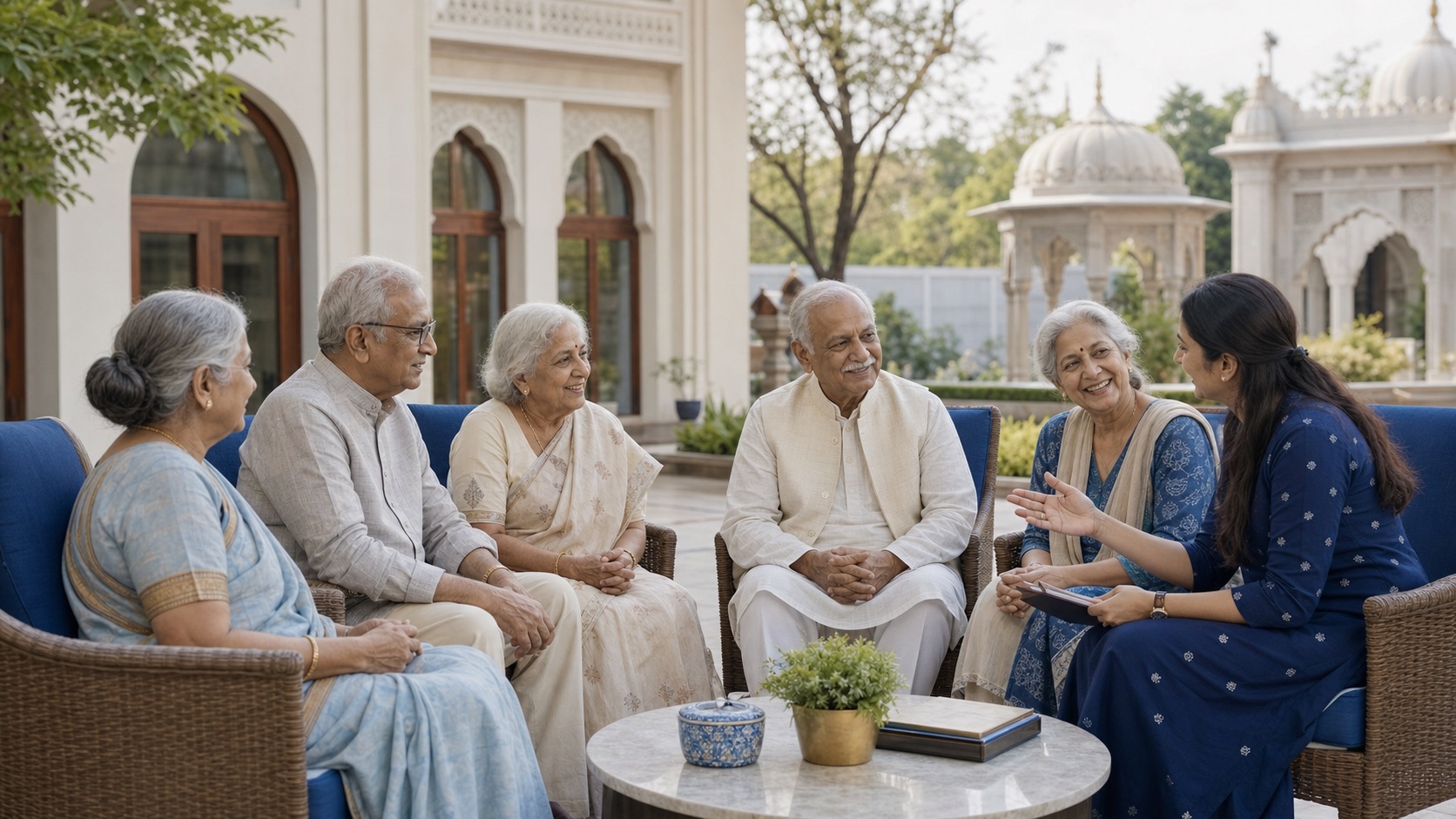
Indian seniors in a premium blue courtyard having a guided community conversation
Community living is strongest when everyday companionship is designed into the rhythm of the place.
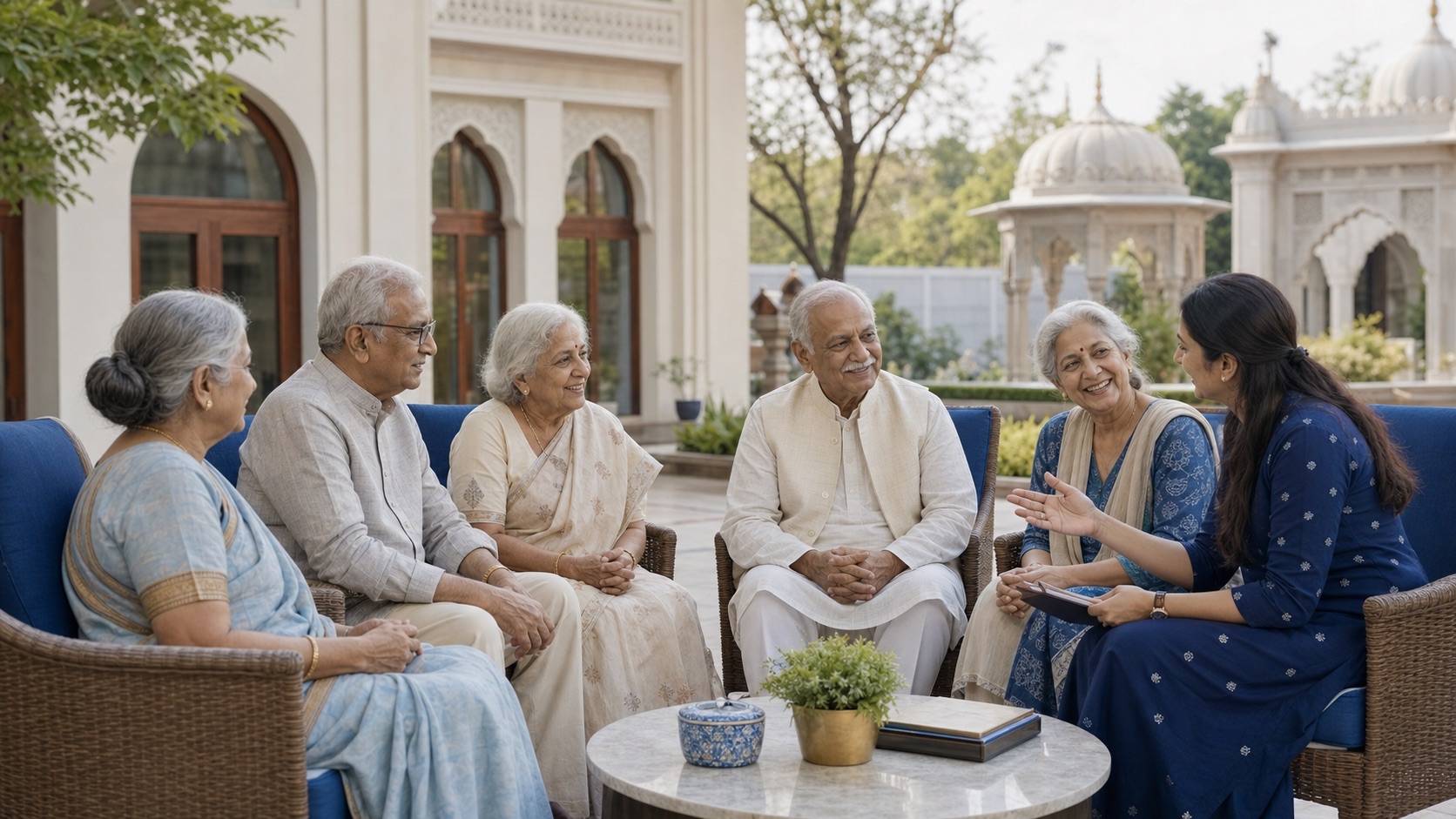
Indian seniors in a premium blue courtyard having a guided community conversation
Community living is strongest when everyday companionship is designed into the rhythm of the place.

At a glance

Spiritual rhythm should lower the burden of the day

The best elder routines are voluntary, accessible, short enough to repeat, and humble about medical needs.

4 anchors
for the day

Orientation, movement, companionship, and rest matter as much as the ritual itself.

20 min
first test

Short, repeatable participation is usually safer than long programs that exhaust seniors.

1
opt-out

Every spiritual activity needs a dignified way to leave, sit quietly, or decline.

Questions families ask

Can satsang cure depression?

No. Satsang may support belonging and routine, but depression should be assessed and treated by qualified professionals. Do not use devotion to delay care for persistent sadness, hopeless words, appetite change, poor sleep, self-neglect, or self-harm talk.

What if the elder is not religious?

The same design still applies: predictable time, friendship, meals, movement, meaningful role, privacy, and choice. The routine can be cultural, social, musical, educational, or family-based instead of devotional.

How long should spiritual activities be?

Start with 15 to 20 minutes and observe recovery. If the elder is tired, hungry, confused, in pain, or anxious afterwards, shorten the activity or change the setting.

Can family insist on seva because it is good for the elder?

No. Seva must remain voluntary. Families can offer age-friendly options, but pressure turns service into performance and can increase shame or exhaustion.

What if a parent stops attending satsang?

Ask gently and check practical barriers first: hearing, seating, toilet access, pain, fatigue, transport, mood, grief, and whether the group has become overwhelming.

What should a senior community monitor?

Absence from usual routines, skipped meals, unusual fatigue, falls, irritability, isolation, pain complaints, confusion, or words about being a burden should trigger a caring check-in.

Sources