A practical audit for families checking whether an Indian township can support older adults through routes, heat, meals, staff response, social life, healthcare access, resident voice, and spiritual routine.
Quick Answer
A senior-friendly township is not proved by a clubhouse, a landscaped garden, or a medical room on the brochure. Families should audit the whole daily system: home to lift, lift to meals, meals to garden, garden to toilet, residence to temple or satsang, clinic access, staff response, heat and monsoon comfort, emergency escalation, social belonging, family communication, and whether residents can complain and be heard. The best test is whether the parent can live an ordinary Tuesday safely, not whether the launch amenities look impressive.
Design safety note
This guide is educational and does not replace advice from qualified architects, accessibility consultants, occupational therapists, physiotherapists, doctors, emergency responders, or licensed care providers. If an older adult has repeated falls, dizziness, confusion, sudden weakness, injury, severe pain, breathing difficulty, or immediate danger, seek urgent local medical help.
daily loop
is the product
Room, lift, meals, garden, temple, toilets, clinic, and help desk must work as one route.
heat
changes usability
Shade, water, cooling, rest points, and timings decide whether elders actually leave home.
response
must be visible
Families should know who comes, how fast, and what happens after a call for help.
Audit the daily loop, not the amenity list
A township can look senior-friendly in photographs while still failing an older person in daily life. The brochure may show a garden, dining hall, temple, clinic, and concierge, but the elder experiences the gaps between them: the lift wait, the wet threshold, the missing bench, the hot path, the unclear help desk, the toilet too far away, and the return route after fatigue.
Families should walk the parent's actual day. Start at the bed, go to the bathroom, lift, breakfast, garden, prayer space, medicine area, clinic or nurse point, reception, parking, and back. Repeat the exercise after sunset and during heat or rain if possible.
The audit should include low-energy days. Ask whether the parent can still eat, pray, meet someone, get medicine, call help, and return safely when recovering from illness, using a cane, or feeling lonely.
Design for Indian heat, monsoon, and family patterns
Indian senior living has a different operating brief from imported retirement-community models. Heat, monsoon, dust, festival crowds, domestic help, visiting grandchildren, vegetarian food rhythms, temple routine, and NRI children managing from a distance all affect whether the community works.
Heat is not a comfort detail. Older adults can be more vulnerable to heat-related health problems, so shaded paths, drinking water, indoor waiting, air-conditioned refuge, route timing, and staff check-ins matter. A garden that is usable only for photography is not a senior amenity.
Monsoon planning is equally practical: drained paths, non-slip entrances, covered drop-offs, visible level changes, dry seating, reliable housekeeping, and footwear management near prayer spaces and dining areas.
Make operations as visible as architecture
Senior-friendly design is partly built and partly operated. A ramp, bell, or clinic room means little if nobody responds, maintains, documents, or communicates. Families should ask to see the response chain, not just hear that help is available.
Ask who answers a call bell, who has the resident's medical summary, how staff identify a missing resident, who informs family, what happens after a fall, how medicines are handled, how transport is arranged, and how night support differs from daytime support.
Maintenance is care. Broken lights, loose pavers, slippery mats, failed lifts, blocked ramps, and unclear signage can turn a premium township into a risky environment for older adults.
Build social belonging without forced programming
Community is not the same as events. Older adults need predictable, low-pressure ways to be known: group meals, walking circles, satsang, gardening, resident committees, library corners, intergenerational visits, service opportunities, and neighbours who notice absence.
Social isolation and loneliness are health issues, so a senior-friendly township should make connection easy. But it should not force extroversion. Some elders need privacy, quiet prayer, or one trusted friend more than a crowded calendar.
Families should ask how a new resident is introduced, how widowed or shy residents are included, what languages are comfortable, how hearing or mobility issues are handled, and whether residents can contribute rather than only consume activities.
Resident voice is the long-term safety system
A community that is age-friendly on day one can become unsafe if residents cannot report problems or influence operations. Older adults notice the real failures: food timing, slippery corners, noisy events, missing benches, rude staff, lift delays, confusing notices, and festivals planned without frail residents.
Look for a clear feedback route: resident council, family contact process, maintenance escalation, response-time tracking, food committee, safety walk-throughs, and a record of what changed because residents spoke.
The strongest sign is not a perfect promise. It is a management culture that treats elder complaints as design information, not inconvenience.
Senior-friendly township audit checklist
01
Walk the full daily loop
Test bed to bathroom, lift, meals, garden, temple or prayer space, reception, clinic or nurse point, parking, toilets, and return routes.
02
Check heat refuge
Look for shaded routes, drinking water, indoor waiting, cooling, staff check-ins, and usable timings during summer.
03
Test monsoon movement
Inspect drainage, covered drop-offs, slippery surfaces, wet footwear areas, lift lobbies, and path visibility after rain.
04
Demand the response chain
Ask who responds to a fall, dizziness, missed meal, night call, medicine issue, wandering concern, or hospital transfer.
05
Inspect toilets beyond the home
Gardens, dining areas, reception, prayer spaces, and community halls should have realistic toilet access.
06
Review food and daily rhythm
Check meal timings, dietary needs, prasad, hydration, illness meals, guest meals, and how missed meals are noticed.
07
Test social onboarding
Ask how a shy, widowed, hearing-impaired, or new resident is introduced into community without pressure.
08
Check family communication
NRI and outstation children need clear updates, escalation contacts, medical information flow, and visit coordination.
09
Ask what residents changed
A real resident voice system should have examples of safety, food, route, festival, or staff changes made after feedback.
Township layers families should test
| Design feature | Why it matters | Family question |
|---|
| Daily loop | Seniors live through connected routes, not isolated amenities. | Can the parent complete an ordinary day without unsafe gaps between spaces? |
| Climate plan | Heat, glare, humidity, and rain can stop movement and increase risk. | Where does the elder rest, cool down, hydrate, and wait in bad weather? |
| Staff response | Emergency systems fail if roles, records, access, and escalation are unclear. | Who arrives, with what information, how fast, and who informs family? |
| Social rhythm | Belonging grows through predictable low-pressure contact, not only events. | How will the parent become known by name in the first month? |
| Spiritual routine | In Vrindavan, prayer, satsang, festivals, and quiet reflection are daily-life infrastructure. | Can devotion continue on strong, tired, crowded, rainy, and low-mobility days? |
| Resident voice | Age-friendly design must adapt as residents age and problems appear. | What changed recently because residents or families complained? |
Age-friendly design scenes to inspect
A senior-friendly township makes dignity operational: visible in paths, meals, heat planning, staff response, social belonging, and the way management listens.
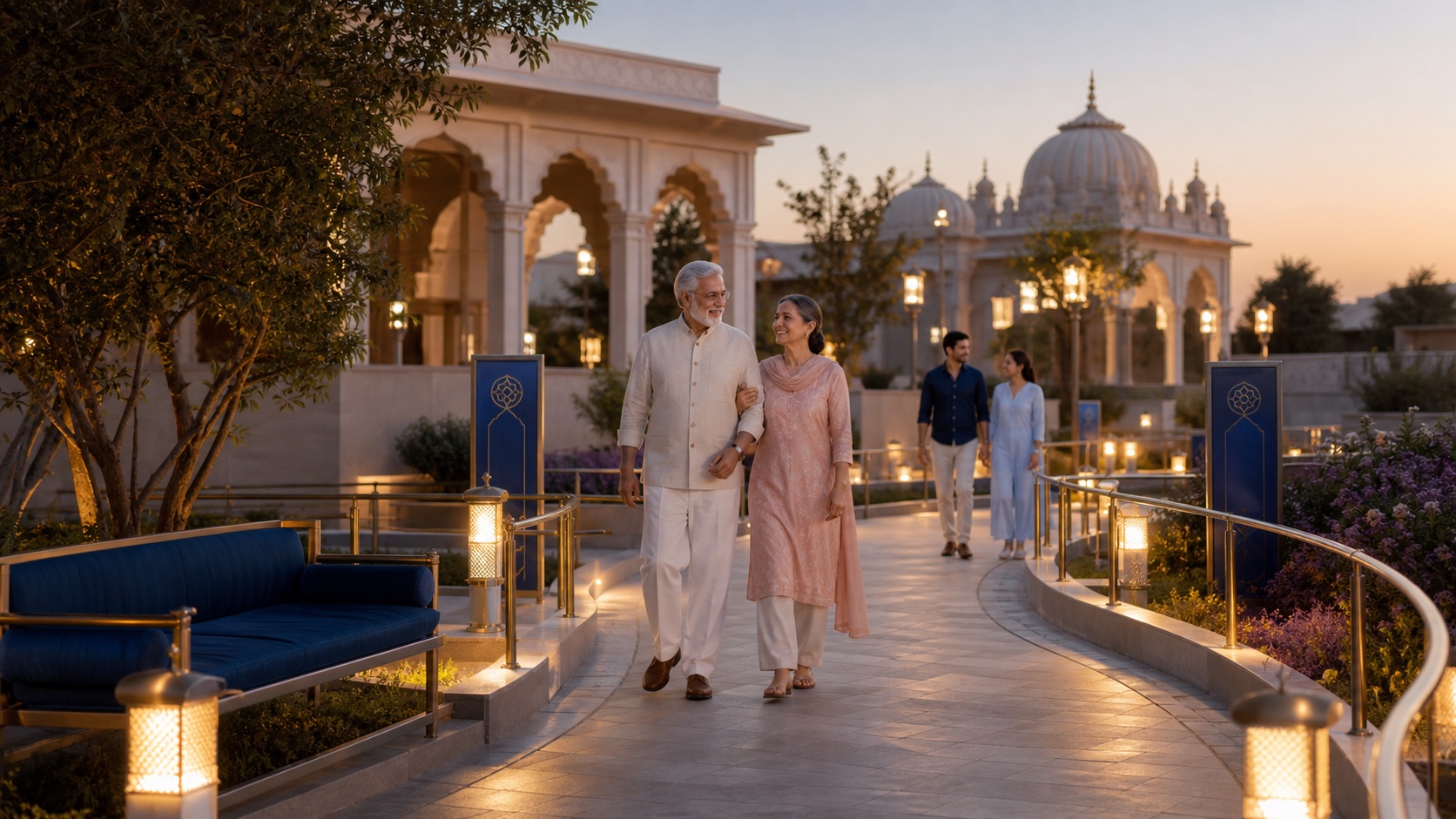 Walkability is more than distance. Shade, benches, even surfaces, lighting, and safe pauses turn movement into a daily habit.
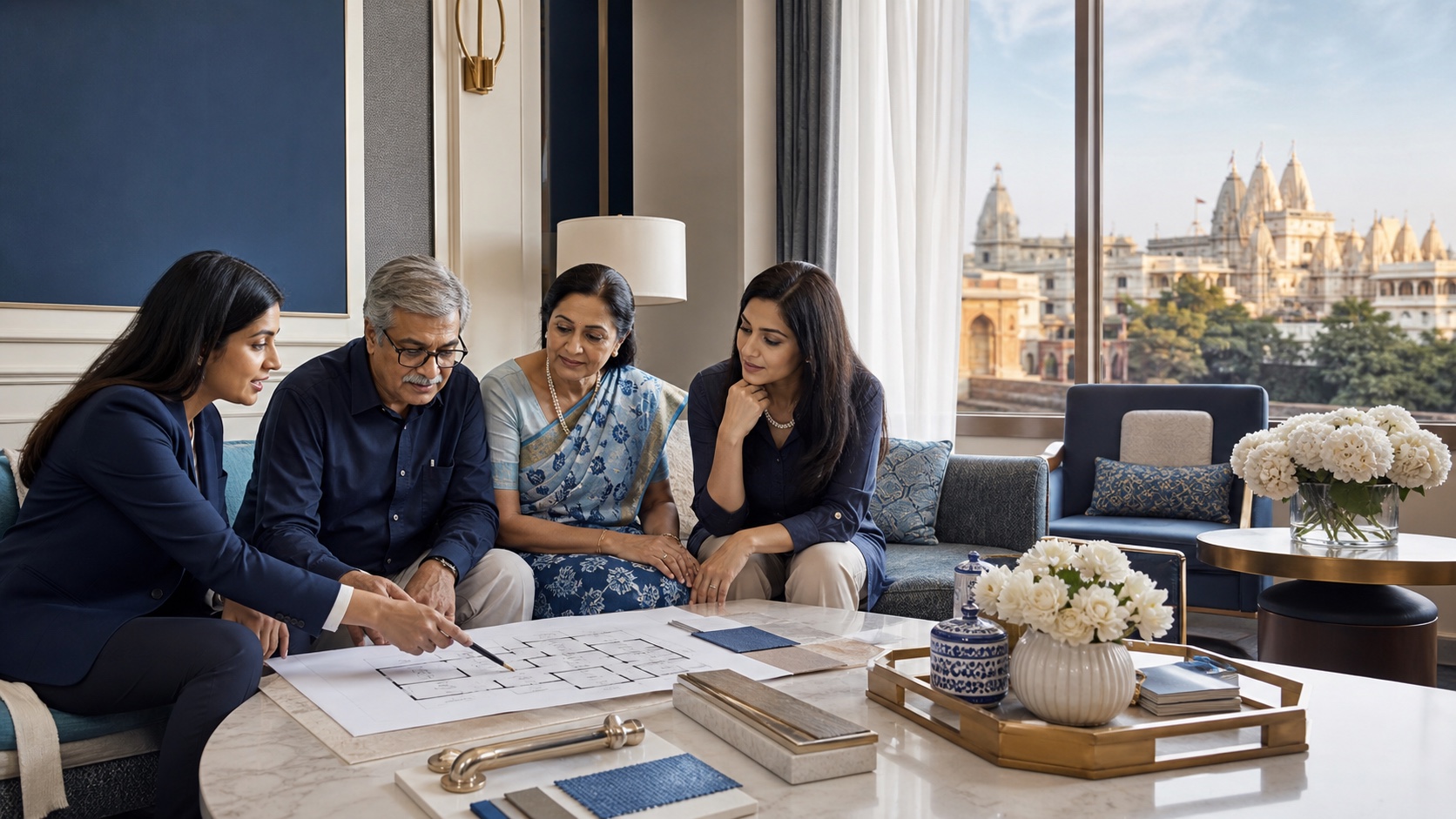 Age-friendly design starts before a crisis: families should inspect movement, light, support, storage, response, and daily routine together.
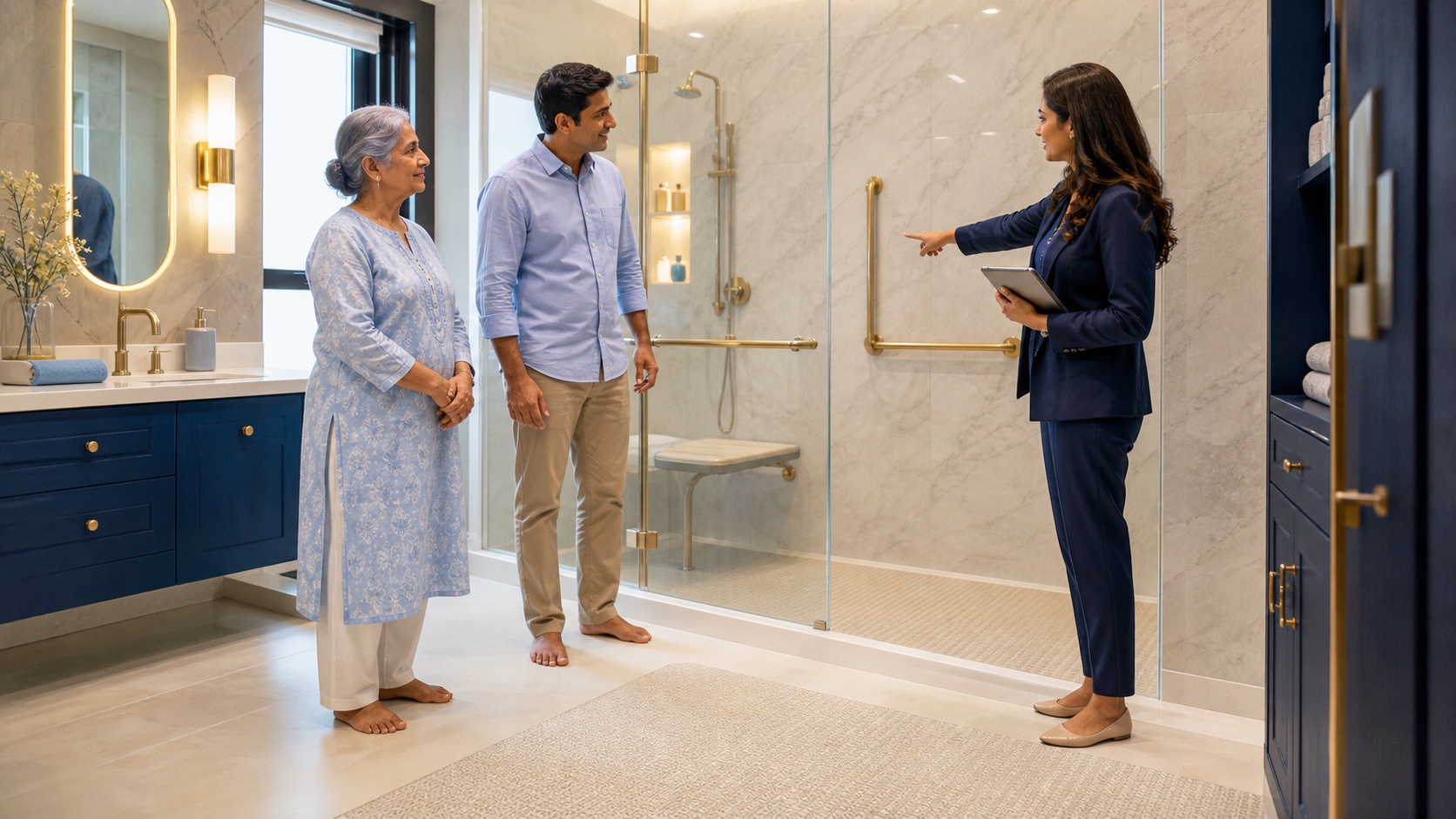 The bathroom is where small design details matter: dry reach, support points, non-slip surfaces, lighting, and space for assistance.
At a glance
Age-friendly design is quiet support
The strongest senior living environments do not make elders feel supervised or reduced. They make movement, rest, help, worship, meals, guests, and emergency response feel natural inside a beautiful home and community.
Questions families ask
What is the fastest way to judge a senior-friendly township?
Walk one full daily loop at the parent's pace: room, bathroom, lift, dining, garden, prayer space, toilet, clinic or nurse point, reception, and return after sunset. Most weaknesses appear on that route.
Why is climate part of senior design in India?
Heat, glare, monsoon, humidity, and wet surfaces change whether older adults can safely leave home. Shade, cooling, water, seating, drainage, and route timing are core design issues.
What questions should NRI children ask?
Ask who notices missed meals, who responds at night, who keeps medical information, who calls family, how hospital transfers happen, how updates are sent, and who has authority during urgent decisions.
Can a normal luxury township be made senior-friendly later?
It can improve, but retrofitting has limits. Senior-friendly design is strongest when routes, lifts, bathrooms, lighting, staffing, food, response, and resident feedback are planned from the beginning.
How do families detect fake senior-living claims?
Look for vague words without operating detail. If management cannot explain response times, staff roles, toilet access, heat planning, night support, resident feedback, and family escalation, the claim is weak.
Why does resident voice matter so much?
Older adults discover practical failures before management does: slippery corners, bad timings, missing benches, food issues, confusing notices, and staff behaviour. A feedback system keeps the township age-friendly over time.