A practical family charter for using the vanaprastha idea without forcing withdrawal, losing elder agency, or leaving health, money, documents, caregiving, and spiritual routine vague.
Quick Answer
Vanaprastha is useful for modern retirement only when it becomes a clear family agreement, not a slogan. It should mean a gradual shift from daily control and pressure toward purpose, mentoring, devotion, rest, and simpler responsibilities. It should not mean abandonment, forced relocation, unpaid caregiving, hidden financial transfer, or silence about health needs. A practical vanaprastha charter names what the elder keeps deciding, what can be delegated, how money and documents are protected, how medicines and doctors continue, how family visits work, and how spiritual life is supported without taking away agency.
Care and dignity note
This guide is educational and cultural. It does not replace medical care, mental health support, legal advice, spiritual counselling, or emergency help. If an older adult has severe depression, self-harm thoughts, sudden confusion, chest pain, breathing difficulty, a fall, severe weakness, or immediate danger, seek urgent local help.
90
day transition
A staged handover works better than sudden withdrawal from home, business, money, or family decisions.
5
charter decisions
Agency, health, money, family contact, and spiritual routine should be written clearly.
1
elder consent rule
No retirement plan is dignified if the elder is pushed into it to solve other people's discomfort.
Use vanaprastha as a transition, not an exit
A useful modern reading of vanaprastha is not that an elder must disappear from family life. It is that later life should carry less daily pressure and more room for reflection, devotion, mentoring, health, rest, and meaningful contribution.
The danger is using tradition as a polite word for removing an older person from decisions. A family should never say, 'Now you are in vanaprastha, so stop asking questions.' The better question is, 'Which decisions do you want to keep, and which burdens are you ready to hand over?'
A 90-day transition is practical. In month one, list responsibilities. In month two, hand over low-risk tasks like bill reminders, repairs, travel bookings, and household logistics. In month three, review whether the elder feels lighter or ignored. If the elder feels invisible, the plan is failing.
Write the family charter before changing the living arrangement
Before a move to Vrindavan, a senior living community, or a quieter home, the family should write the basics down. Who manages medicines? Who holds documents? Who pays recurring bills? Who can access bank records? Which decisions remain with the elder? How often will children visit or call?
The charter should protect elder agency. Property, nominations, bank access, medical choices, caregiving changes, and sale of possessions should not be rushed under emotional language about simplicity. Professional advice may be needed for legal, tax, medical, and financial decisions.
The same charter should protect adult children from confusion. It is unfair to expect them to guess whether the elder wants help, privacy, daily calls, festival visits, seva opportunities, or quiet spiritual routine. Clear expectations reduce resentment on both sides.
Test whether simplicity is actually livable
Simplicity is not created by owning fewer things or moving to a spiritual town. It is created when the elder can manage the day with less friction: safe bathing, easy meals, medicine reminders, nearby help, reachable doctors, clear transport, reliable phone contact, and a routine that includes rest.
Vrindavan may support vanaprastha for an elder who wants temple access, satsang, seva, quiet mornings, and devotional rhythm. It may be wrong for an elder who depends on a specialist in another city, dislikes crowds, cannot tolerate heat, or would lose familiar social support.
A trial stay is more honest than a permanent decision made after a beautiful visit. Test one ordinary week: waking routine, meals, medicines, toilets, walking distance, transport, doctor backup, evening loneliness, family contact, and whether the elder still wants the arrangement when there is no festival excitement.
The modern vanaprastha family charter
01
Define what the elder keeps deciding
Write down decisions that remain with the elder: daily routine, visitors, spiritual practice, spending comfort, medical preferences, and personal possessions.
02
List what can be delegated
Separate real burdens from identity. Bills, repairs, travel bookings, and paperwork may be delegated; dignity, consent, and voice cannot be delegated.
03
Protect money and documents
Create a document folder and record who can help with banking, insurance, pensions, property papers, tax records, passwords, and nominations.
04
Preserve health continuity
Keep prescriptions, doctor contacts, test history, emergency contacts, and pharmacy access clear before any move or long stay.
05
Set family contact expectations
Agree on calls, visits, festival plans, overnight stays, and how the elder can ask for help without feeling like a burden.
06
Give spiritual routine real space
Plan time and access for japa, satsang, seva, scripture, temple visits, silence, and rest without turning devotion into a performance.
07
Test the living arrangement
Before a permanent move, run an ordinary-week trial with meals, medicines, transport, doctors, visitors, and loneliness honestly checked.
08
Review the charter every quarter
Health, energy, family needs, and preferences change. A vanaprastha plan should adapt rather than trap the elder in an old decision.
Vanaprastha charter decisions
| Practice | Why it matters | Family question |
|---|
| Agency | Retirement loses dignity when the elder is treated as a passenger in their own life. | Which decisions remain with the elder even when others help? |
| Responsibility handover | Sudden withdrawal can create confusion, while no handover can exhaust the elder. | Which tasks move this month, and who becomes responsible? |
| Money and documents | Vague control over money, papers, and passwords can lead to conflict or exploitation. | Where are the records, and who can assist without taking over? |
| Health continuity | A spiritual move is unsafe if medicines, doctors, tests, and emergency plans break. | Can the elder's medical routine continue without disruption? |
| Spiritual routine | Devotion should support peace, identity, and community without becoming social pressure. | What rhythm does the elder actually want, not what others admire? |
| Family contact | Connection protects belonging; unclear expectations create guilt and resentment. | How often will calls, visits, and festival stays happen? |
Spiritual ageing scenes to inspect
Modern vanaprastha should reduce unnecessary burdens while keeping the elder visible, heard, protected, and spiritually alive.
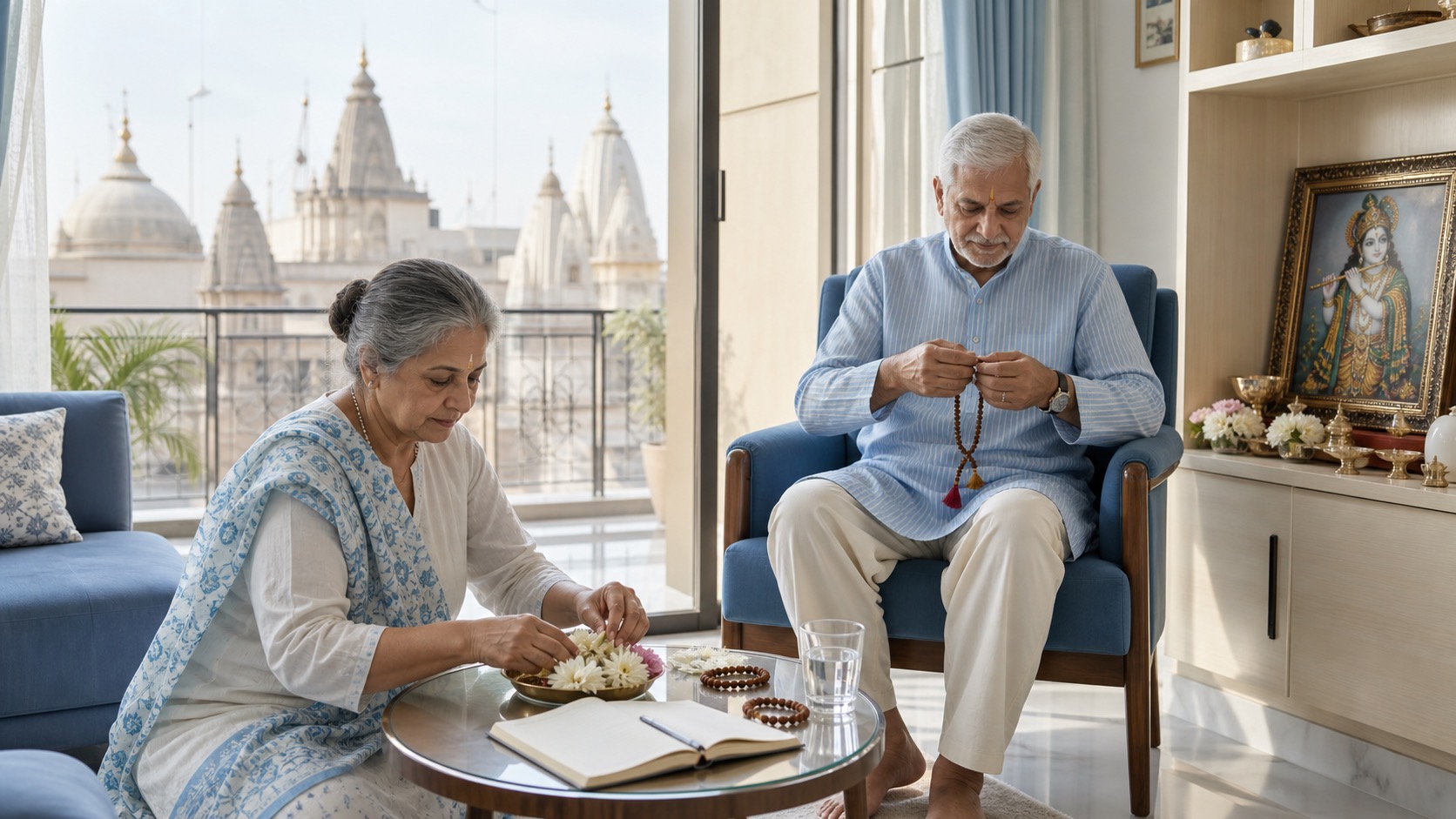 A daily spiritual routine should be gentle, repeatable, safe, and integrated with rest, meals, movement, and medicine timing.
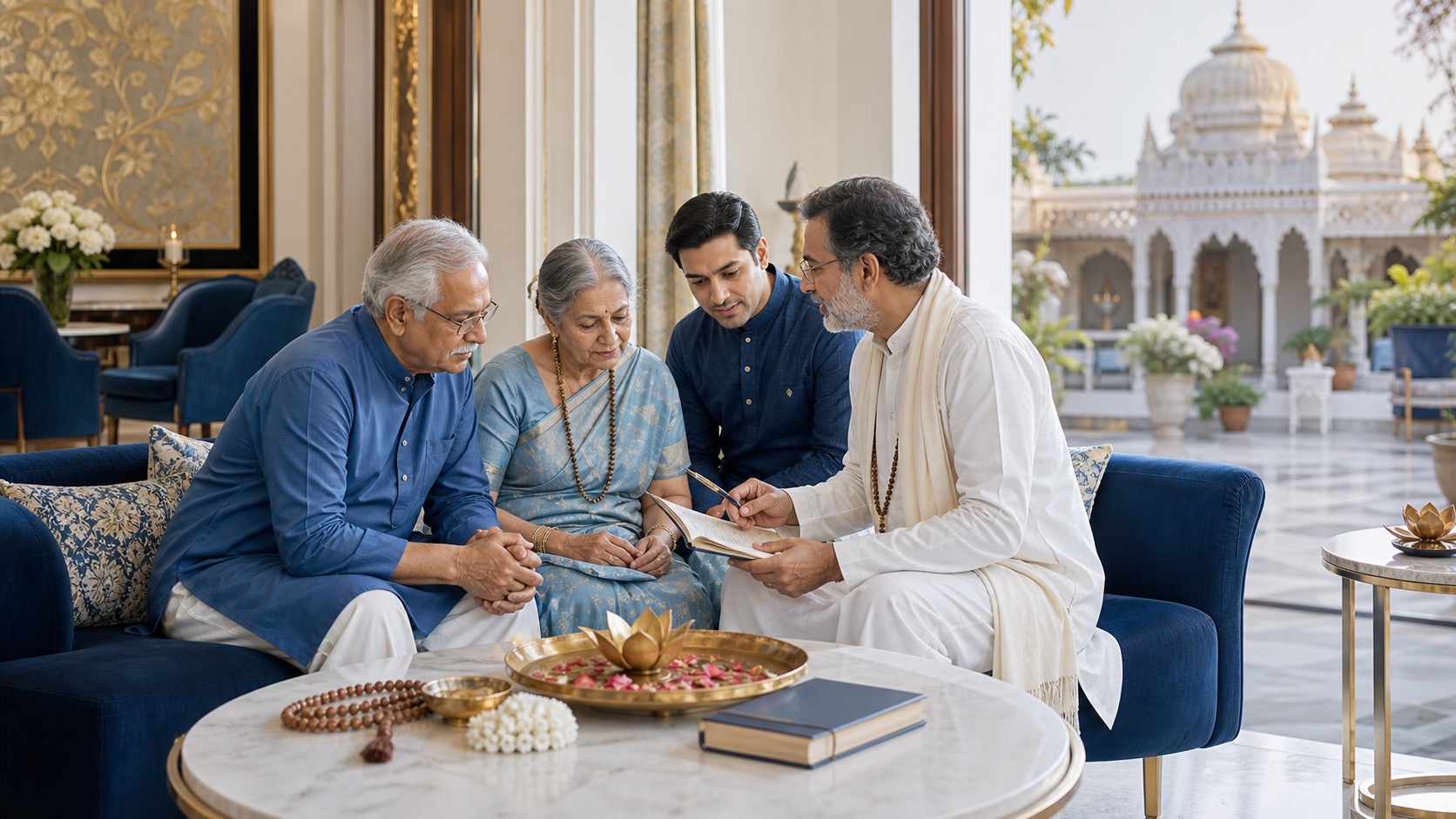 Spiritual ageing works best when purpose, health, community, access, and family voice are planned together.
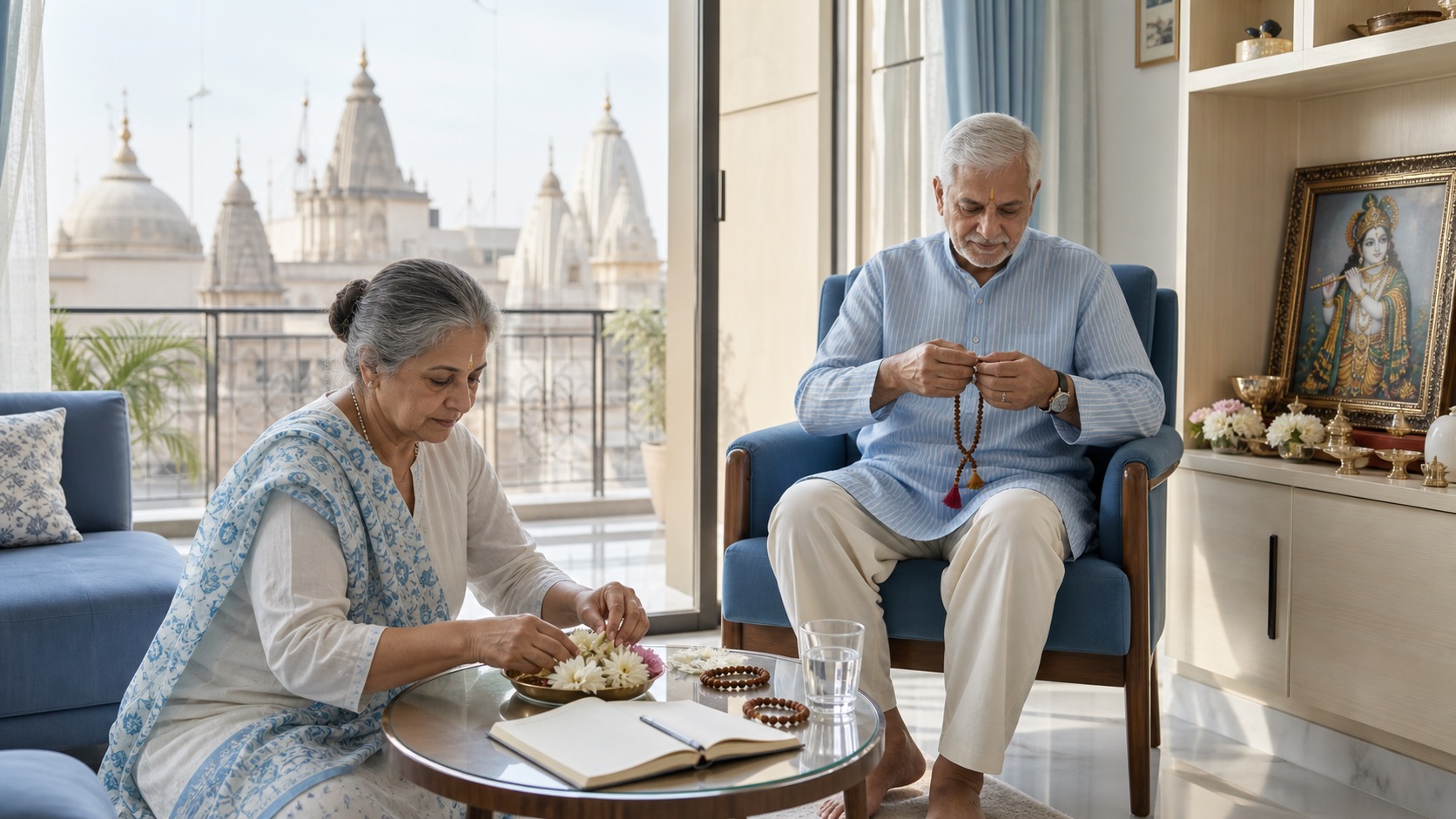 A daily spiritual routine should be gentle, repeatable, safe, and integrated with rest, meals, movement, and medicine timing.
At a glance
Spiritual ageing needs both meaning and support
The strongest spiritual retirement setting does not ask seniors to ignore the body. It brings devotion, safety, companionship, rest, family clarity, and dignity into one daily rhythm.
Questions families ask
Does vanaprastha mean leaving the family?
No. In modern family life, it is better understood as a shift in responsibility and focus. The elder may reduce daily control, household pressure, or business burden while remaining emotionally connected, respected, and involved in important family decisions.
What should a family write before using this idea?
Write a simple charter covering agency, delegated tasks, money and documents, medical routine, emergency contact, privacy, family visits, spiritual routine, and review dates. The point is not bureaucracy. It is preventing confusion, guilt, and silent pressure.
Can Vrindavan support a vanaprastha stage?
It can for elders who actively want devotional rhythm, community, temple access, seva, and a simpler daily environment. It should be tested through an ordinary-week stay, with medicines, doctors, transport, privacy, heat, crowds, and family contact reviewed honestly.
What is a warning sign that the plan is becoming abandonment?
Warning signs include the elder being excluded from decisions, pressured to transfer assets, discouraged from calling family, losing medical continuity, being blamed for needing help, or being told that loneliness is simply part of spiritual detachment.
How often should the retirement charter be reviewed?
A quarterly review is practical in the first year. Health, mobility, loneliness, family availability, and spiritual preferences can change quickly, and the plan should change with the elder rather than trap them.