Wandering Risk in Dementia: A Family Prevention and Emergency Plan
A practical prevention and emergency-response plan for families managing dementia wandering risk, door confusion, identification, neighbours, security, and search roles.
Quick Answer
Families should treat any unsupervised exit attempt, getting lost, wrong-floor episode, late-night door checking, or walking toward an old home, temple, office, or station as a safety event. The plan should combine prevention and response: identify triggers, schedule supervised walking and toileting, monitor doors and lifts, prepare identification and recent photos, brief trusted neighbours or guards, assign search roles, and review whether the home still provides enough supervision. Do not wait for a serious missing-person incident before planning.
The first response should be rehearsed before panic, not invented after the elder is missing.
Toileting, hunger, pain, anxiety, old routines, and overstimulation often sit behind leaving.
Risk can appear after waking, during visitors, near sunset, at night, or after conflict.
Main guide
Treat wandering as a safety pattern, not disobedience
A parent with dementia may walk out because they are searching for a toilet, food, old workplace, temple, childhood home, spouse, child, train station, or a place that feels familiar. They may also leave because of anxiety, pain, noise, boredom, restlessness, or confusion about where they are.
Calling it stubbornness delays planning. The useful question is: what was the elder trying to solve, and what made the exit possible?
Record each episode with time, location, door or lift used, mood, last meal, toileting need, visitor noise, pain, sleep, medicines, weather, and who was supervising. Patterns usually appear after a few entries.
Reduce the need to leave before blocking exits
Prevention starts with unmet needs. Regular toileting, hydration, meals, pain checks, safe walking, rest, meaningful activity, and calm evenings can reduce restless searching.
A person who walked to the temple every morning may need a supervised walk or courtyard routine, not sudden confinement. A former shopkeeper may calm down when given a simple folding, sorting, counting, or prayer-room task.
If wandering increases suddenly, families should look for medical contributors such as infection, dehydration, pain, sleep disruption, constipation, medicine changes, or delirium rather than assuming it is only dementia progression.
Audit doors, lifts, stairs, gates, and familiar routes
In Indian apartments, wandering is often not only the main door. It can involve the lift, wrong floor, staircase, terrace, balcony, parking area, temple path, market road, or security gate.
Walk the route yourself at the elder's pace. Ask: can they open the door quietly, call the lift, leave through the stairwell, reach the road, be recognized by security, and explain where they live?
Use respectful supervision, clear cues, door awareness, safer walking routines, and trusted-helper alerts. Avoid unsafe lock-ins that could trap the elder during fire, medical emergency, or caregiver collapse.
Prepare identification before the emergency
Keep a recent full-length photo, close-up face photo, medical summary, medicines list, allergies, diagnosis if known, address, phone numbers, usual walking routes, languages spoken, and calming phrases in one shared family folder.
Identification should be practical and dignified: wallet card, discreet ID band, labelled phone card, caregiver contact card, or community registration where appropriate. The elder should not be publicly shamed as a problem.
Brief only trusted people who can help respectfully: neighbours, guards, reception, drivers, local relatives, regular shopkeepers, temple staff, and community staff. Tell them what to do, what not to say, and whom to call.
Write the first-15-minute response plan
When an elder is missing, families lose time deciding who should do what. Assign roles in advance: one person searches the home and bathrooms, one checks lift/stairs/gate/CCTV if available, one calls guards or neighbours, one stays at home in case the elder returns, and one contacts local help if the search fails quickly.
Search the most likely routes first: bathroom path, terrace, lift lobby, parking, temple route, market route, old workplace direction, bus or auto stand, railway road, friend's home, or previous residence.
Escalate early if the elder is medically fragile, the weather is extreme, the area has traffic or water hazards, it is night, the elder has no phone or ID, or the person has been missing beyond the family's immediate search window.
Review whether home supervision is still realistic
One wandering incident may lead to better planning. Repeated incidents mean the family should question the care setting, not only blame the caregiver.
Home may no longer be safe enough when there are night exits, gate exits, wrong-floor episodes, traffic exposure, caregiver sleep deprivation, repeated missed supervision, unsafe stairs, or delayed emergency response.
A supported senior living or memory-care environment can become the more dignified option when it provides safer movement, staff awareness, routine, social visibility, and faster response than an isolated home can provide.
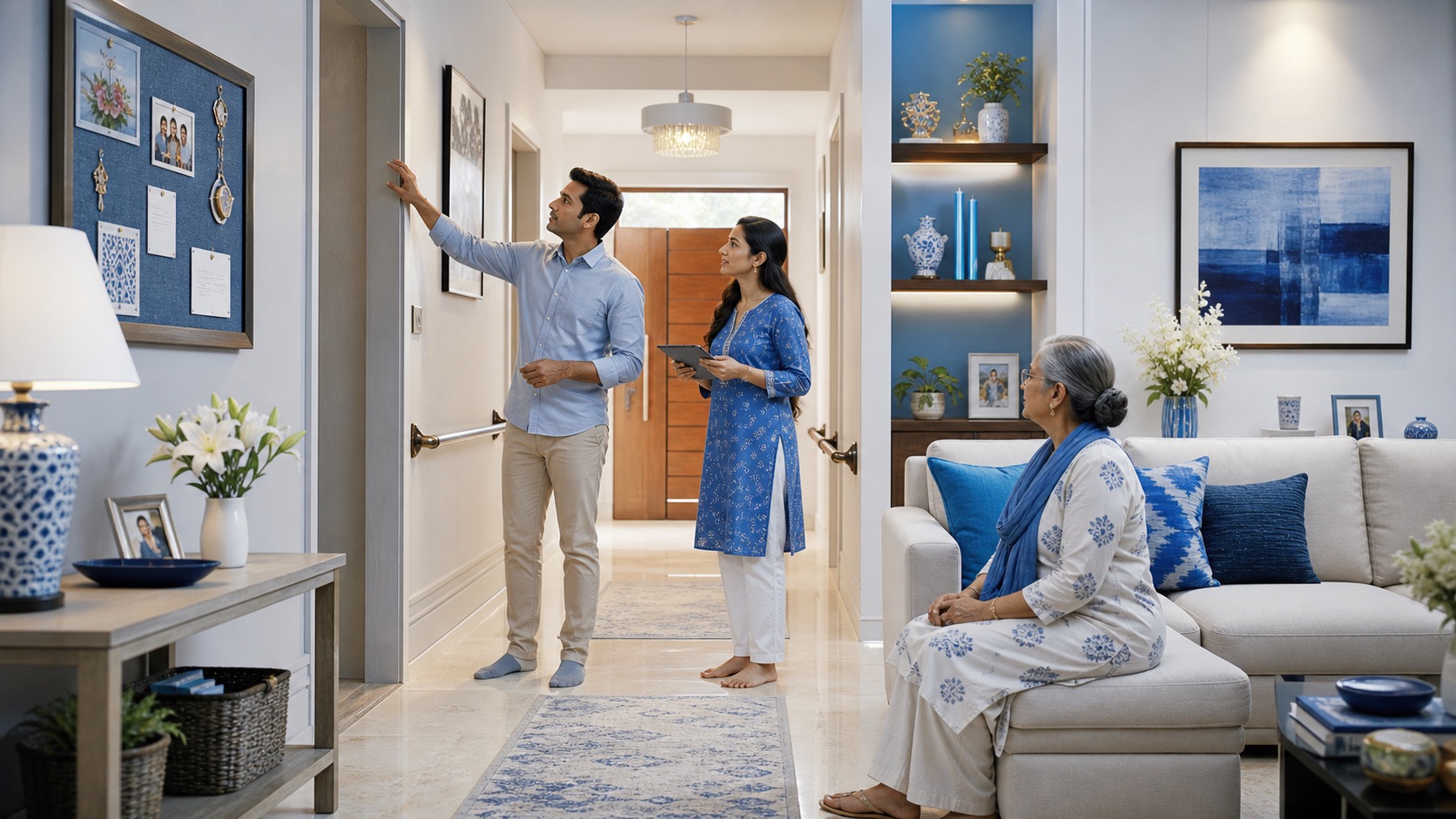
Wandering prevention and response checklist
Incident log
Record time, route, trigger, mood, unmet need, supervisor, and what prevented or ended the episode.
Toileting rhythm
Prompt bathroom use before walks, visitors, naps, evening restlessness, and bedtime.
Supervised walking
Schedule safe movement for elders who have always walked, worked, visited temples, or disliked sitting indoors.
Door and lift awareness
Review main door, stairwell, lift, terrace, balcony, parking, and gate supervision without unsafe lock-ins.
Recent photos
Keep a face photo and full-length clothing photo updated for quick sharing if the elder goes missing.
Identification support
Use a wallet card, discreet ID band, labelled phone card, or community contact record suited to the elder's dignity.
Trusted helper list
Brief guards, neighbours, drivers, regular shopkeepers, local relatives, and community staff on the exact response.
Search roles
Assign who checks the home, who checks the gate, who calls helpers, who stays home, and who contacts local authorities.
Calming script
Give helpers simple language: you are safe, your family is nearby, let us call them, please sit here.
Care-setting review
Repeated wandering, night exits, traffic exposure, or caregiver exhaustion means the environment needs more support.
Wandering triggers and family responses
| Care Area | What to Watch | Family Action |
|---|---|---|
| Toileting need | Restless searching, repeated standing, pulling at clothes, or walking toward wrong rooms. | Use regular bathroom prompts, clear route cues, and night lighting. |
| Old routine | Says they must go to work, temple, school, shop, railway station, or old home. | Offer reassurance, supervised walk, familiar task, or safe substitute activity. |
| Hunger, thirst, or pain | Pacing before meals, irritability, touching body part, or looking for kitchen. | Check food, water, pain, constipation, medicines, and medical changes. |
| Overstimulation | Crowds, noise, visitors, festival rush, children, arguments, or TV volume. | Move to a calm area and reduce demands before door-seeking begins. |
| Night confusion | Door checking, suitcase packing, searching for home, or leaving bed repeatedly. | Review sleep, toilet, pain, medicines, lighting, and caregiver coverage. |
| Wrong floor or gate exit | Lift confusion, stairs, parking, security gate, or walking outside compound. | Brief guards, review lift/stair access, and add supervised movement. |
| Remote family blind spot | NRI children hear calm phone calls but local helpers report exits. | Require incident logs, door/lift review, and named local response roles. |
| Repeated episodes | More than one unsafe exit, night attempt, or traffic exposure. | Review medical contributors, caregiver capacity, and whether the home setting is still safe. |
Care scenes


At a glance
Plan before the gate call
A wandering plan is not pessimistic. It is a written safety drill that tells every caregiver what to prevent, who to call, where to search first, and when to escalate.
The first response should be rehearsed before panic, not invented after the elder is missing.
Toileting, hunger, pain, anxiety, old routines, and overstimulation often sit behind leaving.
Risk can appear after waking, during visitors, near sunset, at night, or after conflict.
This guide is for education only and does not replace advice from a qualified doctor, geriatrician, neurologist, psychiatrist, psychologist, legal professional, financial professional, or other licensed specialist.
Questions families ask
Is wandering always intentional?
No. It may reflect confusion, unmet needs, old habits, anxiety, pain, hunger, toileting need, overstimulation, or searching for something familiar.
Should we lock the parent inside?
Avoid unsafe lock-ins that could trap the elder during fire, medical danger, or caregiver collapse. Seek professional guidance and use supervision, safer routines, identification, and environmental planning.
Should the whole neighbourhood know?
No. Share only with trusted people who can help safely and respectfully, such as guards, close neighbours, local relatives, regular shopkeepers, drivers, or community staff.
What should be ready before an emergency?
Recent photos, address, phone numbers, medical summary, medicines list, usual routes, calming phrases, trusted helper list, and assigned search roles.
How should NRI children handle wandering risk?
Ask local helpers for incident logs, route photos, lift and gate risk, recent photos, guard briefing, and a named person responsible for first response.
When should families consider community living?
When supervision gaps, repeated wandering, night exits, traffic exposure, caregiver exhaustion, isolation, or delayed response make home care unsafe.