A practical room-by-room audit for Indian families checking entrances, floors, bathrooms, bedrooms, kitchens, lighting, storage, walking routes, and emergency response before an older parent struggles.
Quick Answer
An age-friendly home is not a home with one grab bar. It is a home where an older adult can enter, bathe, sleep, cook lightly, pray, meet visitors, reach daily items, walk to community spaces, and call for help without unnecessary risk or embarrassment. Families should audit the full daily route: gate to door, door to bedroom, bed to bathroom at night, bathroom to dry changing area, kitchen to dining, balcony threshold, lift lobby, walking path, and emergency response. The useful test is simple: if the parent is tired, carrying a cup, walking at night, recovering from illness, or using a cane, does the home still work?
Design safety note
This guide is educational and does not replace advice from qualified architects, accessibility consultants, occupational therapists, physiotherapists, doctors, emergency responders, or licensed care providers. If an older adult has repeated falls, dizziness, confusion, sudden weakness, injury, severe pain, breathing difficulty, or immediate danger, seek urgent local medical help.
6
daily routes
Entrance, bedroom-bathroom, kitchen-dining, prayer space, balcony, and community walk should all be tested.
3
stress tests
Night bathroom, wet bathroom, and one-hand movement reveal risks a daytime tour hides.
1
response pathway
A call button matters only if someone can receive, enter, assess, escalate, and inform family.
Audit the parent's real day, not the brochure plan
Many homes look senior-friendly on a sales visit because the route is clean, dry, well lit, and walked slowly by a healthy adult. Older adults experience the same home differently: at night, after medicines, during knee pain, after a hospital stay, while carrying tea, when the bathroom floor is wet, or when they need help but want privacy.
Start by mapping the parent's ordinary day. Where do they wake, bathe, dress, pray, make tea, take medicines, sit with visitors, use the phone, reach documents, walk outside, and sleep? The audit should follow these routes in order instead of only checking attractive rooms.
A useful site visit includes three stress tests: walk from bed to bathroom in low light, test the bathroom after imagining a wet floor, and move through the home with one hand occupied. These reveal thresholds, glare, slippery flooring, awkward switches, missing support, and storage that requires stretching.
Check support without making the home feel medical
Age-friendly design should not make a parent feel like a patient in their own home. The strongest designs keep support quiet: firm chairs with arms, flush thresholds, matte anti-slip flooring, warm layered lighting, reachable shelves, stable bathroom support, uncluttered circulation, and an entrance that works during recovery.
Luxury finishes can create risk when they are too glossy, too low, too dark, too heavy, or too far from help. Polished floors, deep sofas, mood lighting, high cabinets, decorative loose rugs, wet balcony tracks, and long unshaded walks can make daily life harder even when the home looks expensive.
Families should ask whether every feature preserves dignity. Can the parent bathe privately but receive help if needed? Can a walker pass without shifting furniture? Can visitors be hosted without blocking movement? Can puja items, medicines, water, glasses, and phone chargers be reached without climbing?
Do not buy safety without a response plan
A safe-looking home can still fail during an emergency. A call bell, intercom, guard desk, or emergency button has value only when the response pathway is clear. Who receives the alert? Who has access? How do they enter if the door is locked? What medical information is available? When is family called?
The plan should include spare key access, a visible emergency contact card, medicine list, allergies, doctor contacts, ambulance preference, lift backup during power cuts, and a night protocol. This matters for falls, sudden weakness, chest pain, confusion, heat stress, or post-surgery recovery.
The final question is not whether the home has senior features. It is whether the parent can keep doing ordinary life safely today, and whether the home can adapt when balance, vision, stamina, memory, or mobility changes tomorrow.
The room-by-room age-friendly audit
01
Entrance and lift lobby
Check steps, ramps, door weight, lighting, slippery stone, waiting space, wheelchair entry, and whether help can reach the door quickly.
02
Bedroom to bathroom route
Walk it in dim light. Look for thresholds, rugs, sharp furniture corners, switch locations, slippery flooring, and missing support points.
03
Bathroom and dry zone
Inspect shower entry, toilet support, anti-slip texture, drainage, grab bars, reachable shelves, towel access, and space for assistance.
04
Kitchen and dining
Daily cups, plates, medicines, snacks, water, and puja or tea items should be reachable without climbing, bending deeply, or carrying hot items far.
05
Lighting and contrast
Check glare, dark corners, night lights, switch visibility, stair or threshold edges, reading light, and whether glossy floors hide wet patches.
06
Balcony and outdoor path
Look for raised tracks, wet surfaces, drainage, rail safety, shade, benches, smooth paving, evening lighting, and return distance.
07
Storage and daily reach
Keep medicines, glasses, documents, phone charger, clothes, prayer items, and commonly used kitchen items between shoulder and knee height.
08
Emergency response
Write who responds, how they enter, where medical records sit, which doctor is called, and who informs family.
Age-friendly audit decisions
| Design feature | Why it matters | Family question |
|---|
| Flooring | Falls often happen when flooring is glossy, wet, uneven, loose, or difficult to read visually. | Can the parent walk safely with tired legs, socks, slippers, a cane, or a walker? |
| Bathroom access | Night bathroom trips combine low light, urgency, sleepiness, and wet surfaces. | Can the parent reach, enter, use, dry, and exit the bathroom without risky twisting or stepping? |
| Community amenities | A temple, garden, club, or dining area is useful only if the route is realistic. | Are benches, shade, toilets, lighting, hand support, and a short return option available? |
| Response system | Devices do not help unless people, access, records, escalation, and follow-up are ready. | Who receives the alert, who enters, what do they check, and when is family called? |
| Future adaptability | A parent may be independent today and need support after surgery, illness, or a fall. | Can the home handle a walker, shower chair, caregiver visit, or temporary wheelchair use? |
Age-friendly design scenes to inspect
A good age-friendly audit follows the parent's real day. It asks what the home lets them keep doing safely, privately, and without avoidable fear.
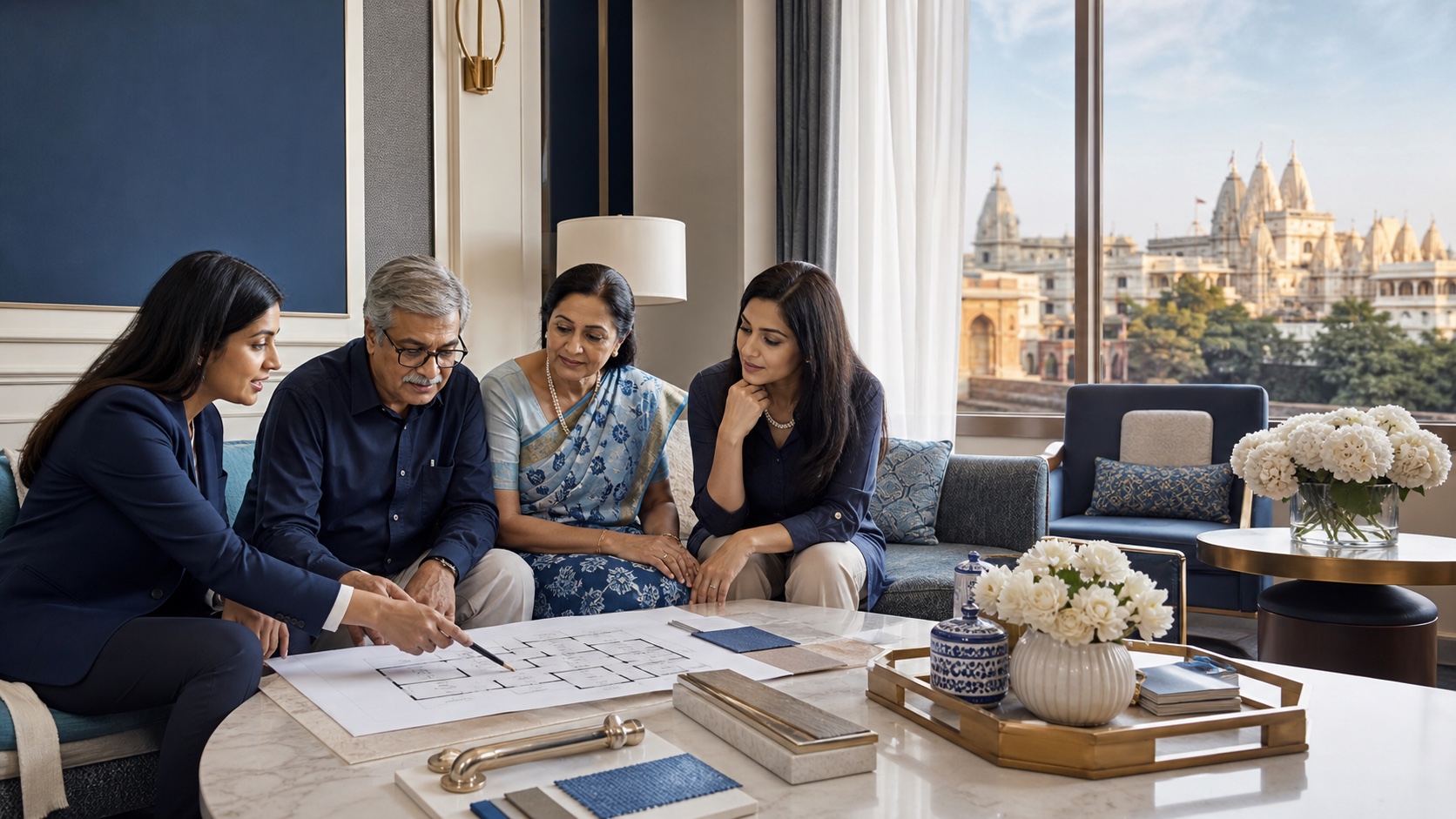 Age-friendly design starts before a crisis: families should inspect movement, light, support, storage, response, and daily routine together.
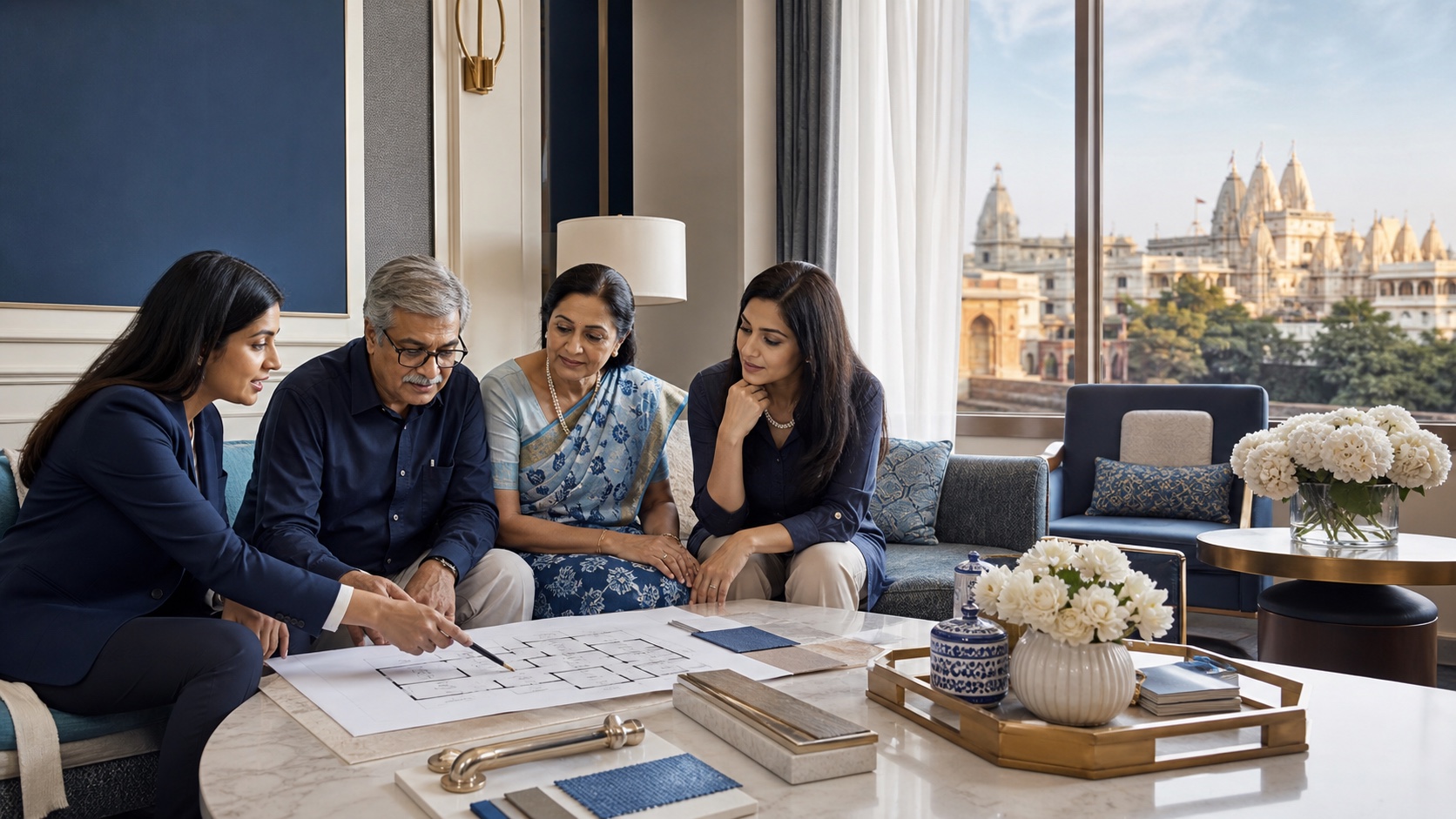 Age-friendly design starts before a crisis: families should inspect movement, light, support, storage, response, and daily routine together.
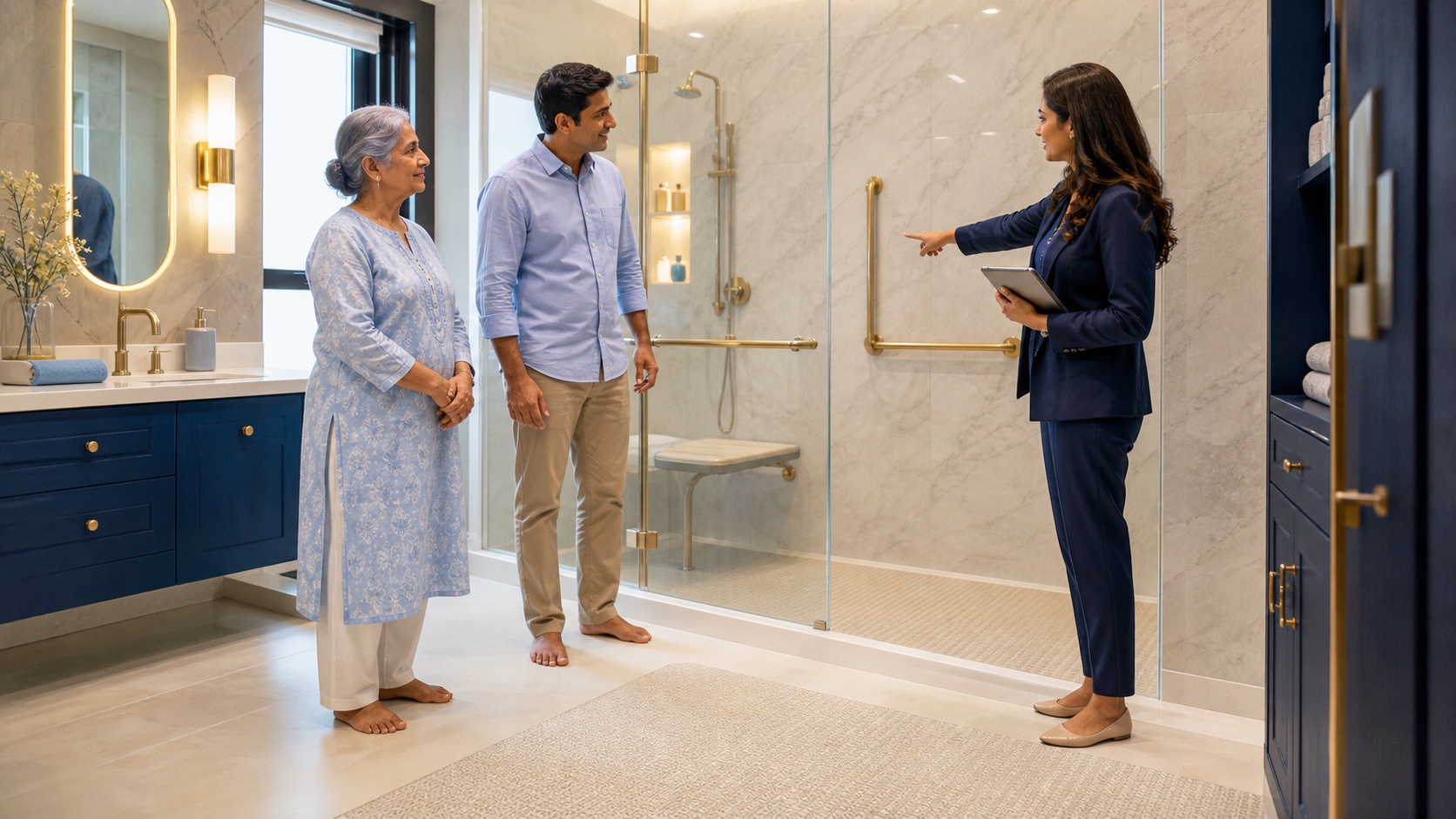 The bathroom is where small design details matter: dry reach, support points, non-slip surfaces, lighting, and space for assistance.
At a glance
Age-friendly design is quiet support
The strongest senior living environments do not make elders feel supervised or reduced. They make movement, rest, help, worship, meals, guests, and emergency response feel natural inside a beautiful home and community.
Questions families ask
Is an age-friendly home only for people who are already frail?
No. It is preventive design. The same features that support ageing also help after surgery, during illness, when guests visit, when grandchildren stay, or when anyone has a temporary injury.
What should families check first during a site visit?
Start with the parent's daily route: entrance, bedroom, night bathroom path, bathroom dry zone, kitchen reach, prayer or sitting space, balcony, and walk to community amenities. Do not judge only the sample flat finish.
Can luxury design and senior safety work together?
Yes. Good design can make safety quiet through matte surfaces, stable seating, elegant hand support, layered lighting, clear circulation, reachable storage, and a response plan that does not look clinical.
What is the biggest mistake families make?
They inspect the home in perfect conditions: daytime, dry floors, no urgency, no medicines due, no tiredness, and no crowd. The better audit tests the home at night, when wet, and when the parent has one hand occupied.
Should families add grab bars everywhere?
No. Add support where it matches real movement: toilet transfer, shower entry, dry changing, entrance, and any route where the parent reaches for walls or furniture. Poorly placed grab bars can be ignored or unsafe.