Krishna Bhumi Logo
Krishna Bhumi

Widowhood After 60: A 30-Day Family Plan for Daily Life

A practical 30-day guide for families supporting a widowed parent with food, medicines, rituals, documents, companionship, safety, and depression warning signs.

Quick Answer

Do not treat widowhood as a problem to fix quickly. Treat it as a major life rupture that needs steady daily protection. In the first month, families should assign one coordinator, protect meals and medicines, keep rituals humane, organize documents, make companionship predictable after visitors leave, and seek urgent professional help if the elder talks about self-harm, stops essential care, becomes unsafe, or cannot function.

This guide is for education only and does not replace advice from a qualified doctor, psychiatrist, psychologist, counsellor, dietitian, or other licensed professional. If someone talks about self-harm, suicide, being unsafe, or is in immediate danger, seek urgent local emergency care or a qualified crisis service.
72
hour check

The first three days need food, medicines, sleep, safety, and calm family coordination.

30
day rhythm

The first month should move from crisis visits to a repeatable weekly support pattern.

1
coordinator

One person should own food, medicines, documents, visitors, calls, and warning-sign review.

Main guide

Do not rush grief, but protect the day

The death of a spouse changes more than emotion. It changes who eats across the table, who notices medicines, who manages money, who shares temple visits, and who hears the first sentence of the morning.

A family cannot make grief neat. It can make the day safer. For the first month, judge support by ordinary signs: the elder is eating something, drinking water, sleeping at least some hours, taking medicines correctly, moving safely, and not being left invisible after visitors go home.

This matters because normal grief can overlap with poor sleep, appetite loss, fatigue, guilt, and loss of interest. Families should allow mourning while watching whether daily life is still functioning.

Assign one calm coordinator

In many Indian families, everyone wants to help after a death. That can become noise: repeated calls, different advice, too many visitors, and no one actually checking whether the elder ate dinner.

Assign one calm coordinator for the first 30 days. This person does not control the elder. They simply keep the week visible: meals, medicines, documents, rituals, visitor load, doctor appointments, money access, and calls from children who live away.

The coordinator should keep a short daily note for the first two weeks. Write what was eaten, whether medicines were taken, who visited, sleep concerns, mood concerns, and any unsafe statement. This helps NRI children and local relatives act on facts rather than panic.

Protect food, medicines, sleep, and hydration

Food is often the first routine to collapse. The elder may say they are not hungry, feel guilty eating without the spouse, avoid the dining table, or forget meals during rituals and visitor traffic.

Do not lecture. Put food into the day. Arrange one shared meal, one simple evening snack, visible water, and a medicine check that respects privacy. If intake stays poor, weight is dropping, dehydration appears, or medicines are missed or doubled, involve a doctor.

Sleep also needs attention. Night waking, daytime exhaustion, and fear of sleeping alone can become a safety issue. Families should avoid sedatives or alcohol as casual fixes and should seek medical guidance for persistent insomnia, confusion, falls, or severe anxiety.

Handle rituals without exhausting the surviving spouse

Rituals can give structure and comfort, but they can also exhaust an older person. Long sitting, repeated condolence conversations, travel, fasting, poor sleep, and social pressure can turn mourning into physical strain.

Ask the surviving spouse what they can manage. Give them seating, water, medicines, rest breaks, hearing support, and permission to leave a gathering early. Do not force public strength for the comfort of relatives.

Spiritual support works best when it protects dignity. Prayer, satsang, chanting, remembrance, or seva can help if the elder wants them. They should not be used to silence sadness or avoid medical and mental health care.

Make companionship predictable after visitors leave

The hardest point often comes after the thirteenth day, after relatives return to work, or after children fly back. The house becomes quiet, but the elder's daily dependency on the spouse has not disappeared.

Plan companionship before the crowd leaves. Decide who will call on which days, who will visit for tea, who will accompany a walk, who will help with temple visits, and who will notice if the elder stops appearing for meals or community activities.

A senior living community can help when it makes absence visible without invading privacy. Regular meals, known neighbours, staff awareness, quiet prayer spaces, and small group routines can reduce the risk that a widowed elder becomes unseen.

Know when grief needs urgent support

Grief is not the same as depression, but bereaved elders can develop depression, anxiety, complicated grief, or safety risk. Do not dismiss danger signs as drama or spirituality.

Seek urgent help if the elder talks about wanting to die, joining the spouse, being a burden, or not wanting to wake up; stops eating or drinking; refuses essential medicines; becomes severely confused; misuses alcohol or medicines; wanders unsafely; or cannot perform basic daily life for a sustained period.

If there is any immediate self-harm risk, do not leave the elder alone. Contact local emergency services, the nearest hospital, or a qualified mental health professional immediately.

30-day widowhood support checklist

01

First 72 hours

Confirm food, water, current medicines, sleep, safe movement, emergency contacts, and who will stay nearby.

02

One coordinator

Name one relative to track meals, medicines, documents, visitor load, calls, and warning signs.

03

Medicine review

Check current prescriptions, pill timing, refills, and whether grief-related confusion is causing missed or duplicate doses.

04

Meal plan

Arrange at least one shared meal and one simple snack each day until appetite and routine are stable.

05

Document folder

Collect death certificate copies, IDs, bank details, insurance, pension records, property papers, and doctor files without pressuring major decisions.

06

Visitor limits

Protect rest. Keep condolences humane, seated, hydrated, and short when the elder is tired.

07

Companionship roster

Plan calls, tea visits, walks, temple visits, or community meals for the quiet weeks after relatives leave.

08

Hard dates list

Mark birthdays, anniversaries, festivals, and the first monthly milestones so the elder is not alone by accident.

09

Doctor check

Book a review if sleep, appetite, blood pressure, diabetes control, pain, confusion, falls, or medicine adherence changes.

10

Safety language

Treat talk of death, self-harm, hopelessness, or being a burden as urgent, not as ordinary mourning.

What families see and what to do

Community AreaWhat to WatchFamily Action
Not eatingSkipped meals, loose clothes, dizziness, constipation, dehydration, or saying food has no meaning now.Use shared meals, simple portions, fluids, and a doctor review if poor intake continues.
Too many visitorsThe elder sits for hours, repeats the story, misses medicines, or looks exhausted after condolence visits.Shorten visits, create rest windows, keep water nearby, and let the elder leave conversations.
Silent after ritualsCrowds leave and the elder stops bathing, calling, walking, eating, or opening the door.Begin the companionship roster immediately. Do not wait for the elder to ask for help.
Money or document confusionBills, pensions, passwords, bank access, insurance, or property papers become unclear.Create a document folder and involve trusted family, legal, or financial help without rushing asset decisions.
Refuses medicinesMissed doses, doubled doses, saying medicines no longer matter, or hiding tablets.Use a pill organizer, supervised reminders, and medical review. Treat refusal with self-harm language as urgent.
Talks of joining spouseStatements about wanting to die, not waking up, being a burden, or having no reason to live.Stay with the elder and contact emergency or mental health support immediately.
NRI childrenDaily emotional calls happen, but no one knows meals, medicines, sleep, visitors, or documents.Ask the local coordinator for a short weekly note with facts, risks, and decisions needed.
Community livingThe elder withdraws from meals, satsang, walking paths, neighbours, or resident groups.Ask staff or trusted neighbours to notice absence and offer low-pressure re-entry.

Community scenes

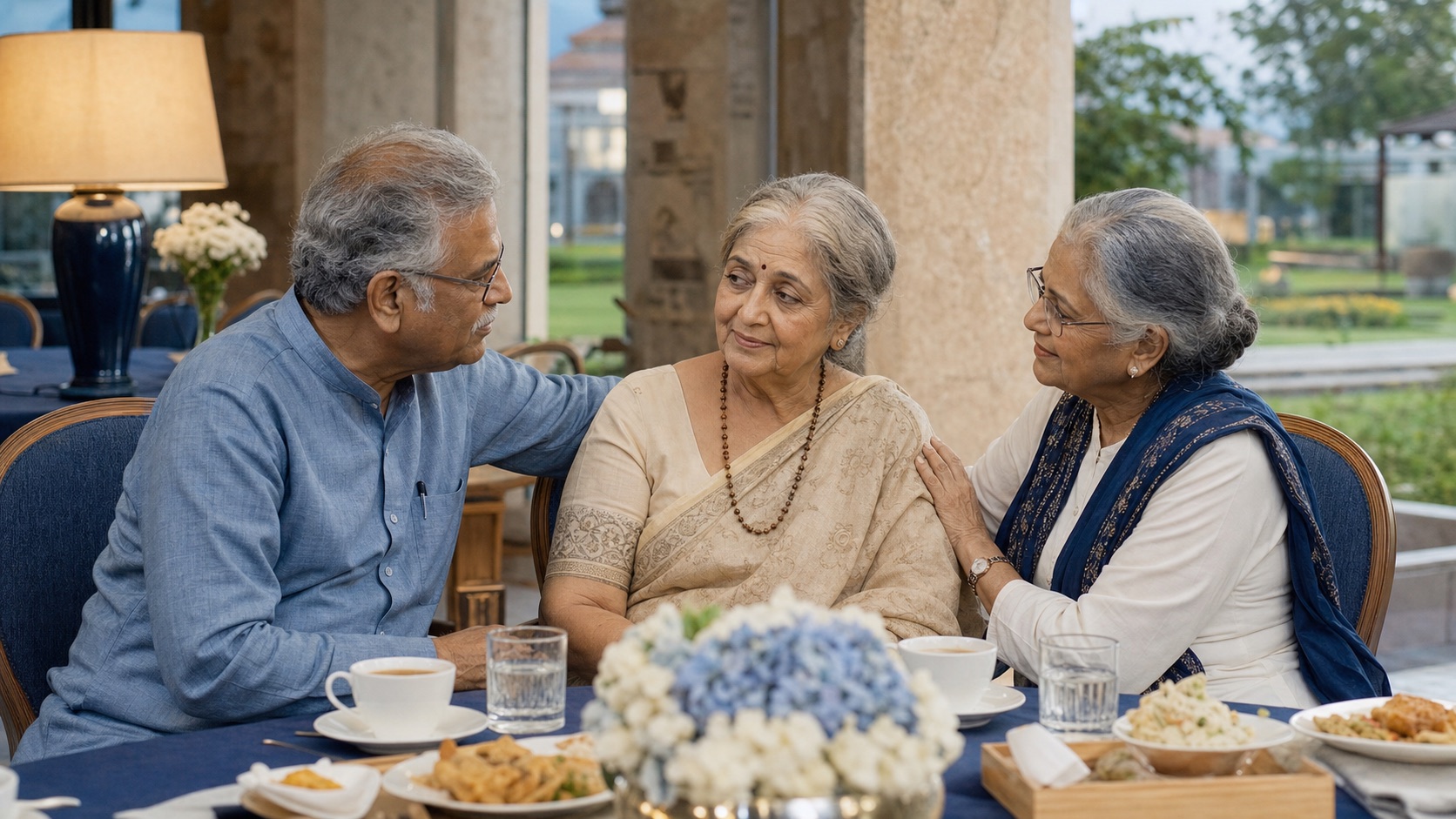
Older Indian adult being supported by senior friends over tea in a blue community dining lounge
Grief support should protect privacy while keeping food, sleep, health, and companionship from collapsing.
Indian seniors in a premium blue courtyard having a guided community conversation
Community living is strongest when everyday companionship is designed into the rhythm of the place.

At a glance

Grief support is built through ordinary protection

For the first month, good care is visible in simple things: food, medicines, rest, documents, rituals, safety, companionship, and the courage to seek help when grief becomes dangerous.

72
hour check

The first three days need food, medicines, sleep, safety, and calm family coordination.

30
day rhythm

The first month should move from crisis visits to a repeatable weekly support pattern.

1
coordinator

One person should own food, medicines, documents, visitors, calls, and warning-sign review.

Questions families ask

Is grief the same as depression?

No. Grief is a normal response to loss, and it has no single timeline. But grief can overlap with depression or become complicated. Watch function, safety, hopelessness, self-harm talk, poor intake, medicine refusal, and sustained inability to live the day.

Should the surviving parent be left alone if they ask?

Respect privacy, but do not confuse privacy with abandonment. Short periods alone may be fine if the elder is safe. Do not leave them alone if there is self-harm language, confusion, unsafe walking, medicine refusal, severe distress, or no reliable way to check in.

How can rituals be handled without exhausting the elder?

Let the elder choose what they can manage. Keep seating, water, medicines, rest breaks, hearing support, and a quiet exit available. Rituals should support mourning, not force public stamina.

What should NRI children do first?

Name a local coordinator and ask for a short weekly note covering meals, medicines, sleep, visitors, mood, documents, doctor needs, and warning signs. Emotional calls are important, but they do not replace local observation.

When should the family seek professional help?

Seek help quickly for self-harm thoughts, severe hopelessness, refusal of food or essential medicines, unsafe behaviour, serious confusion, misuse of alcohol or medicines, persistent inability to function, or depression symptoms that do not ease.

Can spiritual routine help after widowhood?

Yes, if the elder wants it. Prayer, chanting, satsang, seva, temple visits, and remembrance can provide rhythm and meaning. They should sit alongside food, sleep, medical review, companionship, and mental health support when needed.

Sources